The Ibogaine Executive Order: Medical Colonization in Plain Sight
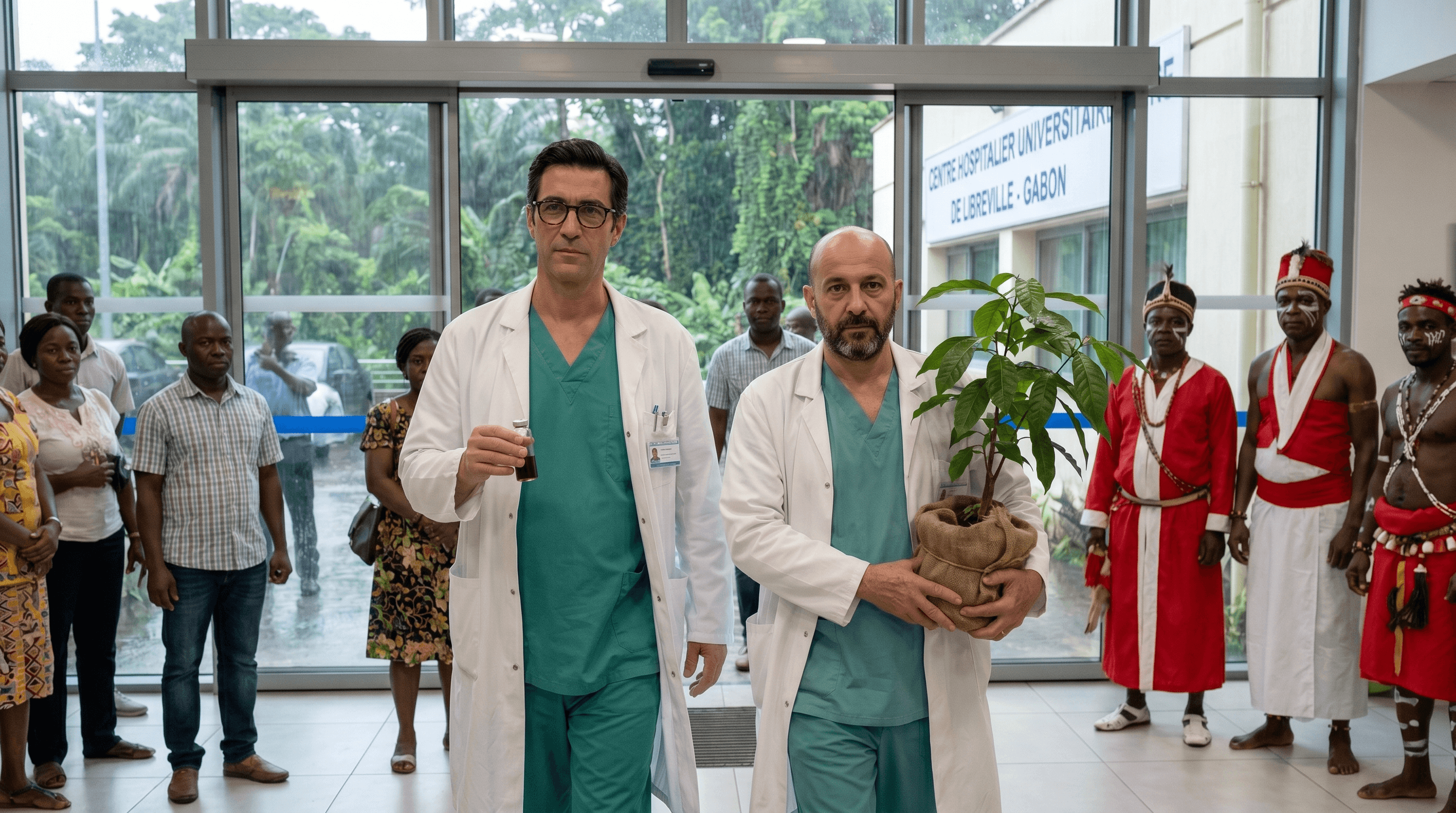
The executive order signed on April 18, 2026 — "Accelerating Medical Treatments for Serious Mental Illness" — names ibogaine explicitly, allocates at least $50 million to psychedelic drug development, and creates fast-track FDA pathways that could reshape addiction treatment in the United States. It does not mention, even once, the Indigenous peoples whose knowledge of this medicine made every word of that order possible. That silence is the story.
We work with ibogaine every day. We have watched it interrupt addictions that nothing else could touch — eliminating opioid withdrawal within hours, resetting neurological patterns that years of conventional treatment failed to reach, opening a window of neuroplasticity that gives people a genuine chance to rebuild. We believe in this medicine with everything we have. And precisely because of that, we need to say what we see: this executive order, as written, sets up the conditions for one of the most visible acts of medical colonization in modern history.
A sacred plant. A living religion. A billion-dollar pharmaceutical pipeline. The people who discovered the medicine are nowhere in the text.
Key Takeaways
- The executive order accelerates FDA pathways and Right to Try access for psychedelic drugs including ibogaine but contains zero mention of Indigenous peoples, Bwiti tradition, or the cultural origins of the medicine
- At least $50 million in federal funding will flow to state programs and pharmaceutical pipelines with no mechanism for Indigenous remuneration or benefit-sharing
- The medical model positions ibogaine as a treatment endpoint, ignoring that addiction is interrupted — not cured — by ibogaine alone
- Scaling ibogaine through synthetic production raises profound ethical questions about who profits from what the earth and its peoples created
- The existing 12-step and clinical rehab infrastructure cannot support what ibogaine makes possible — new education and integration models must be built alongside new access pathways
What the Executive Order Actually Says
The order lays out five major provisions.
First, the FDA Commissioner will issue National Priority Vouchers to psychedelic drugs holding Breakthrough Therapy designation, accelerating their review timeline.
Second, the FDA and DEA will establish a pathway for eligible patients to access psychedelic drugs — ibogaine compounds named explicitly — under the Right to Try Act, including Schedule I handling authorizations for treating physicians and researchers.
Third, the Secretary of Health and Human Services will allocate at least $50 million through ARPA-H to support state governments developing psychedelic drug programs.
Fourth, HHS, the FDA, and the Department of Veterans Affairs will collaborate with the private sector on clinical trials, data sharing, and real-world evidence generation — prioritizing drugs with Breakthrough Therapy designation.
Fifth, the Attorney General will initiate rescheduling review for any Schedule I product that successfully completes Phase 3 clinical trials for serious mental health disorders.
The policy language is measured. The intent is clear: move these medicines through the regulatory system and into clinical use as fast as possible.
Much of this is welcome on its face. The veteran suicide crisis — more than 6,000 veteran suicides per year for over two decades, a rate more than double the non-veteran adult population — demands urgent action. Over 14 million American adults live with serious mental illness. Treatment-resistant depression, PTSD, and substance use disorders destroy lives that conventional medicine has failed to reach. The landmark Stanford Medicine study showing over 80% reduction in PTSD symptoms in veterans after a single ibogaine treatment is not a talking point. It is a moral imperative.
But an imperative to act is not a license to take. This order, as written, takes without asking.
The Missing Word: Indigenous
Read the executive order from beginning to end. Search for "Indigenous." Not there. Search for "Bwiti." Not there. Search for "Gabon," "Africa," "traditional," "ceremonial," or "sacred." None of them appear.
Ibogaine did not emerge from a laboratory. It is one alkaloid — among many — found in the root bark of Tabernanthe iboga, a plant held as a sacrament by the Bwiti religion of Central Africa, primarily in Gabon, DRC, and Cameroon. The Bwiti have used iboga in initiation ceremonies, healing rituals, and spiritual practice for centuries — possibly millennia. The knowledge that this plant could interrupt addiction, reset neurological patterns, and catalyze profound transformation did not come from a Phase 3 clinical trial. It came by happenstance in the 60’s from Howard Lotsof and from generations of Indigenous practitioners who understood this medicine long before Western science had a name for neuroplasticity.
An executive order that names ibogaine explicitly, allocates tens of millions of dollars to its development, creates federal pathways for its commercialization, and does not mention the people whose knowledge made all of this possible — that is not an oversight. That is a pattern. One of the oldest patterns in colonial history: identify something valuable that Indigenous peoples already have, extract it, refine it, patent it, sell it, and never look back.
Quinine from cinchona bark. Aspirin from willow. Vincristine from Madagascar periwinkle. Curare from Amazonian vines. Western medicine has a long, well-documented record of pulling compounds from Indigenous pharmacopoeias, developing them into pharmaceuticals, and returning nothing to the peoples whose knowledge made the discovery possible.
Ibogaine is the next chapter of this story — unless we choose to write it differently.
The Pharmaceutical Pipeline Problem
The order directs federal agencies to collaborate with "the private sector" on clinical trials and real-world evidence generation. It establishes funding pathways through ARPA-H to state programs. It creates fast-track review mechanisms that pharmaceutical companies have spent years positioning for.
None of these provisions include language about benefit-sharing with source communities. None establish requirements for cultural consultation. None create mechanisms — even advisory ones — for Indigenous representation in the regulatory process that will determine how their sacrament is manufactured, marketed, and sold.
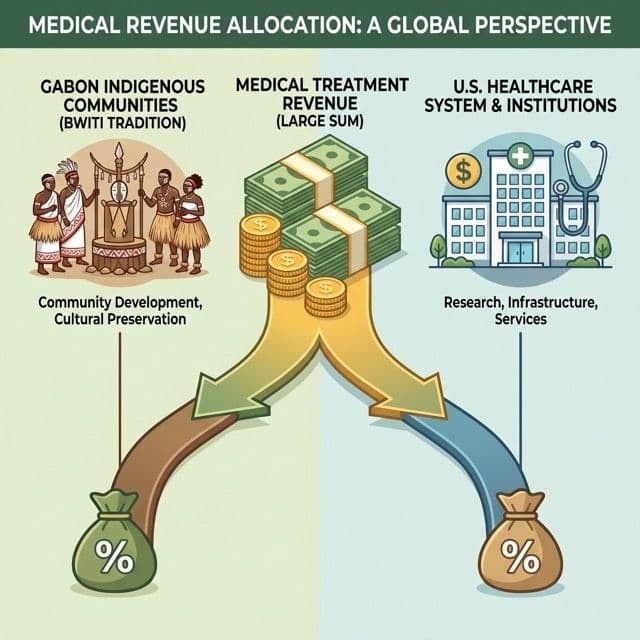
This is not hypothetical. We have watched this exact pattern play out across the broader psychedelic renaissance. Companies file patents on dosing protocols, delivery mechanisms, and synthetic analogs. Investors pour hundreds of millions into clinical development. FDA approval creates billion-dollar markets. The Indigenous peoples whose traditional knowledge made the entire industry possible receive nothing.
The Nagoya Protocol — an international agreement on access to genetic resources and the fair sharing of benefits arising from their use — exists precisely to prevent this. The United States signed it but never ratified it. The absence of any benefit-sharing language in this executive order is consistent with that position.
It is also indefensible.
If ibogaine reaches FDA approval and generates the billions that market analysts already project, the Bwiti people of Gabon and Cameroon must receive direct, meaningful, contractual remuneration. Not charity. Not a foundation established by the companies that profited. Not a cultural sensitivity training module in a corporate onboarding deck. Revenue sharing. Governance participation. Legal recognition of their intellectual and spiritual contribution to every dollar this industry will generate.
Anything less is extraction with better paperwork.
Synthetic Ibogaine: Progress or Erasure?
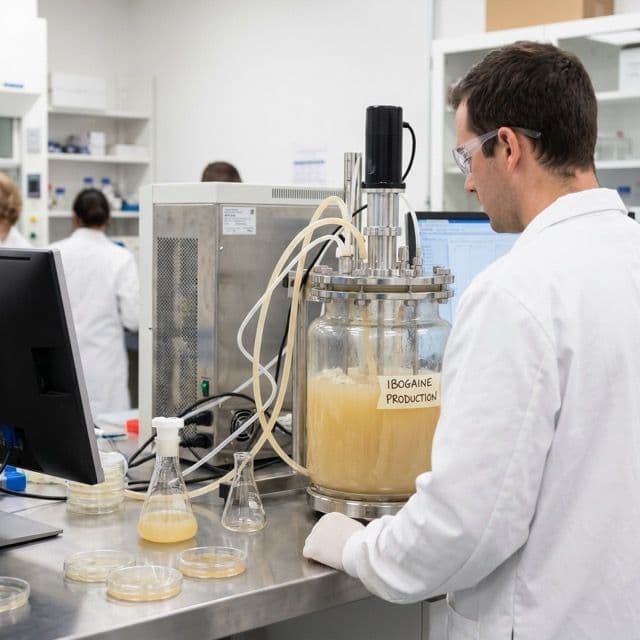
Here is a practical reality the executive order does not address but that its implementation will force: Tabernanthe iboga is a slow-growing plant. It takes years to mature. Demand for ibogaine — if FDA-approved and widely prescribed — will vastly exceed what sustainable harvesting or cultivation can provide. The plant is already under pressure. Gabon has restricted iboga exports in response to overharvesting driven by Western demand.
The likely solution is synthetic ibogaine — or, more precisely, synthetic analogs designed to replicate ibogaine's neurological effects without some of its cardiac risks or visionary properties. Compounds like 18-MC (18-methoxycoronaridine) and tabernanthalog are already in development.
This raises a question that goes beyond pharmacology: Is a synthetic molecule that eliminates the visionary experience still ibogaine in any meaningful sense?
From a purely medical standpoint, maybe. If a synthetic analog can interrupt opioid withdrawal, reset dopamine signaling, and open a window of neuroplasticity — all without the QT prolongation that makes full ibogaine medically intensive — that represents a real advancement in safety and accessibility.
But ibogaine is not just a molecule. The 12-to-24-hour experience — the vivid biographical review, the confrontation with deeply held patterns, the physiological and psychological recalibration — is not a side effect to be engineered away. It is the medicine. The Bwiti have understood this for centuries. Anyone who has been through a full ibogaine experience understands it too.
Stripping the experience from the molecule and calling the result "ibogaine therapy" is reductionism dressed as innovation. That is exactly what pharmaceutical development incentivizes: isolate the active mechanism, eliminate the complexity, standardize the delivery, maximize the margin.
We are not categorically opposed to synthetic development. If it saves lives that full ibogaine treatment cannot reach — because of cardiac contraindications, access limitations, or medical complexity — it has a role. But that role is partial. The full medicine, administered in a medically safe environment with proper preparation and integration, offers something no synthetic analog can replicate. And the rush to synthesize must never become a justification for ignoring the living tradition this molecule was taken from.
The Addiction Model They Are Building Is Already Broken
The executive order frames ibogaine within the existing mental health treatment paradigm: diagnosis, clinical trial, FDA approval, prescription, administration, outcome measurement. This framework has produced advances in many areas of medicine. It has also failed catastrophically to address addiction.
The order itself concedes this indirectly — noting that "individuals suffering from major depressive disorder and substance abuse disorder can relapse or not fully respond to standard medical and psychiatric therapies" and that "innovative methods are needed." What it does not concede is that the innovation needed is not just in the molecule. It is in everything that surrounds it.
Here is what we know from direct clinical work with ibogaine: it does not cure addiction. It interrupts it. Powerfully, neurologically, in ways nothing else can match. A single ibogaine treatment can eliminate opioid withdrawal symptoms within the first hour, dramatically reduce post-acute cravings, and open a 2-to-12-week period of elevated neuroplasticity — what we call the Window of Wonder — during which the brain becomes genuinely more capable of forming new neural pathways and behavioral patterns.
But the window closes. What determines whether someone stays free of addiction is not the ibogaine treatment itself. It is what happens during and after that window. The integration work. The education. The rebuilding of identity, purpose, daily rhythm, and community.
The current addiction recovery infrastructure in the United States cannot support this. The dominant models — 12-step programs, 28-day inpatient rehab, medication-assisted treatment with methadone or buprenorphine — were not designed for people who have undergone a profound neurological reset and possess a time-limited period of extraordinary neuroplasticity. These programs manage addiction as a chronic, relapsing condition. They teach powerlessness as a first principle. They offer maintenance where ibogaine creates an opportunity for genuine transformation.
If ibogaine wins FDA approval and clinicians administer it within the existing treatment model — a clinical dose in a hospital, discharge within 48 hours, referral to a standard outpatient program — the results will disappoint. Not because ibogaine failed. Because the infrastructure failed the opportunity ibogaine created.
Something new has to arise. Post-ibogaine education programs that teach practical life skills, emotional regulation, vocational clarity, and community integration during the Window of Wonder. Protocols that are active, not passive — that meet people during the most critical weeks of their recovery with structure, mentorship, and purpose. Models built around agency rather than powerlessness.
This is what we build at Nekawa — a 28-day program with 10 days of preparation and 15 days of structured integration after treatment. Not because we invented the concept, but because we recognized early that ibogaine without integration is a door opened and then slammed shut. The executive order opens the door to ibogaine access. It says nothing about what happens on the other side.
What Meaningful Policy Would Look Like
We are not against this executive order. We are against what it leaves out.
Indigenous representation in regulatory proceedings. The Bwiti people and other traditional iboga practitioners must hold a formal, ongoing seat at the table — not a single hearing appearance, but structural governance participation in decisions about how their sacrament is developed, manufactured, and distributed.
Mandatory benefit-sharing agreements. Any company developing an ibogaine-based or iboga-derived product for FDA approval should contribute a percentage of revenue to a fund administered by and for Indigenous source communities. The Nagoya Protocol provides the framework. The United States should ratify it and apply it here.
Integration standards as a condition of approval. FDA approval of ibogaine should require post-treatment integration as part of the mandated protocol — not an optional recommendation. The evidence is clear: ibogaine without integration produces worse long-term outcomes. Prescribing guidelines should reflect the full arc of what this medicine requires.
Sustainable sourcing mandates. Before synthetic production renders the question moot, any ibogaine derived from Tabernanthe iboga or related plants must be sourced sustainably, with direct economic benefit to harvesting communities in Gabon and Cameroon. Existing export restrictions should be respected, not circumvented.
Federal investment in new post-treatment models. The $50 million allocated through ARPA-H should include dedicated funding for integration programs designed specifically for post-psychedelic recovery — programs that move beyond the 12-step model and address the unique neuroplastic window ibogaine creates.
The Medicine Deserves More
We have a medicine that can save lives. We know this because we have watched it happen — in ourselves, with our patients, under conditions of medical safety and cultural respect that took years to build.
The executive order signals that the United States government recognizes what practitioners have known for decades: ibogaine works. For many people, especially those battling opioid dependency, it accomplishes in 72 hours what years of conventional treatment could not.
But "it works" is not enough. How it is developed matters. Who profits matters. Who is acknowledged matters. Who is left out matters.
Right now, the people who matter most — the Bwiti practitioners who carried this medicine through centuries of colonial disruption so it could reach this moment — are nowhere in the text. The patients who need more than a molecule — who need integration, education, and a new framework for recovery — are offered a pipeline, not a pathway.
Both absences can be corrected. But only if the people building this industry choose to build it differently than every extractive industry that came before.
The medicine is real. The opportunity is real. The question is whether we can honor both — or whether this becomes another story of a sacred thing taken, refined, sold, and stripped of everything that made it sacred in the first place.
We know which version we are building toward at Nekawa. We hope the policymakers, investors, and pharmaceutical developers reading this order will ask themselves the same question.
---
Frequently Asked Questions
What does the 2026 executive order on psychedelic medicine actually do?
The order directs the FDA to fast-track review of psychedelic drugs with Breakthrough Therapy designation, creates Right to Try pathways for patient access to ibogaine and other psychedelics, allocates at least $50 million through ARPA-H to state programs, establishes data-sharing agreements between HHS, the FDA, and the VA, and initiates rescheduling review for Schedule I substances that complete Phase 3 trials. It does not change ibogaine's current legal status directly but creates mechanisms that could lead to approval and rescheduling.
Does the executive order make ibogaine legal in the United States?
Not immediately. Ibogaine remains a Schedule I controlled substance. The order creates regulatory pathways — Right to Try access, fast-track FDA review, and rescheduling procedures — that could change this over time. In Brazil, where Nekawa operates, ibogaine is already medically regulated, officially recognized by ANVISA, and prescribable by licensed physicians in clinical hospital settings.
Why is Indigenous representation important in ibogaine policy?
Ibogaine comes from the root bark of Tabernanthe iboga, a plant the Bwiti religion of Central Africa has used as a sacrament for centuries. The knowledge that this plant could change lives originated with Indigenous practitioners, not clinical researchers. Developing ibogaine into a pharmaceutical product without acknowledging, consulting, or compensating these communities follows a documented historical pattern of extracting Indigenous knowledge for commercial gain — with nothing returned.
Can ibogaine cure addiction on its own?
No. Ibogaine interrupts addiction — it can eliminate withdrawal symptoms within hours, dramatically reduce cravings, and open a 2-to-12-week window of elevated neuroplasticity. But lasting recovery depends on what happens after treatment: structured integration, education, new daily practices, community support, and the deliberate rebuilding of purpose and identity. This is why Nekawa's program includes 10 days of preparation and 15 days of post-treatment integration — not just the treatment itself.
What is Nekawa's position on the executive order?
We support expanded access to ibogaine and recognize the order's significance in acknowledging psychedelic medicine's therapeutic potential. Our concern is with what was left out: no Indigenous representation, no benefit-sharing mechanisms, no integration standards, and no investment in new post-treatment care models. The order opens a door. The question is who builds the room behind it — and whether the people who carried this medicine for centuries are invited inside.
Referencias
- Executive Order: Accelerating Medical Treatments for Serious Mental Illness. The White House, April 18, 2026.
- Noller, G.E., Frampton, C.M., Yazar-Klosinski, B. Ibogaine treatment outcomes for opioid dependence from a twelve-month follow-up observational study. The American Journal of Drug and Alcohol Abuse, 2018.
- Davis, A.K., et al. Psychedelic Treatment of Major Depressive Disorder and PTSD in Special Operations Forces Veterans. Stanford Medicine / Psychedelic Science Research Group, 2023.
- Nagoya Protocol on Access to Genetic Resources and the Fair and Equitable Sharing of Benefits Arising from their Utilization. Convention on Biological Diversity, United Nations, 2010.
- Samorini, G. The Bwiti Religion and the Psychoactive Plant Tabernanthe iboga. Integration: Journal of Mind-Moving Plants and Culture, 1995.
- Alper, K.R., et al. Treatment of Acute Opioid Withdrawal with Ibogaine. The American Journal on Addictions, 1999.
- ANVISA (Agência Nacional de Vigilância Sanitária). Resolution on Ibogaine Regulation in Brazil, 2021.