At a glance — ibogaine treatment for Dallas residents, April 2026 update:
- Federal status: Schedule I; no Texas clinic can administer ibogaine
- Texas legislative posture: SB 2308 ($50M ibogaine research fund signed June 2025)
- 2024 Dallas County overdose: 558 deaths, fentanyl driving the majority
- Regulated treatment pathway: Brazil, ANVISA-approved, hospital-administered
- Travel from Dallas: DFW → São Paulo (GRU), ~10 hours via American or LATAM
Ibogaine is a single-session medical intervention for opioid dependence, substance abuse, prescription medications, behavioral addictions, and trauma, prescribed and administered by independent licensed Brazilian physicians in a hospital setting. For Dallas residents, the regulated pathway runs through Brazil — Nekawa is the wellness academy that supports US students through it.
Dallas County recorded 558 overdose deaths in 2024, with fentanyl driving most of those fatalities. Even after Dallas County Health and Human Services expanded overdose response teams, placed peer navigators inside hospital emergency departments, and scaled Narcan distribution under a CDC-funded program, the numbers stayed brutal. For families in Uptown, Lakewood, Knox-Henderson, and across the metro, the losses kept coming.
There are 56 SAMHSA-licensed substance use programs within 25 miles of central Dallas. Most people reading this page have already tried one or more of them. The issue is not a shortage of facilities. For a specific subset of people, particularly those caught in fentanyl dependence or years of polysubstance use, conventional treatment has not held. That is the population that eventually finds its way to ibogaine, and then finds that ibogaine is a Schedule I controlled substance in the United States. No facility in Texas can administer it.
This page covers:
- What ibogaine is and how the physician-administered session actually works
- Why the regulated medical pathway runs through Brazil rather than the United States
- How Nekawa's 28-day wellness program is structured around the work the prescribing physicians do
- What the journey from Dallas to Paraty involves, from the flight out of DFW to the integration work you bring home
Nekawa is a wellness education academy. It does not prescribe or administer ibogaine. The medical work happens in a hospital under independent licensed Brazilian physicians; Nekawa builds the preparation curriculum, the environment, and the integration coursework around it.
Why Dallas residents are looking outside the US for ibogaine
Texas does not have a broad Good Samaritan overdose immunity law like most other states. That gap discourages 911 calls during overdoses, which means some people die who might otherwise have survived. It also says something about the broader policy environment: Texas has historically been cautious about harm-reduction approaches, even as fentanyl-contaminated counterfeit pills and polysubstance combinations (fentanyl with cocaine, fentanyl with methamphetamine) have overwhelmed conventional treatment infrastructure.
For families in Dallas, the math becomes brutal. A person cycles through detox, residential treatment, and outpatient programs. They relapse. They go back. The window between relapse and a fatal dose has narrowed because of fentanyl's potency. Parents and partners who reach this page are not looking for another 30-day program off Walnut Hill or Greenville Avenue. They are looking for something that addresses the underlying neurobiology rather than the behavior alone.
Ibogaine does not fit neatly into the existing treatment model, which is part of why it remains Schedule I in the United States. It is not a maintenance medication. It is not a behavioral intervention. It works differently, and understanding how it works is the first step toward understanding why people travel to Brazil for it. The science behind ibogaine's mechanism covers the receptor-level detail, but the short version is this: it appears to interrupt the addiction cycle at a neurological level that most treatments cannot reach.
What ibogaine actually does
If your loved one is in active fentanyl dependence, here is what matters most: ibogaine is not a substitute drug. It does not work by replacing one opioid with another. Patients who have gone through the session often describe the acute withdrawal phase as largely bypassed (interrupted rather than suppressed). That is not a marketing claim; it is what the peer-reviewed research has been documenting for decades, which is part of why Texas invested $50 million in clinical trials of the compound.
The session itself produces an intense visionary phase, typically lasting 6 to 12 hours, followed by roughly 12 hours of quieter mental processing, then 24 to 48 hours of physical recuperation. Many patients report that the visionary phase surfaces memories and patterns they had not consciously connected to their addiction. This is not a recreational experience. It is physically and psychologically demanding, which is exactly why the medical infrastructure surrounding it matters so much.
After the session, there is a period of elevated neuroplasticity, roughly 2 to 12 weeks, that researchers call the Window of Wonder. The brain is more receptive to new patterns during this window than it has been in years. That window is what Nekawa's integration work is built around. Without structured support during that period, the neurological opening closes without being used.
The medical protocol: what hospital administration actually means
Ibogaine carries real cardiac risk if it is administered without proper screening. QT-interval prolongation is the primary concern, and it is why the prescribing physicians conduct a thorough workup before any patient is cleared for the session. Before the prescribing physicians clear a patient for ibogaine, the workup includes:
- EKG
- QT-interval check
- Comprehensive blood panel
- Liver function test
- Magnesium loading
The hospital's ICU-trained nursing team monitors continuous cardiac telemetry for a minimum of 24 hours post-dose. An on-site physician is present throughout the session. This is not a retreat setting with a nurse on call. It is a hospital environment with the infrastructure that ibogaine treatment requires.
Nekawa is a wellness education academy structured around that hospital infrastructure. The medical team, the cardiac monitoring, the nursing, the screening, all of it belongs to the independent licensed Brazilian physicians and the hospital partner. Nekawa does not employ clinicians. What Nekawa provides is the program structure that makes the medical work meaningful: preparation, environment, and integration.
The full program structure is:
- 10 days of preparation and on-site medical onboarding before the session
- The ibogaine session, administered by the medical team in a hospital setting with continuous cardiac telemetry
- 15 days of structured integration on the property
- 45 days of at-home integration coursework after returning home
Longer on-site programs of up to 90 days are available for students who want deeper transformation work. The 28-day structure is the standard program.
See our cardiac safety overview for the full QT-interval, EKG, and screening protocol the prescribing physicians follow.
Why Brazil and not somewhere else
Mexico and Costa Rica are where most people's searches start. They are closer to Dallas, the flights are shorter, and there is a visible industry of ibogaine retreats in both countries. But the regulatory picture is different. In Mexico, ibogaine occupies a legal gray area. There is no federal agency equivalent to the FDA that has specifically approved it for medical use, no national cardiac monitoring requirement, and no standardized physician oversight framework. Some facilities are excellent. Many are not, and there is no reliable way to tell from a website.
Brazil is different. Ibogaine is approved for medical use under ANVISA, Brazil's federal health agency, which functions as the Brazilian equivalent of the FDA. Treatment is physician-prescribed. The hospital infrastructure is required by the regulatory framework, not optional. Nekawa is a wellness education academy built around the hospital infrastructure that physician-administered ibogaine treatment requires. That distinction matters when you are making a decision of this magnitude.
The legal status of ibogaine varies by country in ways that affect both safety and accountability. The physician-prescribed pathway in Brazil is not the same as flying to a private retreat in a country where ibogaine exists in a regulatory gap. It is a different category of experience, and it is why the medical team Nekawa partners with operates inside a hospital, not a villa.
| Brazil (Nekawa pathway) | Texas rehabs | Mexico clinics | |
|---|---|---|---|
| Is ibogaine available? | Yes — physician-prescribed | No (Schedule I); SB 2308 funds research only | Yes — but unregulated |
| Regulatory framework | ANVISA-regulated | FDA + DEA (federally illegal); SB 2308 funds state research only | No formal framework |
| Cardiac monitoring | 24-hour ICU telemetry, EKG, QT screening | N/A (no ibogaine) | Varies |
| Program length | 28+ days | 30 days typical | 5–10 days typical |
| Setting | Hospital partner + wellness program | Treatment facility | Retreat / private clinic |
| Aftercare structure | 45-day online/home coursework with mentors | Outpatient varies | Rare |
| Cost / insurance | $750/day; insurance N/A | $300–$2,000/day; insurance available | $1,000–$1,800/day; insurance N/A |
Getting from Dallas to Paraty
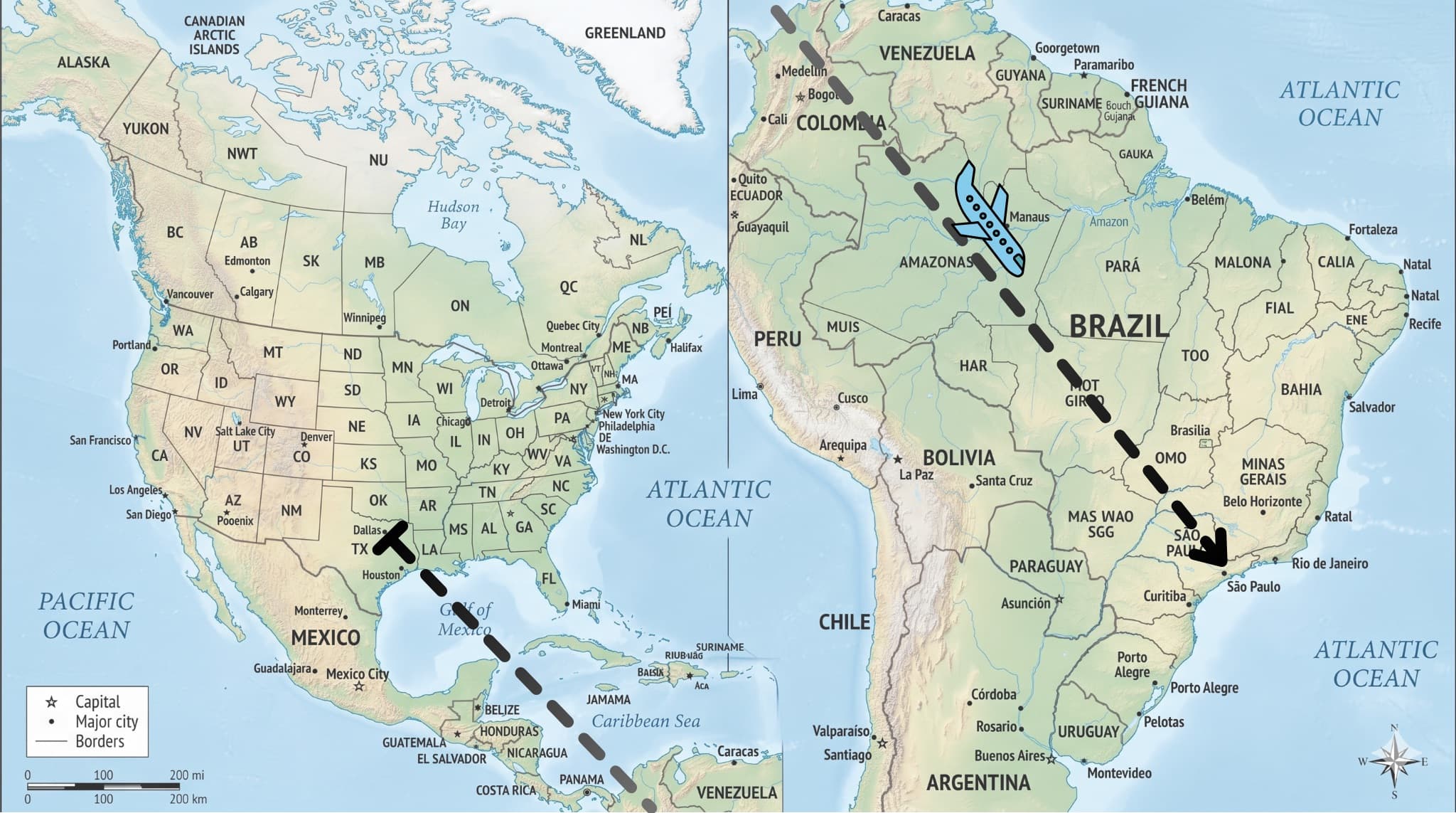
DFW International Airport offers daily nonstop flights to São Paulo–Guarulhos (GRU) on American Airlines (AA963), operated by a Boeing 787 Dreamliner, with a block time of roughly 10 hours and 10 minutes. Nonstop service to Rio de Janeiro–Galeão (GIG) is also available from DFW on American Airlines and LATAM, with a flight time of approximately 10 hours. Both airports are viable entry points, and most Dallas students depart out of Terminal D.
From GRU, Paraty is a 4-hour drive along the BR-101 coastal highway, the same road that traces the Costa Verde coast through the Atlantic rainforest. Nekawa arranges private ground transport from the airport; students arrive directly at our location without navigating Brazilian transit on their own.
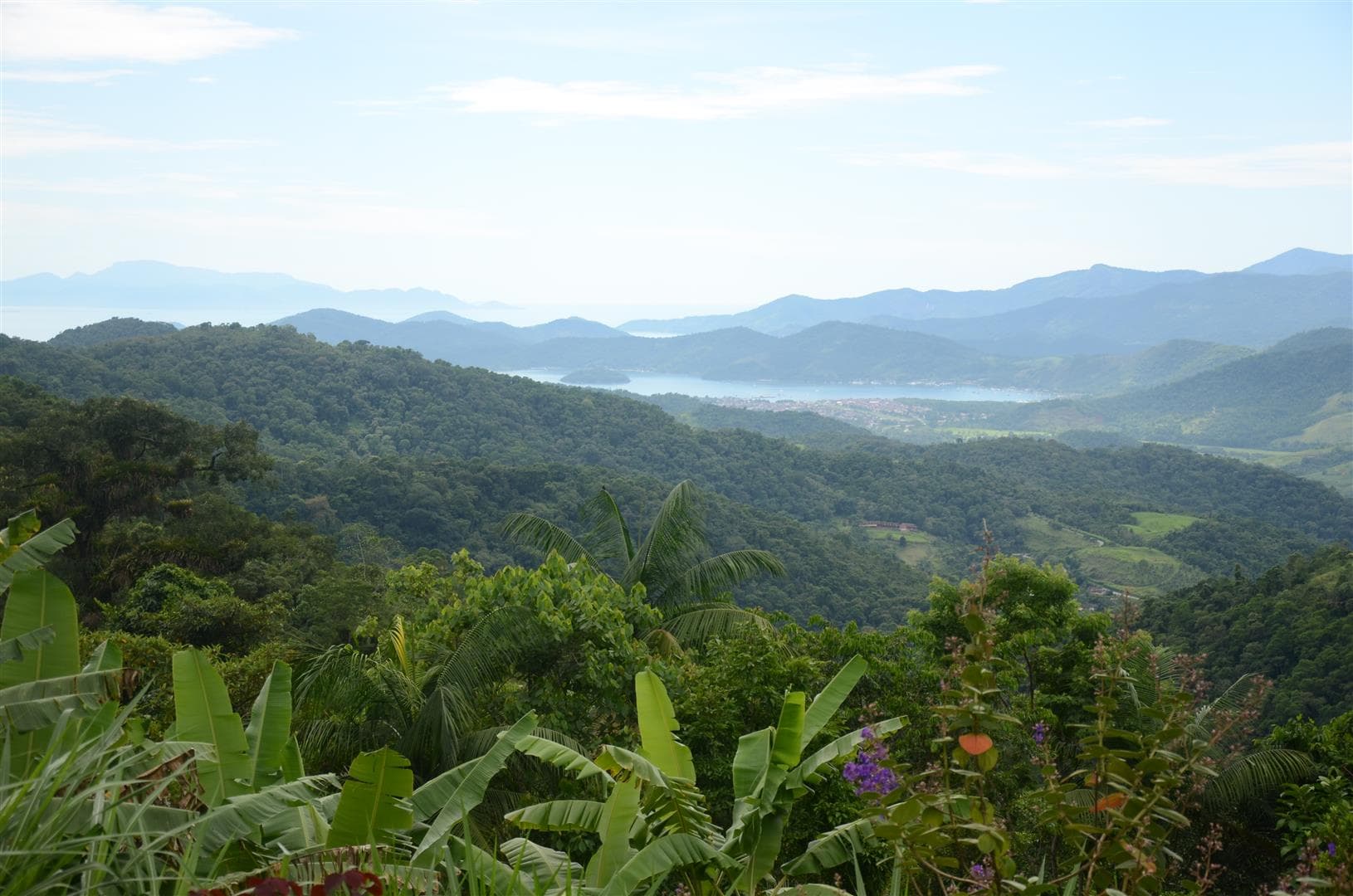
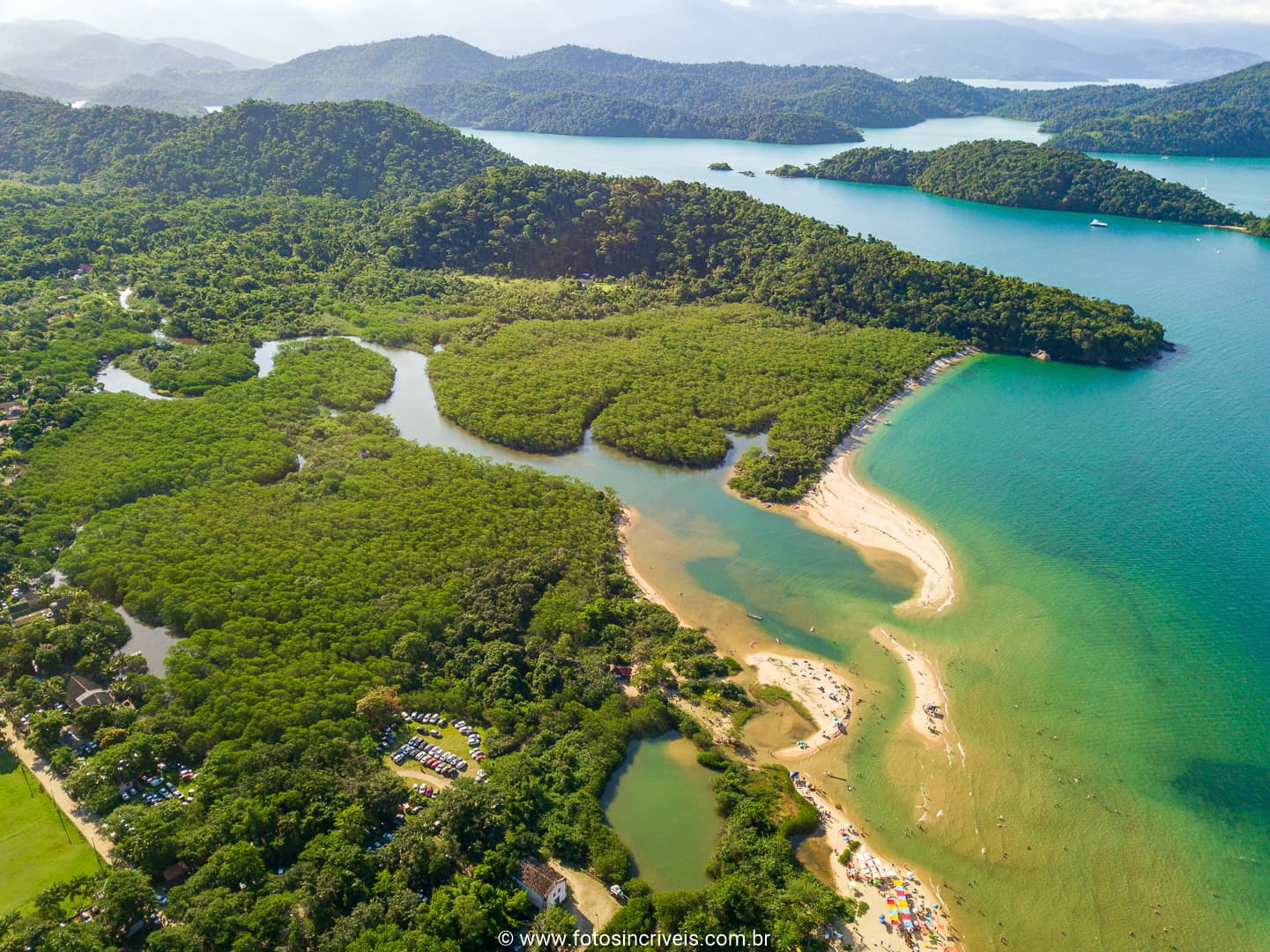
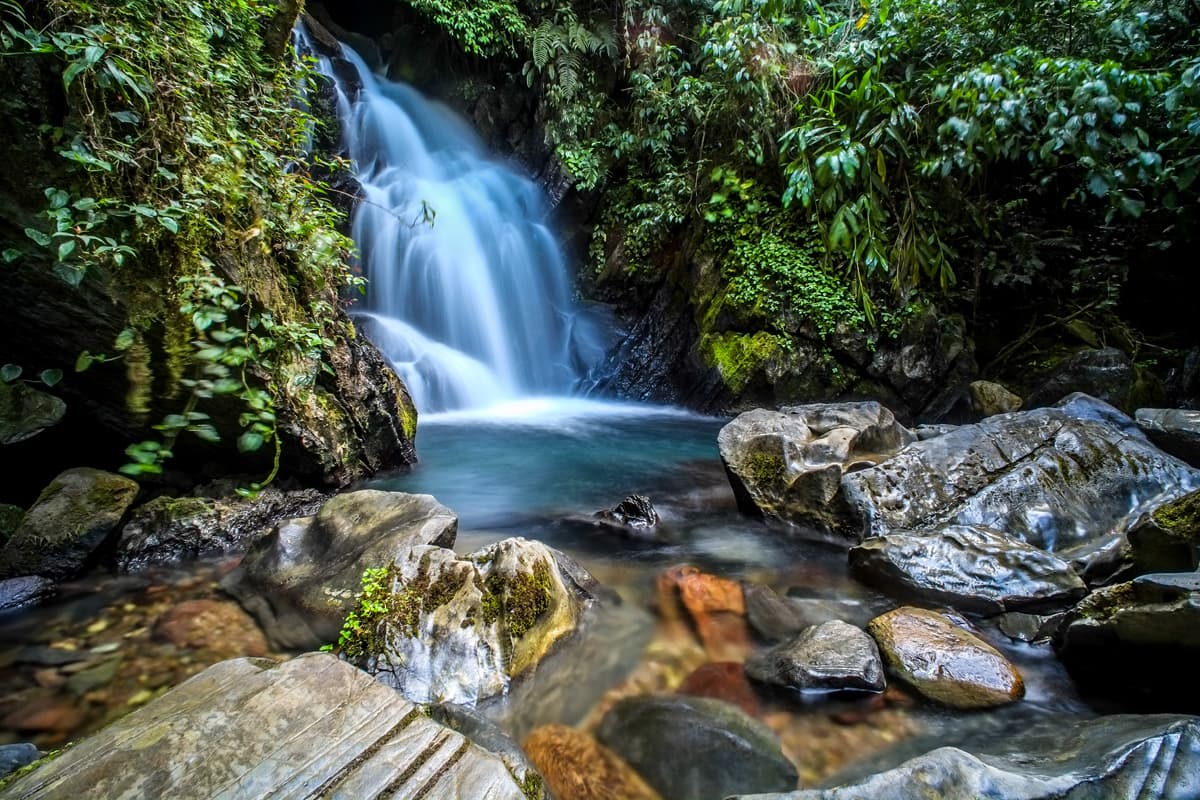
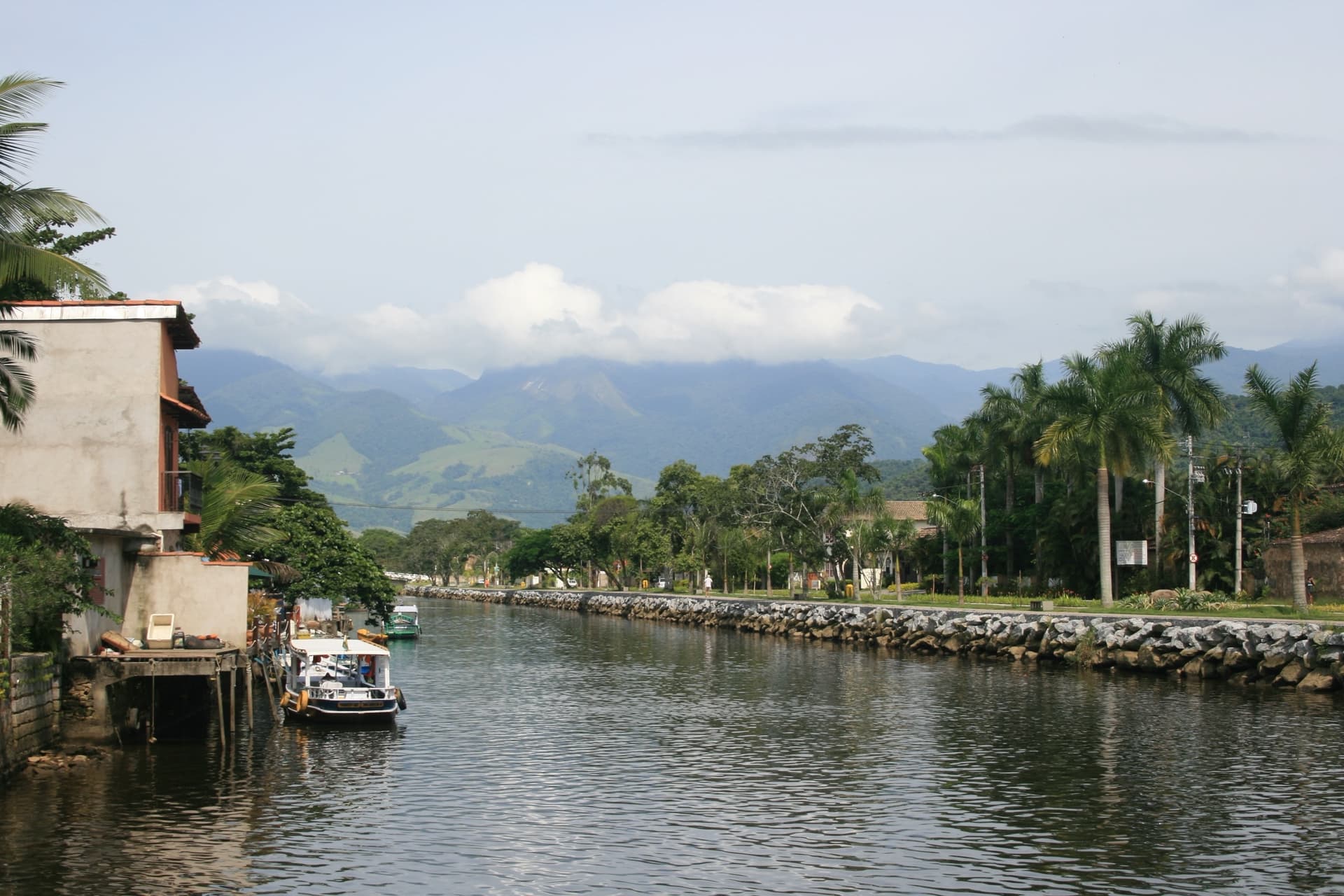
What they arrive to is worth describing plainly. The Mata Atlântica, Brazil's Atlantic rainforest, is one of the world's most biodiverse ecosystems, and Paraty sits at its edge. Old-growth jungle comes down to the water. Waterfalls sit within walking distance. A protected lagoon runs adjacent to the property. The bay beyond holds more than 300 forested islands. The colonial port town of Paraty, a UNESCO World Heritage Site, is minutes away. For someone who has spent months or years in active addiction in a city environment, the contrast is immediate and intentional.
As of January 1, 2026, US travelers need an approved Brazilian eVisa to enter Brazil. Apply online at brazil.vfsevisa.com.
- Cost: US$80.90
- Processing time: about 72 hours
- Validity: 10 years, multiple entries of up to 90 days per stay
- Passport: US passport with at least 6 months of remaining validity
Our intake team walks every student through this during onboarding.
Texas's position on ibogaine: what SB 2308 means for Dallas residents
In June 2025, Texas Governor Greg Abbott signed SB 2308, creating a $50 million public-private fund to support FDA clinical trials of ibogaine for opioid use disorder, traumatic brain injury, and PTSD. The Texas Ibogaine Initiative, led in part by former Governor Rick Perry, is the largest state investment in psychedelic medicine research in US history.
In April 2026, after failing to attract a private pharmaceutical partner, the Texas Health and Human Services Commission awarded the $50 million to UTHealth Houston in collaboration with UT Medical Branch at Galveston. The resulting IMPACT consortium, which stands for Ibogaine Medicine for PTSD, Addiction, and Cognitive Trauma, is a statewide, multi-university clinical trial program.
This is meaningful progress. It also does not help anyone in Dallas today. The fund supports research only. No Texas resident can legally receive ibogaine treatment inside the United States as of 2026. Clinical trials have enrollment criteria, timelines, and waitlists. For someone in active fentanyl dependence, waiting for a trial slot is not a viable plan.
The physician-prescribed pathway through Brazil exists now. The regulatory framework is in place. The hospital is operating. For Dallas residents who cannot wait for the research timeline to catch up, that is the current reality.
Integration back in Dallas: the 45 days that follow
The session is not the endpoint. For most students, the hardest work begins when they land back at DFW and return to the environment where the addiction took hold. Deep Ellum on a Friday night. The same apartment off Henderson. The same contacts in their phone. The Window of Wonder, the 2 to 12 weeks of elevated neuroplasticity after the session, is also the period of highest vulnerability if it is not structured.
The 45 days of at-home integration coursework are not a suggestion. They are a designed continuation of the on-site program, built specifically for the return home. The coursework gives students a daily framework for the neurological window they are in, and it keeps them connected to the support structure they built during the 15 days of on-site integration.
For Dallas students, that means re-entering a city with 56 SAMHSA-licensed substance use programs nearby, which can be an asset rather than a reminder of past failures. Some students connect with local therapists familiar with psychedelic-assisted treatment. Others lean on the peer community they built at Nekawa. The program structure for opioid dependence covers how the integration curriculum is sequenced, and our team remains available throughout the 45-day period.
How to start: the discovery call
The first conversation is a candidacy and program-fit assessment. It is not a sales call, and it is not clinical screening. Our team is trying to understand whether Nekawa's program is the right fit for where you or your loved one actually is, in terms of readiness, commitment, and what you are hoping to accomplish. Students who are not genuinely ready for the work are not served by pushing forward.
If the program seems like a fit, the next step is a referral to the prescribing physicians for independent clinical screening. That process (the EKG, the bloodwork, the cardiac workup) belongs entirely to the medical team. Nekawa does not conduct or interpret clinical screening.
You can start the process at Book a discovery call. If you have questions before you are ready to apply, the discovery call is the right first step. Families in Dallas who have already spent years inside the conventional treatment system tend to arrive at this conversation with a lot of specific questions. That is exactly what the call is for.
Where the jungle meets the sea
Nekawa sits in the Atlantic rainforest just outside the colonial port town of Paraty. Old-growth jungle, waterfalls, natural swimming pools, and a bay scattered with more than 300 forested islands. After Dallas, this is a different world.
Frequently asked questions
More questions? See our full FAQ.
Definitions
Plain-language definitions of the terms used on this page.
- Schedule I
- A US federal classification under the Controlled Substances Act for substances with no accepted medical use and high abuse potential. Ibogaine has been Schedule I since 1970, which means no clinic in the United States — public or private — can administer it.
- ANVISA
- Brazil's federal health agency, the Agência Nacional de Vigilância Sanitária — the functional equivalent of the US FDA. Regulates physician-prescribed, hospital-administered ibogaine treatment in Brazil under formal medical-use authorization.
- Window of Wonder
- The 2- to 12-week period of elevated neuroplasticity following an ibogaine session, during which the brain is more receptive to new patterns and integration work. Nekawa's 15-day on-site integration plus 45-day at-home coursework are structured around this window.
- eVisa (Brazilian)
- An electronic visa required for US travelers entering Brazil since January 1, 2026. Applied at brazil.vfsevisa.com, costs US$80.90, processes in roughly 72 hours, valid 10 years with multiple entries up to 90 days per stay.
- QT-interval
- A measurement on an electrocardiogram (EKG) of the time between ventricular depolarization and repolarization. Ibogaine prolongs the QT interval, which is why the prescribing physicians screen every patient with EKG and a comprehensive workup before clearing them for a session.
- Hospital-administered
- Refers to ibogaine treatment delivered in a hospital setting under continuous cardiac telemetry, ICU-trained nursing, and an on-site physician throughout — the regulated framework Brazil's prescribing physicians operate within. Distinct from retreat-style settings in countries without a federal regulatory pathway.
Dallas families who have reached this page have usually already done the hard work of trying everything closer to home. If you are ready to have a direct conversation about whether Nekawa's program is the right fit, the discovery call is where that starts. You can apply at Book a discovery call. The call covers candidacy, program structure, travel logistics, and what the 28 days on-site actually look like, so you can make a clear-eyed decision before committing to anything.
A medical program in a setting that matters
The hospital protocol is the foundation. The setting is the second medicine. See the property, the rooms, the team, and the route in.
Conectemos.
Sin presión — cuéntenos un poco sobre lo que está atravesando.