
Ibogaine is a single-session medical intervention for opioid dependence, substance abuse, prescription medications, behavioral addictions, and trauma, prescribed and administered by independent licensed Brazilian physicians in a hospital setting. For Los Angeles residents, the regulated pathway runs through Brazil. Nekawa is the wellness academy that supports US students through it.
Los Angeles County recorded 2,438 drug-related overdose deaths in 2024, a historic 22% decline from 2023, and a number that still works out to nearly seven people dying every day. Fentanyl was involved in 52% of those deaths, and it remains the dominant driver of accidental overdose across the county. The families who reach this page are usually not looking at a population-level statistic. They are looking at one person who has been through treatment and come back the same.
Los Angeles has 200+ SAMHSA-licensed substance use programs within 25 miles of central Los Angeles. That density of options is real, and the county's scaled-up investments in prevention and harm reduction drove the 2024 improvement. But conventional rehab (detox, residential, outpatient) operates on a cycle of management and relapse for a subset of people with chronic, treatment-resistant dependence. For those individuals, more of the same program is not a solution.
This page covers:
- What ibogaine is and how the medical session actually works
- Why the regulated medical pathway runs through Brazil rather than the United States
- How Nekawa's program is structured around the work the prescribing physicians do
- What the trip from Los Angeles to Paraty involves, from flight to integration
Nekawa is a wellness education academy. It is not a clinic, and it does not prescribe or administer ibogaine. The medical work happens in a hospital under independent licensed Brazilian physicians; Nekawa builds the preparation, environment, and integration around it.
Why Los Angeles residents are looking outside the US for ibogaine
The 2024 overdose numbers in Los Angeles County tell two stories at once. The county's historic 22% decline in drug-related overdose deaths, from 3,137 in 2023 to 2,438 in 2024, reflects real public-health progress. Fentanyl-involved deaths fell 37% to 1,263, the first reduction since the county began tracking fentanyl specifically. That decline followed scaled-up investments in prevention, treatment, and harm reduction.
The second story is the one that brings people to this page. Population-level progress does not reach everyone equally. The LA County SAPC fentanyl report documents that fentanyl-contaminated counterfeit pills and polysubstance combinations (fentanyl with methamphetamine, fentanyl with cocaine) continue to drive deaths among people who have already cycled through conventional treatment. For that group, the problem is not access to programs. It is that the programs available have not worked.
Ibogaine is not a substitute for those programs. It is a different category of intervention, a single-session approach that operates at the level of brain chemistry rather than behavioral reinforcement. People who reach Nekawa's intake process have typically already done the work that conventional treatment asks of them, sometimes through a Westside outpatient program, sometimes through a 30-day stay further out. They are looking for something that addresses what conventional treatment cannot.
I went through this myself, in this city. In the 2010s I was working through opiate dependence while living between Culver City and Westwood, finishing coursework at West Los Angeles College before transferring to UCLA. Los Angeles had — and still has — hundreds of treatment options. I tried twelve-step programs and was recommended Suboxone by the medical professionals I saw. Neither worked, and I knew those were not solutions to the real problem. I eventually left the country to find ibogaine, and that experience is what led to Nekawa. If you are reading this for yourself or someone you love, I have been on the other side of the search bar.
What ibogaine actually does
Ibogaine comes from the root bark of the Tabernanthe iboga plant, and it acts on multiple receptor systems at once: opioid, NMDA, serotonin, dopamine, and sigma-1. That combination is what sets it apart from any other substance used in addiction medicine. For someone dependent on opioids, ibogaine interrupts physical withdrawal at the neurochemical level. Most patients report that acute withdrawal symptoms are dramatically reduced or absent during the session.
The more significant effect, for many people, is what happens in the weeks that follow. After the session, the brain enters a period of elevated neuroplasticity (what Nekawa calls the Window of Wonder) lasting roughly 2 to 12 weeks. During this window, the patterns of thought and behavior that sustained the addiction are more accessible to change than they would be under ordinary conditions. This is why integration is not optional. The session creates the opening; structured integration is how students use it.
For families in LA watching someone they love cycle through detox and relapse (sometimes the third or fourth round at the same facility off the 405), the mechanism matters less than the outcome data. See our research timeline for the peer-reviewed studies and clinical-trial literature behind ibogaine's evidence base. If you want to understand the science of ibogaine more completely, visit our ibogaine science page.
The medical protocol: what hospital administration actually means
Ibogaine carries real cardiac risk. It prolongs the QT interval (a measure of the heart's electrical cycle), and that prolongation can become dangerous in patients with pre-existing cardiac conditions or certain drug interactions. This is why ibogaine cannot be administered safely in a retreat setting, and why the hospital partnership Nekawa works within is not a formality.
Before the prescribing physicians clear a patient for ibogaine, the workup includes:
- EKG
- QT-interval check
- Comprehensive blood panel
- Liver function test
- Magnesium loading
The session itself is administered by the medical team in a hospital setting. The hospital's ICU-trained nursing team monitors continuous cardiac telemetry for a minimum of 24 hours post-dose, and an on-site physician is present throughout. The session unfolds in phases: the intense visionary phase lasts 6 to 12 hours, followed by roughly 12 hours of quieter mental processing, then 24 to 48 hours of physical recuperation.
The full program structure Nekawa builds around that session is:
- 10 days of preparation and on-site medical onboarding before the session
- The ibogaine session, administered by the medical team in a hospital setting with continuous cardiac telemetry
- 15 days of structured integration on the property
- 45 days of at-home integration coursework after returning home
Nekawa's role in all of this is the preparation curriculum, the wellness environment, the integration coursework, and the program structure. The cardiac protocol, the telemetry, and the screening belong to the prescribing physicians and the hospital. See our cardiac safety overview for the full QT-interval, EKG, and screening protocol the prescribing physicians follow.
Why Brazil and not somewhere else
Ibogaine is a Schedule I controlled substance in the United States. No clinic in the US can administer it, not in California, not anywhere. That is the legal reality, and it is not changing in the near term. AB 1103, signed by Governor Newsom in October 2025, streamlines the state's review process for federally authorized clinical research involving ibogaine, but it enables research, not treatment. No California resident can receive ibogaine treatment inside the United States as of 2026.
Mexico and Costa Rica are the destinations most often mentioned when people search for ibogaine outside the US. Some of those operations are run by experienced practitioners. Others are not. The structural difference in Brazil is regulatory: ibogaine treatment there is medically regulated under ANVISA, Brazil's federal health agency and the country's equivalent of the FDA. That means physician-prescribed protocols, hospital infrastructure, and mandatory cardiac monitoring, rather than a retreat model where the level of medical oversight varies by operator.
Nekawa is a wellness education academy structured around the hospital infrastructure that physician-administered ibogaine treatment requires. The preparation and integration work Nekawa provides is designed specifically to support what the prescribing physicians do, not to replace it or approximate it. For the US legal and global regulatory context, see our ibogaine legal status page.
| Brazil (Nekawa pathway) | US rehab | Mexico clinics | |
|---|---|---|---|
| Is ibogaine available? | Yes — physician-prescribed | No (Schedule I) | Yes — but unregulated |
| Regulatory framework | ANVISA-regulated | FDA + DEA (no ibogaine pathway) | No formal framework |
| Cardiac monitoring | 24-hour ICU telemetry, EKG, QT screening | N/A (no ibogaine) | Varies |
| Program length | 28+ days | 30 days typical | 5–10 days typical |
| Setting | Hospital partner + wellness program | Treatment facility | Retreat / private clinic |
| Aftercare structure | 45-day online/home coursework with mentors | Outpatient varies | Rare |
| Cost / insurance | $750/day; insurance N/A | $300–$2,000/day; insurance available | $1,000–$1,800/day; insurance N/A |
Travel from Los Angeles to Paraty
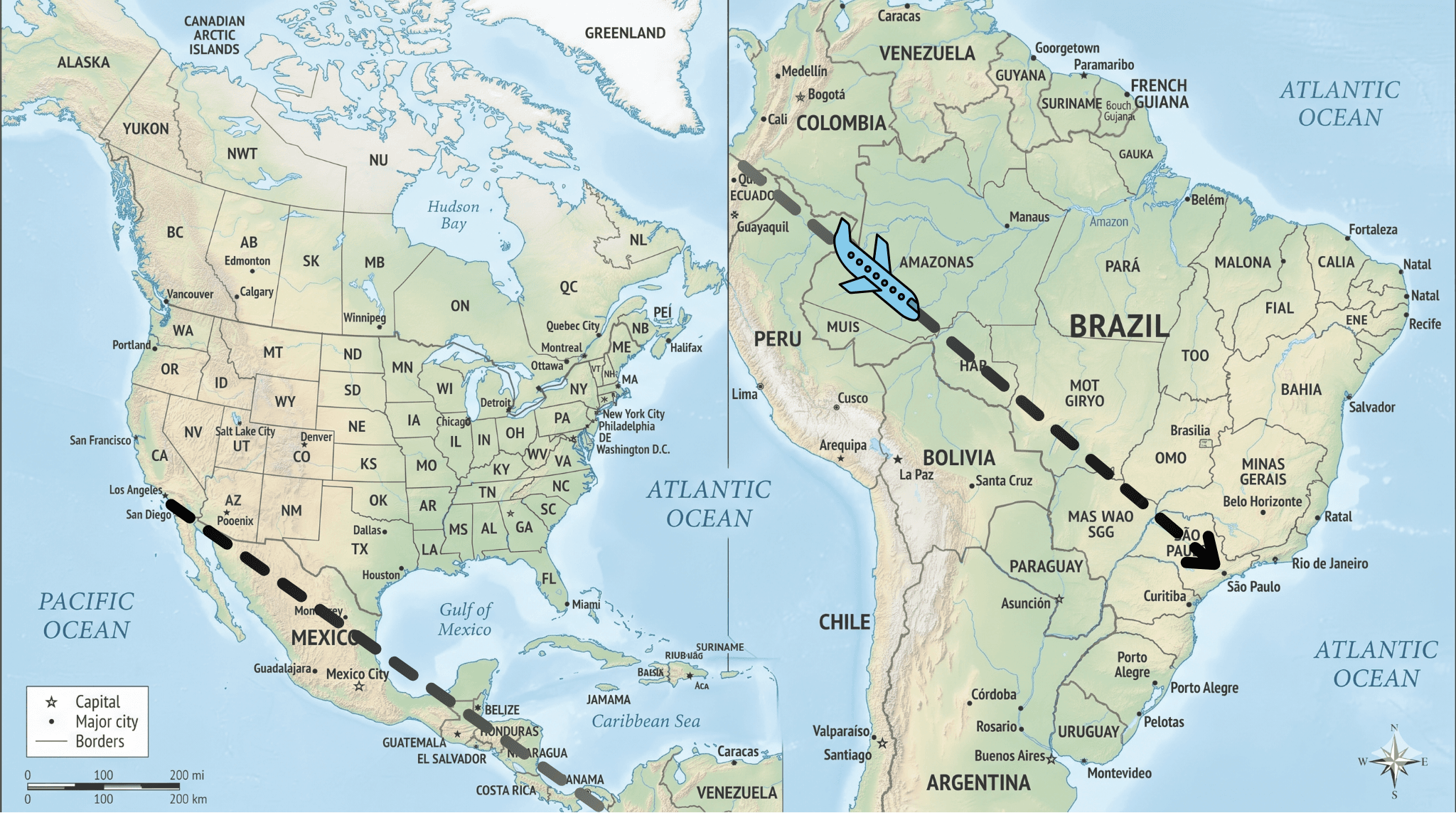
Los Angeles is one of the better-connected US cities for Brazil travel. LATAM operates nonstop service from LAX to São Paulo–Guarulhos (GRU) with a block time of roughly 12 hours. American Airlines also operates nonstop LAX–GRU service. One-stop itineraries via Dallas–Fort Worth, Miami, or Atlanta on American, Delta, or LATAM are widely available with similar total travel time. From GRU (or from Rio de Janeiro–Galeão (GIG), which is also an option) it is a 4-hour drive along the BR-101 coastal highway to Paraty on Brazil's Costa Verde. Nekawa arranges private ground transport from either airport; students arrive directly without navigating Brazilian transit.
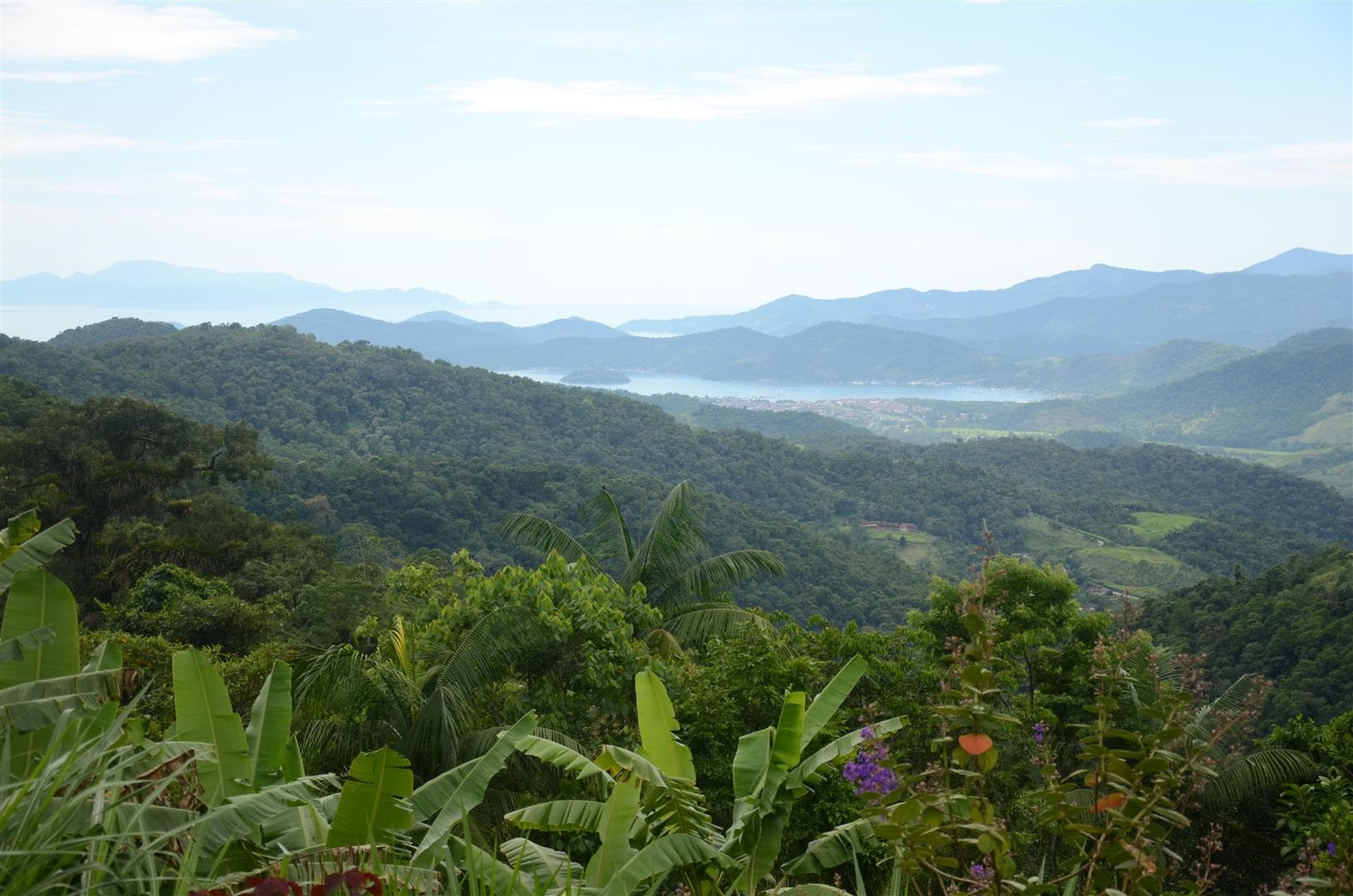
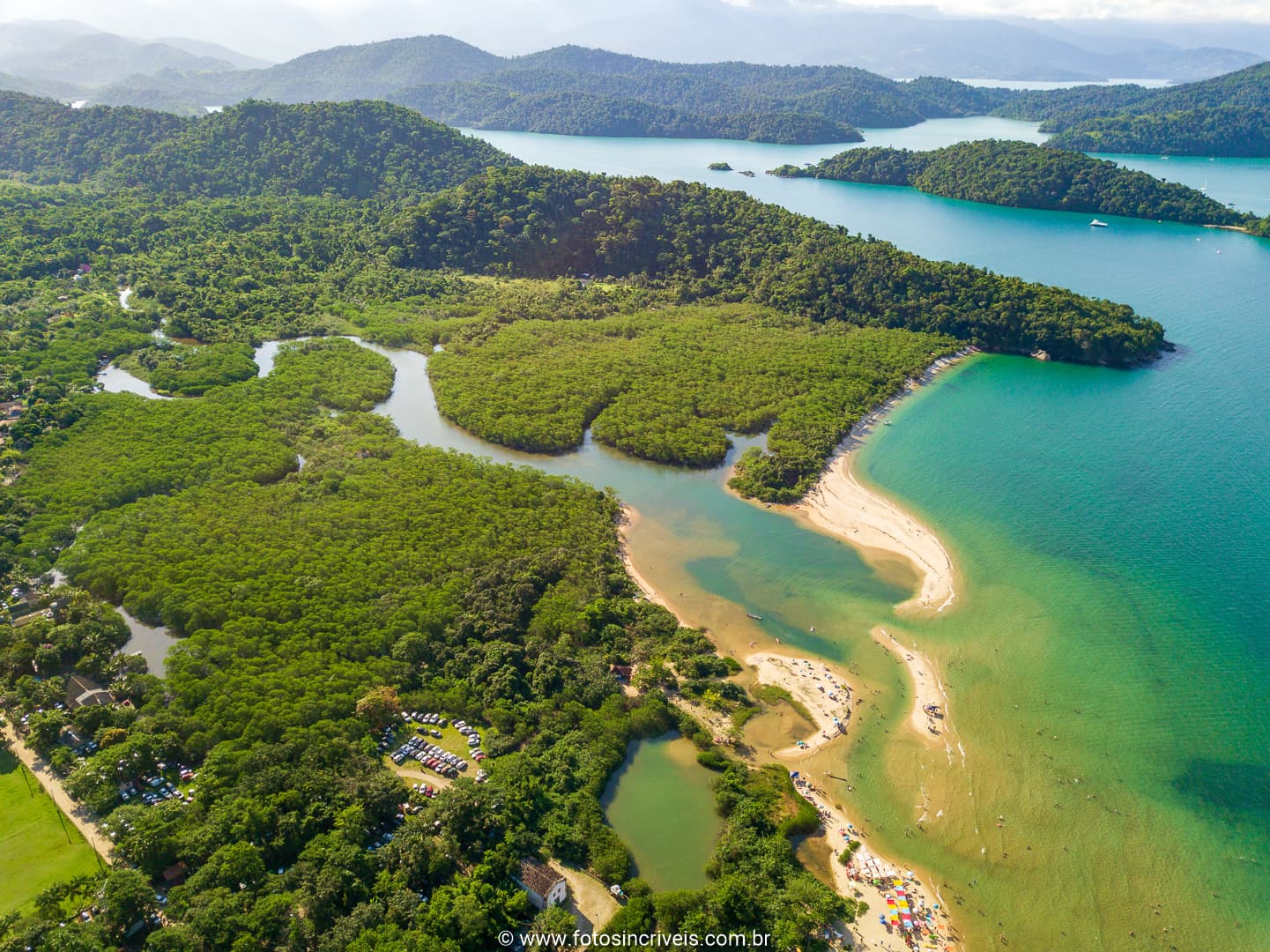
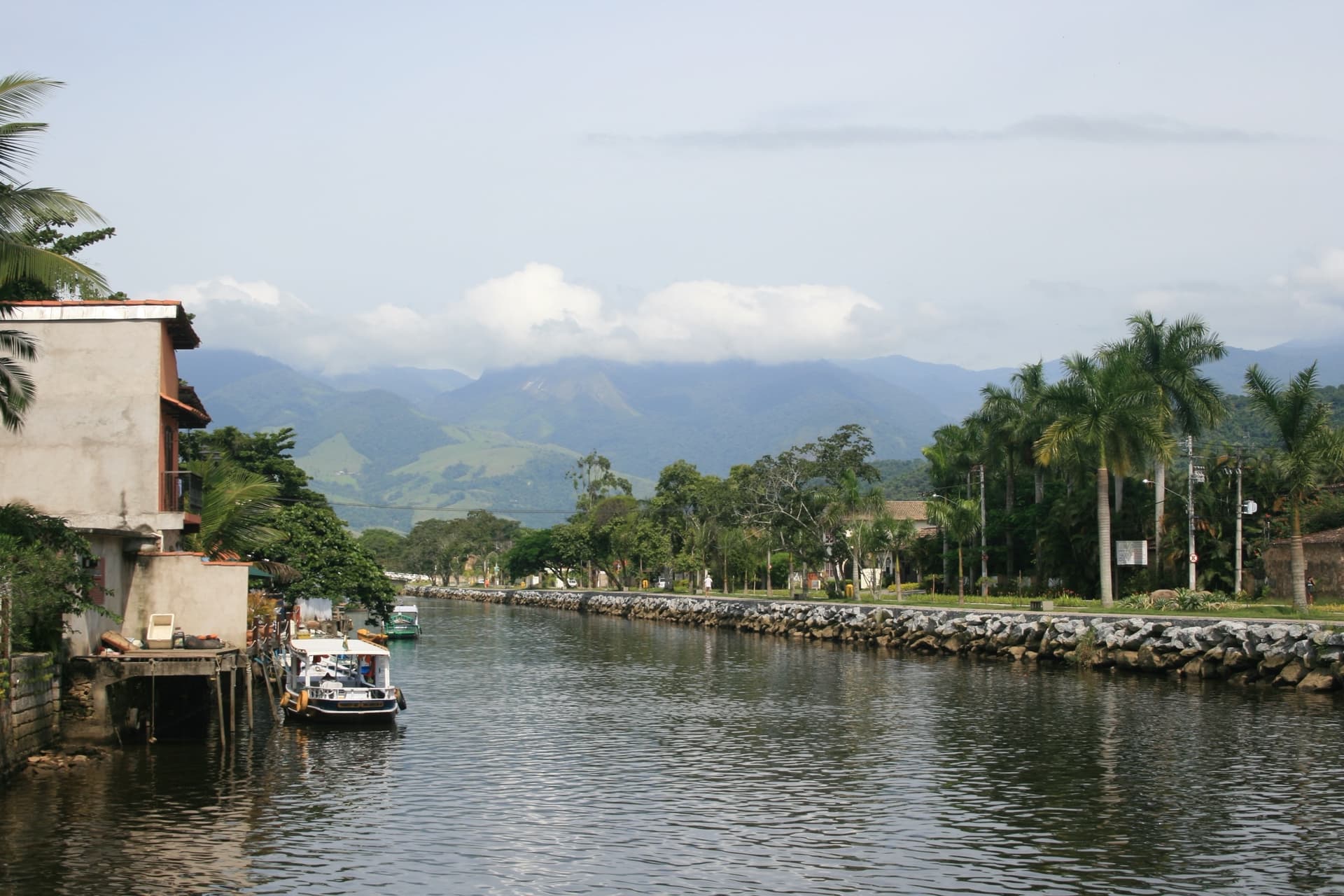
Paraty sits at the edge of the Atlantic rainforest (Mata Atlântica), and what you arrive to is not a clinical environment. Our location is old-growth jungle, waterfalls, a protected lagoon, and a bay scattered with more than 300 forested islands. The colonial port town of Paraty is a short distance away. The environment is part of the program design, not incidental to it. After a Tom Bradley terminal departure and a redeye south, the contrast lands hard. See more about the property and the route on our location page.
As of January 1, 2026, US travelers need an approved Brazilian eVisa to enter Brazil. Apply online at brazil.vfsevisa.com.
- Cost: US$80.90
- Processing time: about 72 hours
- Validity: 10 years, multiple entries of up to 90 days per stay
- Passport: US passport with at least 6 months of remaining validity
Our intake team walks every student through this during onboarding.
California's legal and policy context for ibogaine
California is one of 18 US states tracked by Americans for Ibogaine as actively pursuing ibogaine-relevant policy. In October 2025, Governor Newsom signed AB 1103 (Chapter 571), which streamlines the state Research Advisory Panel's review of federally authorized clinical studies involving Schedule I and II substances, including ibogaine, psilocybin, and MDMA. The bill took effect January 1, 2026, and applies through December 31, 2027.
AB 1103 is a research-enabling bill, not a treatment bill. It makes it easier for FDA-authorized clinical trials to be conducted in California. It does not create a regulated treatment pathway, and it does not change the legal status of ibogaine for anyone seeking treatment today. California's posture is research-enabling rather than research-funding, a contrast with Texas, which established a $50 million dedicated ibogaine research fund under SB 2308 in 2025.
In April 2026, a federal Executive Order directed a major federal effort on ibogaine research, with a focus on veterans, an initiative Americans for Ibogaine covered in detail. That order accelerates federal research timelines but does not affect access to treatment in the US. For Los Angeles residents who cannot wait for clinical trials or policy shifts, the physician-prescribed pathway runs through Brazil. See our ibogaine legal status page for the full US and global regulatory picture.
What aftercare looks like back in Los Angeles
The 15 days of on-site integration at Nekawa are not the end of the program. They are the first half of the integration phase. The Window of Wonder, the 2 to 12 weeks of elevated neuroplasticity following the ibogaine session, extends well past the time students spend in Paraty. The 45 days of at-home integration coursework are built specifically around that window, designed to be worked through after students return to LA.
For someone coming back to Hollywood, Silver Lake, Pasadena, or any other part of the metro, the coursework provides structure during the period when the brain is most receptive to change and when the absence of structure is most likely to result in relapse. This is not a check-in call or a resource list. It is a curriculum with a sequence and a purpose.
LA is a city where high-functioning dependence is common across the entertainment industry, the aerospace corridor down in El Segundo, and the hospital systems from Cedars to UCLA, and the professional and social pressures that sustain it do not pause during recovery. The at-home coursework is designed to be worked through inside a real life, not a residential bubble. For students whose primary struggle is opioid dependence, our opioid recovery program covers the specific integration support structure that applies.
How to start: the discovery call
The first step is a discovery call. It is not a sales conversation, and it is not a clinical screening. It is a conversation about whether Nekawa's program is genuinely the right fit for your situation, and whether you or your loved one is ready to commit to what the program actually requires.
On the call, our intake team covers the program structure, the preparation curriculum, what the prescribing physicians require before they will clear a student for the session, and what the 28-day on-site experience involves. If the program is not the right fit, we will say so. Clinical screening (the cardiology workup, the blood panel, the QT-interval assessment) is conducted separately by the prescribing physicians after program fit has been established.
If you are in LA and you have reached this page, you have probably already done a significant amount of research, the kind that starts at 2 a.m. and runs through tab after tab. The discovery call is where that research meets a real conversation. Book a discovery call to begin.
Where the jungle meets the sea
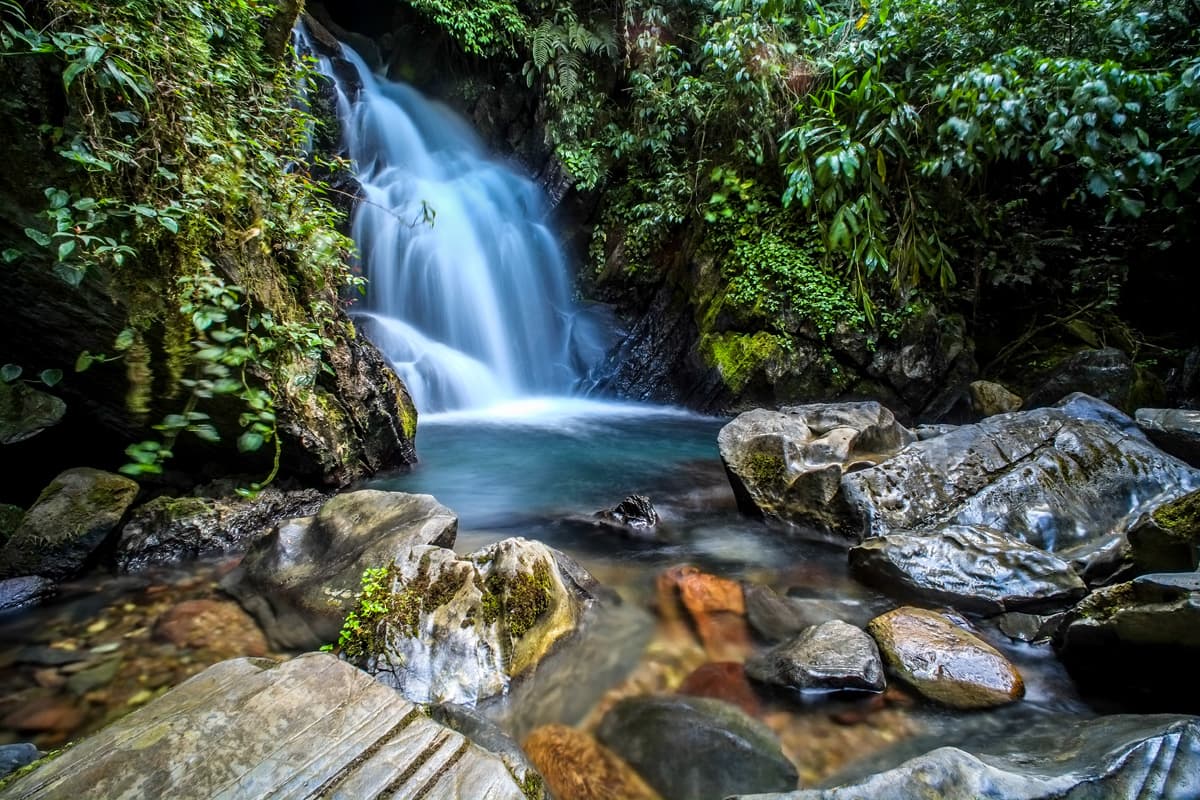
Nekawa sits in the Atlantic rainforest just outside the colonial port town of Paraty. Old-growth jungle, waterfalls, natural swimming pools, and a bay scattered with more than 300 forested islands. After Los Angeles, this is a different world.
Frequently asked questions
More questions? See our full FAQ.
Los Angeles has more substance use programs per square mile than almost any metro in the country, and for a specific group of people (those with chronic, treatment-resistant dependence who have already tried what those programs offer) that density has not been enough. Ibogaine, prescribed and administered by independent licensed Brazilian physicians in a hospital setting, is a different category of intervention. Nekawa is the wellness academy that structures the preparation, the environment, and the integration around it. If you are ready to have a real conversation about whether this program is the right fit, book a discovery call.
A medical program in a setting that matters
The hospital protocol is the foundation. The setting is the second medicine. See the property, the rooms, the team, and the route in.
Conectemos.
Sin presión — cuéntenos un poco sobre lo que está atravesando.