
Psychiatric Medications
Ibogaine and sleep medications
Ambien, Lunesta, and the Seroquel that was never meant to be a sleeping pill. Sleep medication dependence is not an indication for ibogaine, and no trial exists. This page is for people who have not fallen asleep on their own in years and want the night back.
How ibogaine can help, honestly told
Straight answer first: nobody has studied ibogaine as a way off sleep medications. There is no trial to cite and no success rate to quote, and we will not manufacture one.
What people actually arrive with is a bedside drawer: a z-drug that stopped working at one pill, sometimes an antipsychotic prescribed off-label for sleep, and a fear that has quietly become the real condition, which is the fear of the bed itself.
The spiritual work: learning to dream again
We hold a view you will not find on a package insert: sleep is not a switch to be thrown but a place to be entered, and dreaming is the oldest medicine the mind has. The ibogaine experience is itself described in the research as a waking dream state: in one survey 97% of people treated reported visions, and every one of them insights about their own life.¹¹³ People who have spent years sedating the night meet it again as something alive. That reunion, not sedation, is what we are after.
Ibogaine is the first step, never the whole answer
A treatment night does not rebuild a circadian rhythm, and people without structure afterwards often struggle to hold what they found.¹²⁴ Re-learning sleep is slow, physical work: light at the right hours, tired legs, real food, a dark room and a quiet mind. That is why this is a month in a strong, healthy environment with a spiritual, indigenous and philosophical approach, not a prescription handed across a counter. And we will be honest to the point of comedy: the treatment night itself is long and not restful.¹¹⁵ The sleep comes after.
Then, the pharmacology, with a warning that matters
Sedation is not sleep; it borrows the night rather than restoring it, and guidance in the UK limits these drugs to two to four weeks precisely because tolerance and dependence arrive so fast.¹³⁵ One warning we state loudly: many "sleep meds" are actually off-label antipsychotics, most often quetiapine,¹⁴⁵ and those matter enormously for ibogaine screening because of cardiac interaction risk.¹²³ Tell us everything you take. Everything.
Why ten days
Z-drugs and most sleep aids clear the body quickly, so ten days gives a clean pharmacological baseline before treatment. The schedule is set with your prescriber in screening, and if your sleep aid is actually an off-label antipsychotic like quetiapine, the plan is stricter, because QT-prolonging drugs cannot be in your system when ibogaine is.¹²³ ¹⁴⁵
Expect those ten days to be uncomfortable, and expect rebound: the insomnia usually gets louder before it quiets, which is precisely why we do not ask you to do this part at home alone. Rough nights in the plan are very different from rough nights in your bedroom with a bottle in the drawer.
Taper plans come from your prescriber and the physician who works with our program, never from a website. If your medication is a benzodiazepine sleeping pill, read our benzodiazepines page: abrupt stops are dangerous and the rules are different.
Re-learning the night from scratch
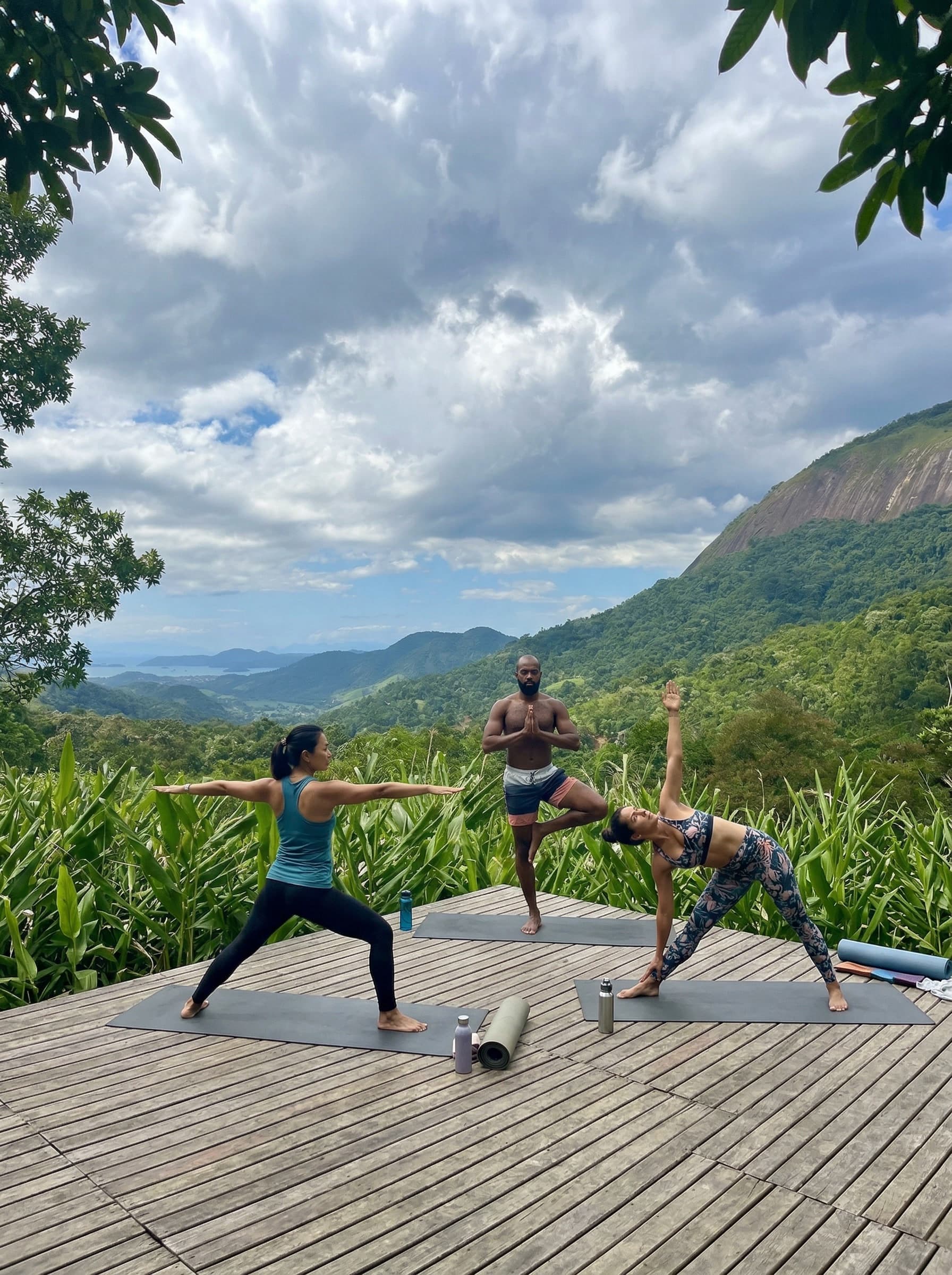
Insomnia is rarely a night problem. It is a day problem that collects its bill at 2 a.m. So the program rebuilds the whole 24 hours, and lets the night follow.
Exercise
Genuine physical tiredness, earned daily. The single most underrated sleep aid in existence, and the first thing modern life removed.
Meditation
The racing 2 a.m. mind is a skill problem, and the skill is trainable. We practice it in daylight so it is there when the lights go out.
The jungle
True darkness, real dawn, and a rainforest that runs on the same clock you are trying to remember. The campus has no screens glowing at midnight and nothing that beeps.
Daily walking and hiking
Morning light on a moving body is the most powerful circadian signal known. You get a dose of it on the trail, every day.
Excellent food
Meals at consistent hours, nothing heavy late, no caffeine ambush. The kitchen is quietly half the sleep program.
Media detox
The feed is engineered to keep you awake, and it is very good at its job. It stays off for the month, and the nights notice first.
And where the nights need support, plants before prescriptions
For the rough stretch while natural sleep returns, we reach for the plant traditions rather than another sedative: mulungu, the classic South American calming bark, saffron alongside it, and ashwagandha and brahmi from Ayurveda, chosen case by case with the physician. Supportive and traditional, not a new pill to depend on.

Come see where people learn to sleep again
Dark nights, loud dawn chorus, rooms built for deep rest and days built to earn it. Look around before you decide anything.


A world that forgot how to sleep
Sleeplessness is one of the quietest epidemics we have: roughly one adult in eight worldwide meets full criteria for insomnia disorder,¹⁴¹ and in the US nearly a fifth of adults reach for something to sleep in any given month.¹⁴⁰
It is not hard to see why. We flooded the evening with light, moved the workday into the bedroom, put a slot machine on the nightstand, and then treated the resulting sleeplessness as a private chemical malfunction, one prescription at a time.
The prescriptions were designed as a bridge over a bad fortnight, and the guidance still says so.¹³⁵ Somewhere between that design and the present, the bridge became a residence. We built our program for the people ready to move out.
Sleeping is the first psychedelic. It is where you dream.
We are here to show you how to dream again, and with that, you will begin to sleep.
Tatiana Aya Tupinambá, Co-Founder, Nekawa
Giving the night back
Every tradition we draw from, Amazonian, Ayurvedic, contemplative, treated sleep and dream as sacred territory: the place the mind repairs itself and speaks to itself. Modern medicine, for all its gifts, treated it as downtime to be induced. We think the older view was closer to the truth, and we built a campus that lives by it.
Ibogaine, for those the physicians clear, is the first step: a waking dream that reintroduces you to the dreaming mind you have been sedating. The 28-Day UNprogram is everything after: the light, the trails, the food, the practice, the philosophy, until the night is yours again without assistance.
No trial backs any of this for sleep medications, and we say so plainly. What we have is a place, a method, and people who sleep now. Come see the place.

Citations (9)
[113] Heink A, Katsikas S, Lange-Altman T (2017). Examination of the phenomenology of the ibogaine treatment experience: role of altered states of consciousness and psychedelic experiences. Journal of Psychoactive Drugs, 49(3), 201–208. Read the source →
Survey of 27 people who underwent ibogaine treatment: all reported insights about their personal past, 97% experienced visions, 77% saw content drawn from their own childhood, and 85% reported subjective relief from guilt. Large majorities reported insights about the meaning of life, death, and creation. A small, self-selected online survey, reported as phenomenology rather than outcome evidence.
[115] Camlin TJ, Eulert D, Horvath AT, Bucky SF, Barsuglia J, Polanco M (2018). A phenomenological investigation into the lived experience of ibogaine and its potential to treat opioid use disorders. Journal of Psychedelic Studies, 2(1), 24–35. Read the source →
Qualitative study of 10 people treated with ibogaine in Mexico: 80% described the experience as physically draining, one comparing it to having survived cancer. The source for stating honestly that the treatment night is often demanding or harrowing rather than pleasant, which also helps explain ibogaine's low abuse potential.
[123] Knuijver T, Ter Heine R, Schellekens AFA, Heydari P, Lucas L, Westra S, Belgers M, Van Oosteren T, Verkes RJ, Kramers C (2024). The pharmacokinetics and pharmacodynamics of ibogaine in opioid use disorder patients. Journal of Psychopharmacology, 38(5), 481–488. Read the source →
PK/PD study in opioid use disorder patients: ibogaine clearance varies more than ten-fold with CYP2D6 enzyme activity, and QTc prolongation tracks drug exposure. The quantitative basis for strict cardiac screening and for clearing CYP2D6-inhibiting medications before treatment.
[124] Davis AK, Renn E, Windham-Herman AM, Polanco M, Barsuglia JP (2018). A mixed-method analysis of persisting effects associated with positive outcomes following ibogaine detoxification. Journal of Psychoactive Drugs, 50(4), 287–297. Read the source →
In a retrospective study of 73 people treated with ibogaine for opioid use disorder, roughly 23% reported difficulty integrating the experience into daily life afterwards. The evidence that ibogaine is a beginning that needs a structured program around it, not a standalone treatment.
[135] National Institute for Health and Care Excellence (2004). Guidance on the use of zaleplon, zolpidem and zopiclone for the short-term management of insomnia (TA77). NICE Technology Appraisal Guidance 77. Read the source →
UK national guidance restricts hypnotic sleep medications, both z-drugs and benzodiazepine hypnotics, to short-term use only, generally no more than two to four weeks at the lowest effective dose, because tolerance and dependence can develop within weeks. Still-current guidance; millions take these drugs far longer.
[140] Reuben C, Elgaddal N, Black LI (2023). Sleep medication use in adults aged 18 and over: United States, 2020. NCHS Data Brief No. 462, CDC National Center for Health Statistics. Read the source →
In 2020, 8.4% of US adults took medication for sleep every day or most days in the past month, and about 18% used it at least some days. The figure spans prescription drugs and over-the-counter sleep aids; women and older adults used them most. Self-report survey data.
[141] van Straten A, et al. (2025). The prevalence of insomnia disorder in the general population: a meta-analysis. Journal of Sleep Research, e70089. Read the source →
Pooled across general-population studies, roughly one in eight adults meets full clinical criteria for insomnia disorder (12.4% by clinician interview, 16.3% by self-reported criteria), and about three in ten report insomnia symptoms. Prevalence estimates vary with the measurement instrument used.
[142] Substance Abuse and Mental Health Services Administration (2013). Emergency department visits for adverse reactions involving the insomnia medication zolpidem. Drug Abuse Warning Network (DAWN) Report, May 2013. Read the source →
US emergency department visits for adverse reactions involving zolpidem more than tripled in five years, from 6,111 in 2005 to 19,487 in 2010; two thirds of the 2010 visits were women and half involved zolpidem combined with other drugs. Older federal surveillance data, but the canonical figure.
[145] Carton L, Cottencin O, Lapeyre-Mestre M, Geoffroy PA, Favre J, Simon N, Bordet R, Rolland B (2015). Off-label prescribing of antipsychotics in adults, children and elderly individuals: a systematic review of recent prescription trends. Current Pharmaceutical Design, 21(23), 3280–3297. Read the source →
Systematic review finding that 40–75% of adult antipsychotic prescriptions are off-label, with quetiapine the most frequently prescribed off-label antipsychotic, most often for insomnia and anxiety rather than psychosis or bipolar disorder.