Behavioral Disorders
Ibogaine for sex & porn addiction
Sexual energy is a creative force, maybe the oldest one we have. An industry figured out how to sell it back to you on an infinite scroll.
the WHO code for compulsive sexual behaviour disorder, added to the ICD-11 in 2019.⁶⁴
US adults report real distress from difficulty controlling their sexual urges and behavior.⁶⁵
of 82,000 people surveyed across 42 countries screened at high risk for compulsive sexual behavior.⁶⁶
of that high-risk group had ever sought treatment. The rest carry it alone.⁶⁶
Precision matters here. ICD-11 files compulsive sexual behaviour disorder under impulse control, not addiction, and DSM-5 does not include it at all.⁶⁴ Screening high on a scale is not a diagnosis. The distress, though, is real and measured.
A creative force, resold as consumption
Porn did not invent desire. It industrialized it. Endless novelty on tap collides with a reward system built for scarcity, and the average first exposure now comes at age twelve, before most people have had a first kiss.⁶⁷
Be precise about the target. Desire is not the illness. Sex is not the illness. The real target is the loop: hours disappearing into a screen, escalation to hold the same effect, real intimacy flattening while the compulsion sharpens. When students describe it, the word they reach for is not pleasure. It is autopilot.
The industry's design goal is the casino's design goal: turn a drive into a subscription. You were not weak. You were monetized.

What we do about it
Not punishment, and not a purity program. The work is to take a force back from a machine that was farming it, and every step here is built for that.
Remove the digital influence
The loop cannot be examined while it is still running. On campus the digital influence is simply gone: no feed, no tabs, no algorithm learning what makes you click. What is left is you, which is the whole point.
Learn what this force actually is
Students study sexuality itself: the innate power it carries, and the spiritual disciplines that have spent thousands of years working to understand and channel this force. Not for the exotic factor. Because those traditions are the accumulated research on the question.
Say it out loud
Compulsion grows in secrecy, and only 14% of the people at highest risk have ever told anyone.⁶⁶ Here the conversations are open, direct and without shame, with teachers who have heard all of it before and are not shocked by any of it.
Harness it toward what you want
The energy does not get switched off. It gets redirected: into creation, into a body that moves, into building the fulfilling relationship most students actually came looking for. That is the measure of success here. Not abstinence. A life you prefer.
This was never about shame
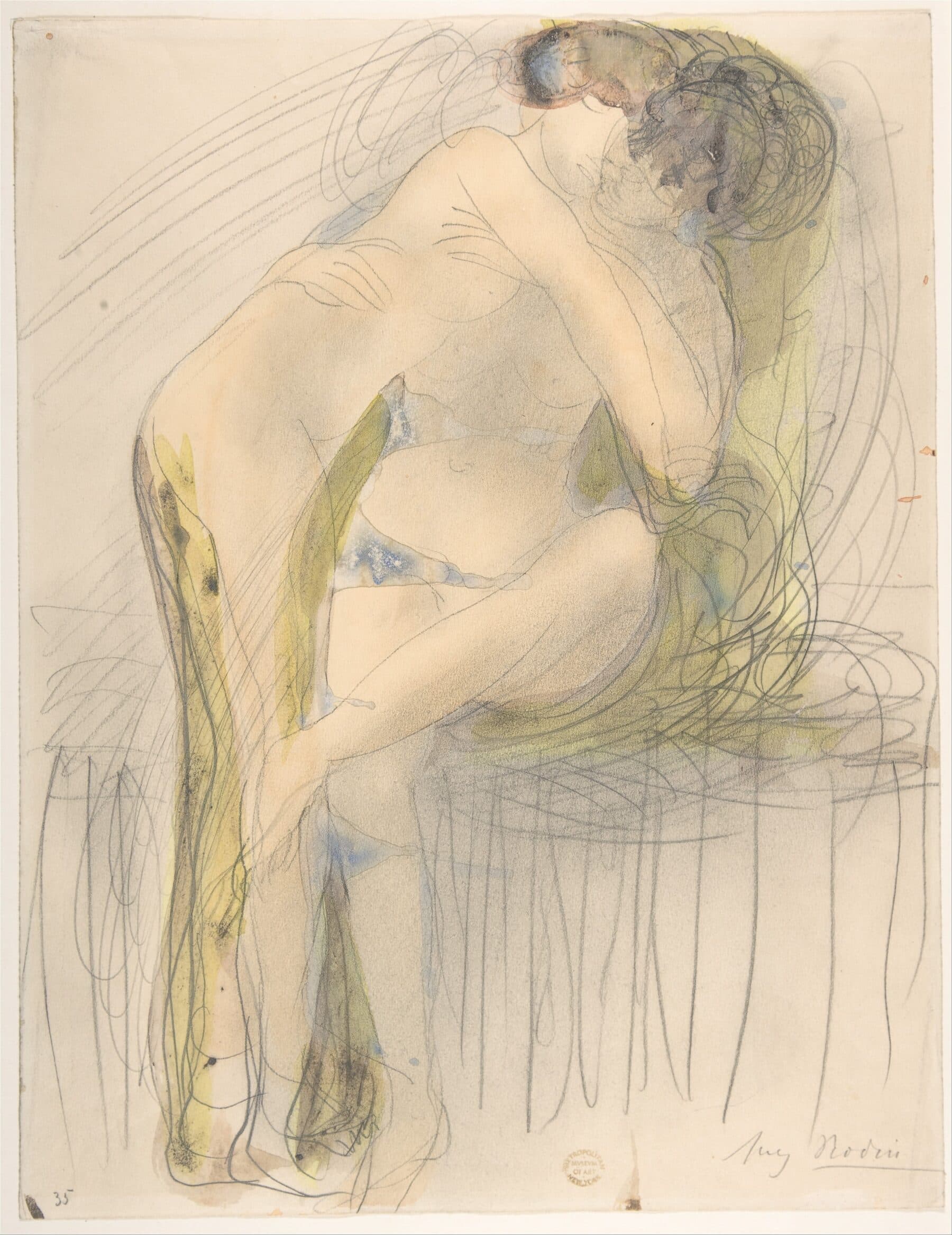
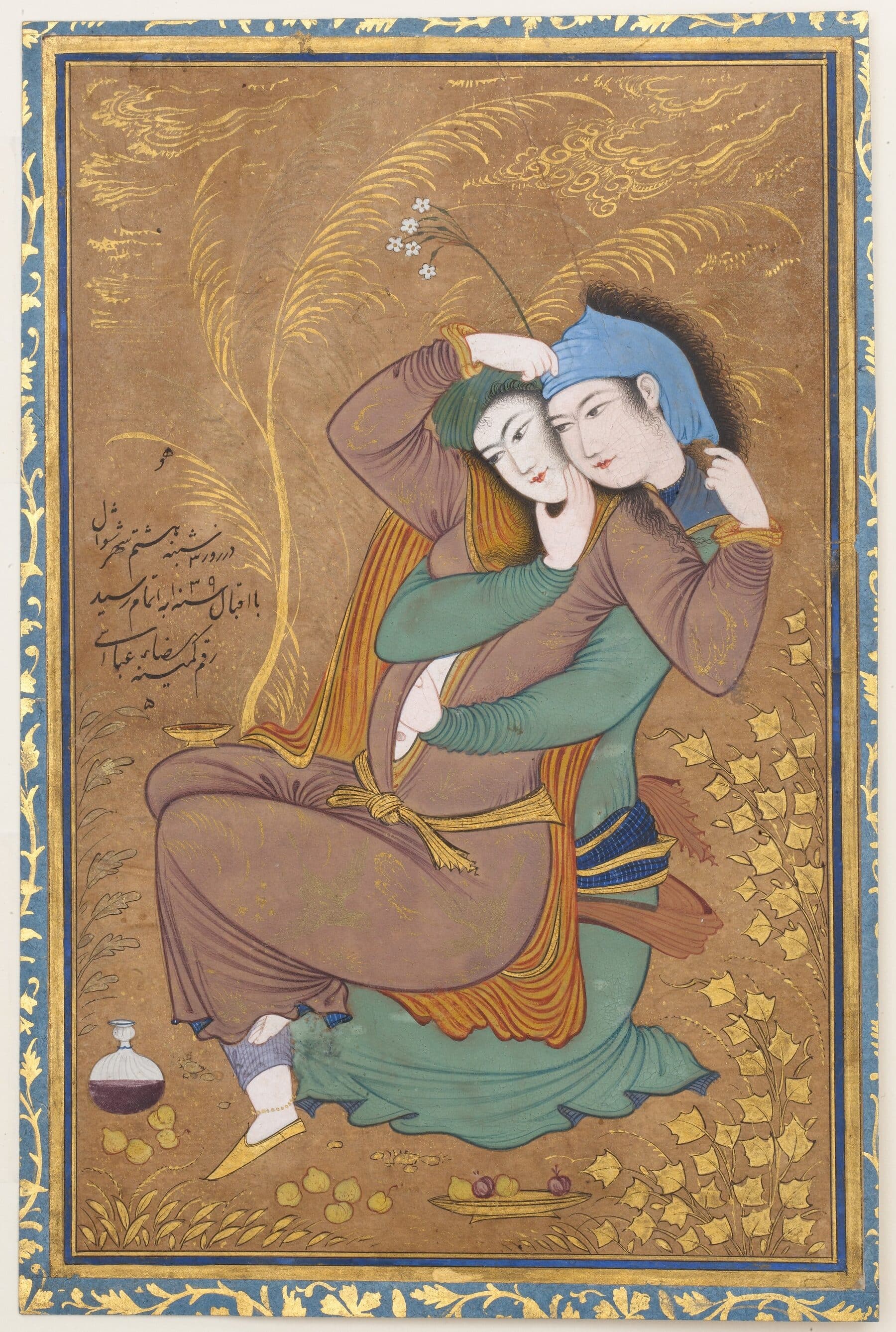
Cultures have painted, carved and written about erotic love for as long as art has existed. The drawing at the top of this page is Rodin. This one is four hundred years old, from Persia. Both treat sexual energy as something near the center of being human.
That is what recovery means here: not switching desire off, but taking it back from the loop, so it can go where you actually want it to go. Creation, intimacy, a life. Not a feed.
Where ibogaine comes in
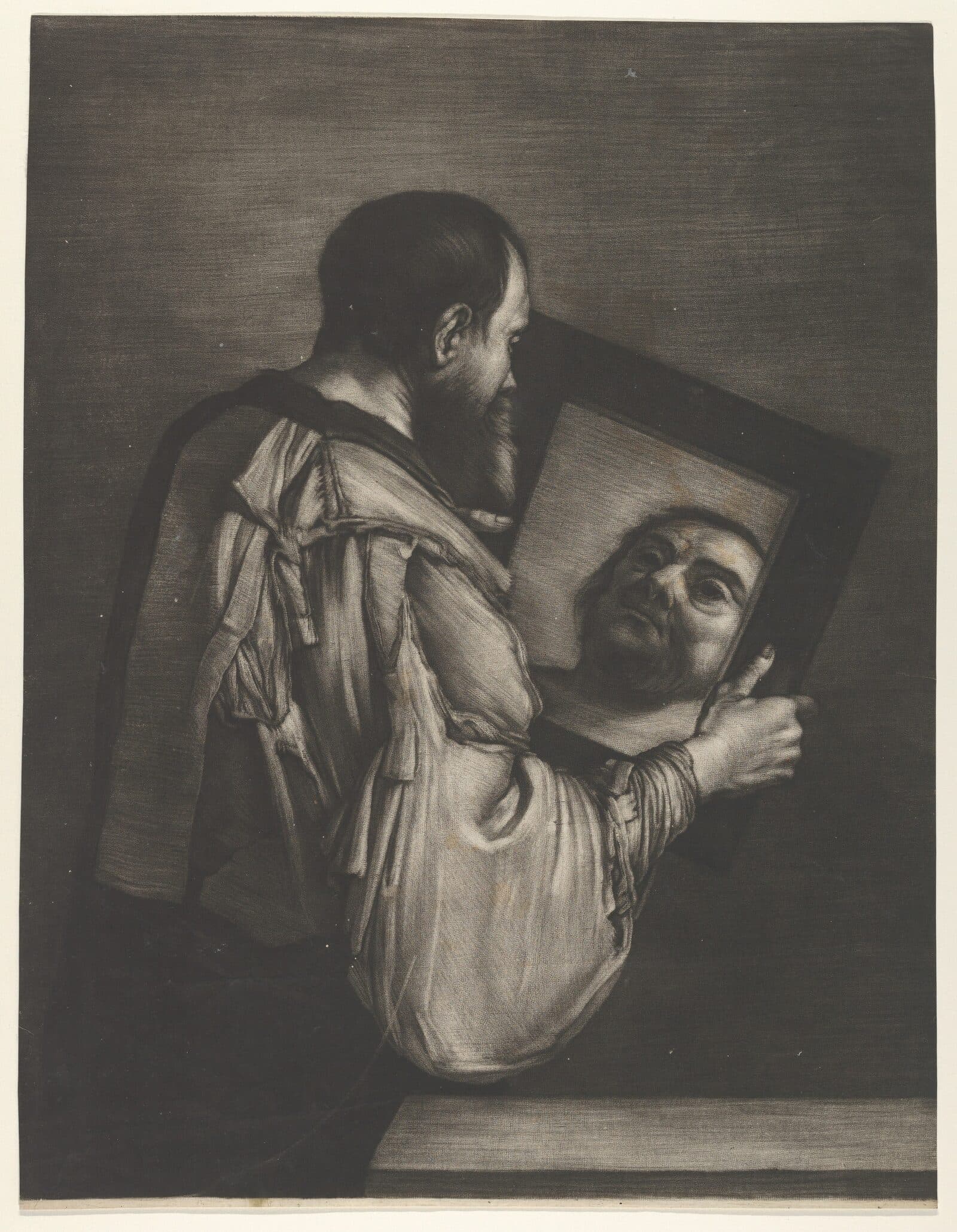
Ibogaine is a truth mirror. It forces you to have an honest conversation with yourself, and at the same time it relieves the cravings and compulsions for a significant period of time.
No clinical trial has tested ibogaine for compulsive sexual behavior. We will not pretend otherwise, and the shared-circuitry evidence behind the reasoning is strongest for gambling, more suggestive than settled for porn.⁷⁷
What ibogaine has repeatedly shown, in the addiction work it is actually known for, is an unusual capacity to interrupt a compulsive pattern and hold it open long enough to look at what the pattern was covering. Students describe watching the autopilot from the outside for the first time. The weeks after, the window of heightened plasticity we call the Window of Wonder, are where a different relationship with desire gets practiced.
Treatment is natural ibogaine treatment led by spiritual guides and iboga facilitators, with a registered nurse and a physician on hand, after cardiac and psychological screening that takes this seriously and will rule some people out. The rest of the program happens on a rainforest campus with no feed to open. We will level with you about whether it fits your case.
Citations (5)
[64] Kraus SW, Krueger RB, Briken P, First MB, Stein DJ, Kaplan MS, Voon V, Abdo CHN, Grant JE, Atalla E, Reed GM (2018). Compulsive sexual behaviour disorder in the ICD-11. World Psychiatry, 17(1), 109–110. Read the source →
Documents the World Health Organization adding compulsive sexual behaviour disorder to ICD-11 under code 6C72. Worth being precise about: ICD-11 classifies it as an impulse-control disorder, not formally as an addiction, and DSM-5 does not include it at all.
[65] Dickenson JA, Gleason N, Coleman E, Miner MH (2018). Prevalence of Distress Associated With Difficulty Controlling Sexual Urges, Feelings, and Behaviors in the United States. JAMA Network Open, 1(7), e184468. Read the source →
US nationally representative survey finding 8.6% of adults (10.3% of men, 7.0% of women) reported clinically relevant distress or impairment tied to difficulty controlling sexual feelings, urges, and behaviors. This measures distress, not a diagnosis; true diagnostic prevalence is lower.
[66] Bőthe B, Koós M, Nagy L, Kraus SW, Demetrovics Z, Potenza MN, et al. (2023). Compulsive sexual behavior disorder in 42 countries: Insights from the International Sex Survey and introduction of standardized assessment tools. Journal of Behavioral Addictions, 12(2), 393–407. Read the source →
Survey of 82,243 people across 42 countries in which 4.8% scored in the high-risk range for compulsive sexual behaviour disorder, and only 14% of that high-risk group had ever sought treatment for it. A non-probability online sample, and a screening scale rather than a clinical diagnosis.
[67] Robb MB, Mann S (2023). Teens and Pornography. Common Sense Media, survey of 1,358 US teens aged 13–17, fielded September 2022. Read the source →
US teen survey finding the average age of first seeing online pornography is 12, with 15% first exposed at age 10 or younger and 73% of teens 13 to 17 having watched porn online. Self-report and recall-based. The widely circulated claim that average first exposure is age 8 has no credible primary source; this is the citable figure.
[77] Grant JE, Potenza MN, Weinstein A, Gorelick DA (2010). Introduction to Behavioral Addictions. American Journal of Drug and Alcohol Abuse, 36(5), 233–241. Read the source →
The standard review showing behavioral addictions produce the same core clinical picture as substance addictions (craving, escalation, loss of control, continued use despite harm) and engage overlapping brain reward circuitry, including altered dopamine signaling in the mesolimbic pathway. The neuroimaging evidence is strongest for gambling; for newer candidates like porn and social media it is suggestive, not conclusive.