Mental Health
Ibogaine treatment for anxiety
Anxiety disorders are the most common mental health condition on earth and among the least treated. Here is what ibogaine has shown on anxiety, including the finding that points the other way.
What ibogaine has shown on anxiety
No study has ever recruited people with an anxiety disorder to test ibogaine on it. Every human anxiety finding is a secondary measurement, taken in people treated for opioid dependence or, in the veterans research, trauma and brain injury. That is the honest starting point.
Within that limit the signal is consistent: in the Stanford veterans study, anxiety fell 81% at one month,⁴² with measurable shifts in brain rhythms that tracked the improvement.⁴⁴ And the counter-evidence, because you deserve to see it: in rodents, high doses look anxiogenic for nearly a day afterwards.¹¹⁰ It fits what we tell every student plainly: the treatment night is demanding, not calm. The calm comes after.
The proposed mechanism runs through noribogaine, the long-lived metabolite that slows serotonin reuptake and dampens the kappa-opioid signaling tied to dysphoria: hypotheses under investigation, not demonstrated effects.¹¹¹ Treatment is natural ibogaine treatment led by spiritual guides and iboga facilitators, with a registered nurse and a physician on hand. Cardiac screening comes first, and some anxiety medications need a supervised taper planned in screening, never on your own.
The numbers that keep people asking
average drop in anxiety one month after a single treatment in the Stanford veterans study.⁴²
of the same thirty veterans met remission criteria for anxiety at one month.⁴²
the brain-rhythm changes that tracked anxiety improvement were still present at follow-up.⁴⁴
of one treated cohort met criteria for a complete mystical experience.¹¹⁴
Open-label numbers from small cohorts with no control groups, shown at their real strength: signals, not guarantees.
Meeting fear from the other side of it
Receptors are half the story. The other half is what actually happens to the mind during those hours, and for anxiety it matters more. The treatment night is a long waking dream, and we will be straight with you: for an anxious mind, the idea of surrendering control for hours is itself frightening, and the experience is often demanding while it happens.¹¹⁵ What students describe afterwards is that the fear was not the enemy it seemed. It was the guard at the door of things that needed to be seen.
The phenomenology research says the dream tends to return people to the origins of their patterns: childhood scenes, old wounds, the moments where the vigilance got installed.¹¹³ Many describe watching those scenes with a strange calm, as if the mind had finally been given enough distance to look without flinching. In one treated cohort, 43% met criteria for a complete mystical experience, and people compared its significance to a spiritual transformation.¹¹⁴ It is often that dimension, more than any molecule, that they credit with the change.
The quiet comes after. A mind that spent decades scanning for threats gets shown, experientially rather than intellectually, that it can stop. Then the real retraining begins: weeks of integration in which the new calm is practiced until it stops being novel and starts being yours. That is what healing the mind means here, and no pill was ever going to do it alone.

A place built for a nervous system to stand down
Quiet rooms, rainforest on every side, no schedule pressing on you. The weeks around treatment happen here, and seeing the place answers questions no page can.


The age of anxiety is measurable
In the first year of the COVID-19 pandemic, the global prevalence of anxiety and depression rose by an estimated 25%.⁸⁷ The wave has receded; the baseline it receded to was already the highest ever recorded.⁹⁷
The gap between suffering and care is the real story. Three out of four people who need anxiety treatment never get any,⁹⁷ and those who do typically waited somewhere between nine and twenty-three years to first ask for help.⁹⁹ An entire generation is white-knuckling it.
We do not think a molecule fixes a culture that runs on urgency and comparison. We do think the size of that gap is why new approaches deserve serious, careful study instead of dismissal.
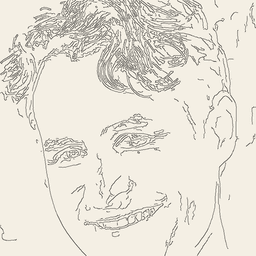

Anxiety is caused by living in the future, whether a specific future or a generalized one, and feeling that you do not have control. What you do have control over is this moment, and your breathing.
As simple as that seems, we spend an incredible amount of time teaching you to be present with your breath, so that the future starts to be dictated by your present experience and not the other way around.
Charles D. Johnston & Tatiana Aya Tupinambá, Co-Founders, Nekawa
What could change, worldwide
Anxiety is where the psychedelic research pipeline is thinnest, which makes honesty easy: nobody has run the trial yet, for ibogaine or for most of its cousins. What exists is a mechanism worth testing and secondary outcomes that keep pointing the same way.⁴² ⁴⁴
The conditions for real trials finally exist. In April 2026 a US executive order directed the FDA to prioritize review of psychedelic medicines, naming ibogaine specifically, with $50 million behind it.⁸⁰ When anxiety-primary studies come, the question this page cannot answer will get answered properly.
Culturally, we think the shift matters as much as the science: away from treating anxiety as a life sentence to be managed in weekly increments, and toward the possibility that a nervous system can be given one real chance to reset, and then taught to stay reset.

Citations (12)
[42] Cherian K, Keynan J, Anker L, Faerman A, Brown R, Shamma A, Keynan O, Coetzee J, Batail JM, Phillips A, Bassano N, Sahlem G, Inzunza J, Millar T, Dickinson J, Rolle C, Keller J, Adamson M, Kratter I, Williams N (2024). Magnesium-ibogaine therapy in veterans with traumatic brain injuries. Nature Medicine, 30, 373–381. Read the source →
The MISTIC trial. 30 male US Special Operations Forces veterans with predominantly mild traumatic brain injury received intravenous magnesium plus oral ibogaine (mean 12.1 mg/kg); 23 met criteria for PTSD at baseline. One month after treatment the group had moved from mild-to-moderate disability to no disability on the WHODAS-2.0 (30.2 to 5.1, d = 2.20), the study primary outcome. PTSD symptoms fell 88% on average, with a 100% response rate and 86% remission (d = 2.54); depression fell 87% (83% remission) and anxiety 81% (83% remission). Suicidal ideation fell from 47% at baseline to 7% at one month. Participants also gained in processing speed, executive function, verbal fluency and verbal learning, with no cognitive decline on any measure, and there were no serious or unexpected treatment-emergent adverse events. Open-label and uncontrolled, in a highly selected cohort, with magnesium co-administered, so the effect cannot be attributed to ibogaine alone.
[44] Lissemore JI, Chaiken A, Cherian KN, Buchanan D, Espil F, Keynan JN, Sridhar M, Rolle CE, Saggar M, Keller CJ, Williams NR (2025). Magnesium-ibogaine therapy effects on cortical oscillations and neural complexity in veterans with traumatic brain injury. Nature Mental Health, 3(8), 918–931. Read the source →
The first reported in-human evidence that ibogaine alters cortical oscillations in a clinically meaningful way. After treatment, slower theta-alpha rhythms gained power while faster beta-gamma activity lost it, raising the theta/beta ratio in a way that correlated with improved cognitive inhibition. Peak alpha frequency and neural complexity were lower, and the changes persisted at one-month follow-up.
[80] The White House (2026). Fact sheet: President Donald J. Trump is accelerating medical treatments for serious mental illness. whitehouse.gov, 18 April 2026. Read the source →
The April 2026 executive order directing the FDA to prioritise review of psychedelic medicines, naming ibogaine, easing DEA research restrictions, and funding the effort with $50 million.
[87] World Health Organization (2022). Mental health and COVID-19: early evidence of the pandemic's impact (scientific brief). World Health Organization, 2 March 2022. Read the source →
Global prevalence of anxiety and depression rose an estimated 25% in the first year of the COVID-19 pandemic. A modelled estimate for the first pandemic year; prevalence has since receded toward baseline.
[97] World Health Organization (2025). Anxiety disorders (fact sheet, updated 8 September 2025). World Health Organization. Read the source →
An estimated 359 million people worldwide were living with an anxiety disorder in 2021, the most common of all mental disorders, and only about 1 in 4 people who need treatment for one (27.6%) receive any. Modelled estimates.
[98] National Institute of Mental Health, from the Harvard National Comorbidity Survey Replication (2017). Any Anxiety Disorder (statistics page). National Institute of Mental Health. Read the source →
An estimated 31.1% of US adults experience an anxiety disorder at some point in their lives, and 19.1% had one in the past year (women 23.4% vs men 14.3%). Survey data collected 2001–2003; still the standing NIMH figure.
[99] Wang PS, Berglund P, Olfson M, Pincus HA, Wells KB, Kessler RC (2005). Failure and delay in initial treatment contact after first onset of mental disorders in the National Comorbidity Survey Replication. Archives of General Psychiatry, 62(6), 603–613. Read the source →
The median delay between the onset of an anxiety disorder and first treatment contact in the US is 9 to 23 years, against 6 to 8 years for mood disorders. Retrospective self-report.
[110] Benwell ME, Holtom PE, Moran RJ, Balfour DJ (1996). Neurochemical and behavioural interactions between ibogaine and nicotine in the rat. British Journal of Pharmacology, 117(4), 743–749. Read the source →
Counter-evidence carried honestly: male rats given 40 mg/kg ibogaine made fewer entries into open runways for about 22 hours afterwards, a response the authors read as anxiety-like and long-lasting. An animal study; recovering animals may avoid open spaces for reasons other than anxiety, but the finding warrants stating on any anxiety page.
[111] Mash DC (2023). IUPHAR invited review — Ibogaine: A legacy within the current renaissance of psychedelic therapy. Pharmacological Research, 190, 106620. Read the source →
Mechanism synthesis: ibogaine inhibits the serotonin transporter noncompetitively, its long-lived metabolite noribogaine slows serotonin reuptake and acts as a G-protein-biased kappa-opioid agonist, and rapid antidepressant-like effects are thought to involve ketamine-like NMDA receptor blockade. All framed as proposed mechanisms under investigation, not demonstrated clinical effects.
[113] Heink A, Katsikas S, Lange-Altman T (2017). Examination of the phenomenology of the ibogaine treatment experience: role of altered states of consciousness and psychedelic experiences. Journal of Psychoactive Drugs, 49(3), 201–208. Read the source →
Survey of 27 people who underwent ibogaine treatment: all reported insights about their personal past, 97% experienced visions, 77% saw content drawn from their own childhood, and 85% reported subjective relief from guilt. Large majorities reported insights about the meaning of life, death, and creation. A small, self-selected online survey, reported as phenomenology rather than outcome evidence.
[114] Brown TK, Noller GE, Denenberg JO (2019). Ibogaine and subjective experience: transformative states and psychopharmacotherapy in the treatment of opioid use disorder. Journal of Psychoactive Drugs, 51(2), 155–165. Read the source →
In 44 opioid-dependent people undergoing ibogaine treatment, 43% met criteria for a complete mystical experience. Participants described cyclic visual content leading to confronting realisations involving remorse and regret toward others, subjective release from guilt and worthlessness, and many compared the significance of the experience to a spiritual transformation.
[115] Camlin TJ, Eulert D, Horvath AT, Bucky SF, Barsuglia J, Polanco M (2018). A phenomenological investigation into the lived experience of ibogaine and its potential to treat opioid use disorders. Journal of Psychedelic Studies, 2(1), 24–35. Read the source →
Qualitative study of 10 people treated with ibogaine in Mexico: 80% described the experience as physically draining, one comparing it to having survived cancer. The source for stating honestly that the treatment night is often demanding or harrowing rather than pleasant, which also helps explain ibogaine's low abuse potential.