Mental Health
Ibogaine treatment for depression
No controlled trial has tested ibogaine for depression, and this page says so in its first breath. Here is what has actually been measured, why it is worth taking seriously, and where the honest limits sit.
What ibogaine has actually shown on depression
Straight answer first: no controlled trial has ever tested ibogaine for depression. Every finding comes from people treated for something else, mostly opioid dependence, and measured for mood along the way. If someone quotes you a success rate, they made it up.
What has been measured is worth knowing. In the largest inpatient cohort, 191 patients detoxing from opioids and cocaine, depression scores fell after a single treatment and stayed lower a month later.⁹ In a small New Zealand cohort the improvement held for a year.⁸³ And in the Stanford veterans study, depression fell 87% at one month, with suicidal ideation dropping from 47% of the group to 7%.⁴² All open-label, small, and uncontrolled: real signals, not proof.
The proposed mechanism pairs a fast, ketamine-like reset with a long tail from noribogaine, a metabolite that lingers for days and slows serotonin reuptake the way an SSRI does,¹¹¹ plus a self-sustaining rise in the growth factor GDNF.⁸¹ Treatment is natural ibogaine treatment led by spiritual guides and iboga facilitators, with a registered nurse and a physician on hand. Cardiac screening comes first, and any antidepressant taper is planned in screening, never on your own.
The numbers that keep people asking
average drop in depression scores one month after treatment in the Stanford veterans study, with 83% in remission.⁴²
of the veterans reported suicidal ideation one month after a single treatment, down from 47% at baseline.⁴²
how long reduced depression held in the New Zealand follow-up cohort.⁸³
of surveyed ibogaine patients reported relief from guilt after the experience.¹¹³
Open-label numbers from small cohorts with no control groups, shown at their real strength: signals, not guarantees.
A life review, and what it leaves behind
The science above is half the story, and honestly the smaller half. Ibogaine is not a classical psychedelic, and the treatment night does not feel like one. For four to eight hours you lie still, eyes closed, inside something closer to a waking dream, and the dream has an agenda: it walks you through your own life. In one survey of people treated with ibogaine, every single respondent reported insights about their personal past, and 77% saw scenes drawn from their own childhood.¹¹³
For depression, one number from that small survey matters more than the rest: 85% reported relief from guilt.¹¹³ People describe confronting realisations about themselves and the people they have hurt or lost, followed by a release from guilt and worthlessness, and many rank the experience alongside a spiritual transformation.¹¹⁴ Depression is a story the mind tells about who you are. The treatment sits you down in front of that story and has you reread it from a distance, often with a compassion the depression never allowed.
We will not romanticize the night itself: it is often physically draining, sometimes harrowing.¹¹⁵ The rebirth people describe happens on the other side of it, in the days and weeks after, when the noise drops and the story has room to be rewritten. That rewriting is the actual work of healing the mind, and it is what the campus and the months of integration exist for.


Where the healing happens
The weeks around treatment are spent here: a rainforest campus above Paraty, rooms built for deep rest, and nothing that beeps. Come see the place before you decide anything.


A depleted society, measured
Depression is not rare, and it is not a personal failure of the people who carry it. It is the second leading cause of years lived with disability on the planet,⁹⁶ and depression and anxiety together drain an estimated one trillion dollars a year from the global economy in lost productivity, about twelve billion working days.⁹¹
The treatment system is not keeping up. Even in high-income countries, only about a third of people with depression receive formal care,⁸⁶ and the standard tools leave a large minority still sick after multiple medication attempts.⁹⁵
None of this means conventional treatment is worthless. It means the pipeline needs more than incremental versions of the same medications, and that is the argument, made carefully, for taking compounds like ibogaine seriously enough to study them properly.
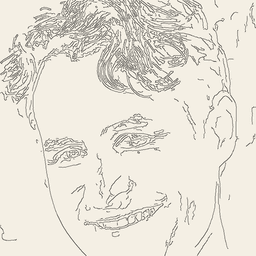

Depression is an obsession with the past, and the belief that the past defines us. The way out of depression is to accept, embrace, and place ourselves firmly in the present moment.
Ibogaine and plant medicine are an incredible starting point for creating exactly this type of presence.
Charles D. Johnston & Tatiana Aya Tupinambá, Co-Founders, Nekawa
What this could mean, far beyond one campus
For seventy years the standard model of mental health care has been maintenance: a daily medication, indefinitely, managing symptoms it does not resolve. Psychedelic medicine proposes a different shape, a small number of profound, carefully supervised treatments followed by real integration. If even part of the open-label ibogaine signal survives controlled trials, that shape becomes available for depression.
The politics are catching up with the science. In April 2026 a US executive order directed the FDA to prioritize review of psychedelic medicines, naming ibogaine specifically, and funded the effort with $50 million.⁸⁰ Controlled trials are coming, and they will answer the questions this page is honest about not being able to answer yet.
We think the deeper shift is cultural: from managing minds to healing them. That is the world we are trying to build a small piece of in the rainforest.

Citations (17)
[9] Mash DC, Duque L, Page B, Allen-Ferdinand K (2018). Ibogaine Detoxification Transitions Opioid and Cocaine Abusers Between Dependence and Abstinence: Clinical Observations and Treatment Outcomes. Frontiers in Pharmacology, 9, 529. Read the source →
Open-label study reporting that ibogaine therapy in a safe dose range diminished opioid withdrawal symptoms and reduced drug cravings, transitioning opioid- and cocaine-dependent patients toward abstinence.
[42] Cherian K, Keynan J, Anker L, Faerman A, Brown R, Shamma A, Keynan O, Coetzee J, Batail JM, Phillips A, Bassano N, Sahlem G, Inzunza J, Millar T, Dickinson J, Rolle C, Keller J, Adamson M, Kratter I, Williams N (2024). Magnesium-ibogaine therapy in veterans with traumatic brain injuries. Nature Medicine, 30, 373–381. Read the source →
The MISTIC trial. 30 male US Special Operations Forces veterans with predominantly mild traumatic brain injury received intravenous magnesium plus oral ibogaine (mean 12.1 mg/kg); 23 met criteria for PTSD at baseline. One month after treatment the group had moved from mild-to-moderate disability to no disability on the WHODAS-2.0 (30.2 to 5.1, d = 2.20), the study primary outcome. PTSD symptoms fell 88% on average, with a 100% response rate and 86% remission (d = 2.54); depression fell 87% (83% remission) and anxiety 81% (83% remission). Suicidal ideation fell from 47% at baseline to 7% at one month. Participants also gained in processing speed, executive function, verbal fluency and verbal learning, with no cognitive decline on any measure, and there were no serious or unexpected treatment-emergent adverse events. Open-label and uncontrolled, in a highly selected cohort, with magnesium co-administered, so the effect cannot be attributed to ibogaine alone.
[80] The White House (2026). Fact sheet: President Donald J. Trump is accelerating medical treatments for serious mental illness. whitehouse.gov, 18 April 2026. Read the source →
The April 2026 executive order directing the FDA to prioritise review of psychedelic medicines, naming ibogaine, easing DEA research restrictions, and funding the effort with $50 million.
[81] He DY, Ron D (2006). Autoregulation of glial cell line-derived neurotrophic factor expression: implications for the long-lasting actions of ibogaine. The FASEB Journal, 20(13), 2420–2422. Read the source →
Shows ibogaine triggers a sustained, self-sustaining upregulation of GDNF in reward-related brain regions — a mechanism for effects that outlast the drug itself.
[83] Noller GE, Frampton CM, Yazar-Klosinski B (2018). Ibogaine treatment outcomes for opioid dependence from a twelve-month follow-up observational study. The American Journal of Drug and Alcohol Abuse, 44(1), 37–46. Read the source →
Twelve-month observational follow-up of 14 people receiving legal ibogaine treatment in New Zealand; documents reduced opioid use and depression over the follow-up year.
[86] World Health Organization (2025). Mental disorders (fact sheet, updated 30 September 2025). World Health Organization. Read the source →
An estimated 1.1 billion people worldwide, nearly 1 in 7, were living with a mental disorder in 2021, with anxiety and depressive disorders the most common. Also documents the treatment gap: even in high-income countries only about a third of people with depression receive formal care. Modelled Global Burden of Disease estimates, not diagnosed cases.
[91] Chisholm D, Sweeny K, Sheehan P, Rasmussen B, Smit F, Cuijpers P, Saxena S (2016). Scaling-up treatment of depression and anxiety: a global return on investment analysis. The Lancet Psychiatry, 3(5), 415–424. Read the source →
Depression and anxiety cost the global economy an estimated US$1 trillion each year in lost productivity, about 12 billion working days. The same model found every $1 invested in scaled-up treatment returns roughly $4 in better health and productivity. A 2016 economic model.
[92] World Health Organization (2025). Depressive disorder (depression) (fact sheet, updated 29 August 2025). World Health Organization. Read the source →
An estimated 332 million people worldwide, 5.7% of adults, were living with depression in 2021; it is about 1.5 times more common in women than men. Modelled Global Burden of Disease estimates.
[93] National Institute of Mental Health, from the SAMHSA 2021 NSDUH (2023). Major Depression (statistics page, data year 2021). National Institute of Mental Health. Read the source →
21.0 million US adults (8.3%) had at least one major depressive episode in 2021, and 39% of them received no treatment for it. Among adolescents aged 12 to 17 the rate was 20.1% (5.0 million), of whom about 59% went untreated. Self-reported survey screen.
[95] Rush AJ, Trivedi MH, Wisniewski SR, et al. (2006). Acute and longer-term outcomes in depressed outpatients requiring one or several treatment steps: a STAR*D report. The American Journal of Psychiatry, 163(11), 1905–1917. Read the source →
In the largest real-world antidepressant trial run, remission rates fell from 36.8% on the first medication to 13.0% by the fourth attempt; roughly one in three patients did not remit even after four sequential treatments, and relapse was more likely the more steps it took. Open-label, 2006.
[96] GBD 2021 Diseases and Injuries Collaborators (Ferrari AJ, et al.) (2024). Global incidence, prevalence, years lived with disability (YLDs), disability-adjusted life-years (DALYs), and healthy life expectancy (HALE) for 371 diseases and injuries in 204 countries and territories: a systematic analysis for the Global Burden of Disease Study 2021. The Lancet, 403(10440), 2133–2161. Read the source →
Depressive disorders were the second leading cause of years lived with disability worldwide in 2021.
[111] Mash DC (2023). IUPHAR invited review — Ibogaine: A legacy within the current renaissance of psychedelic therapy. Pharmacological Research, 190, 106620. Read the source →
Mechanism synthesis: ibogaine inhibits the serotonin transporter noncompetitively, its long-lived metabolite noribogaine slows serotonin reuptake and acts as a G-protein-biased kappa-opioid agonist, and rapid antidepressant-like effects are thought to involve ketamine-like NMDA receptor blockade. All framed as proposed mechanisms under investigation, not demonstrated clinical effects.
[113] Heink A, Katsikas S, Lange-Altman T (2017). Examination of the phenomenology of the ibogaine treatment experience: role of altered states of consciousness and psychedelic experiences. Journal of Psychoactive Drugs, 49(3), 201–208. Read the source →
Survey of 27 people who underwent ibogaine treatment: all reported insights about their personal past, 97% experienced visions, 77% saw content drawn from their own childhood, and 85% reported subjective relief from guilt. Large majorities reported insights about the meaning of life, death, and creation. A small, self-selected online survey, reported as phenomenology rather than outcome evidence.
[114] Brown TK, Noller GE, Denenberg JO (2019). Ibogaine and subjective experience: transformative states and psychopharmacotherapy in the treatment of opioid use disorder. Journal of Psychoactive Drugs, 51(2), 155–165. Read the source →
In 44 opioid-dependent people undergoing ibogaine treatment, 43% met criteria for a complete mystical experience. Participants described cyclic visual content leading to confronting realisations involving remorse and regret toward others, subjective release from guilt and worthlessness, and many compared the significance of the experience to a spiritual transformation.
[115] Camlin TJ, Eulert D, Horvath AT, Bucky SF, Barsuglia J, Polanco M (2018). A phenomenological investigation into the lived experience of ibogaine and its potential to treat opioid use disorders. Journal of Psychedelic Studies, 2(1), 24–35. Read the source →
Qualitative study of 10 people treated with ibogaine in Mexico: 80% described the experience as physically draining, one comparing it to having survived cancer. The source for stating honestly that the treatment night is often demanding or harrowing rather than pleasant, which also helps explain ibogaine's low abuse potential.
[86] Barsuglia JP and colleagues (2026). Indication-stratified mortality risk of ibogaine treatment under contemporary safety protocols: a multisite analysis of 19,071 patients and updated systematic review of fatalities. Research Square preprint rs-9966269 (not yet peer reviewed). Read the source →
The largest ibogaine safety dataset to date: 19,071 treatments across 11 international clinics operating under contemporary safety protocols. Six deaths occurred within 72 hours, all among patients treated for opioid use disorder (6 of 10,382); none occurred among the 8,689 patients treated for non-substance-use indications. In the accompanying review of documented fatalities, 41 of 44 with a known indication involved substance use disorder, predominantly opioid detoxification, clustering around preexisting cardiovascular disease, concurrent CNS depressants such as opioids and benzodiazepines, and absent or inadequate pretreatment cardiac screening. A preprint: it has not completed peer review.