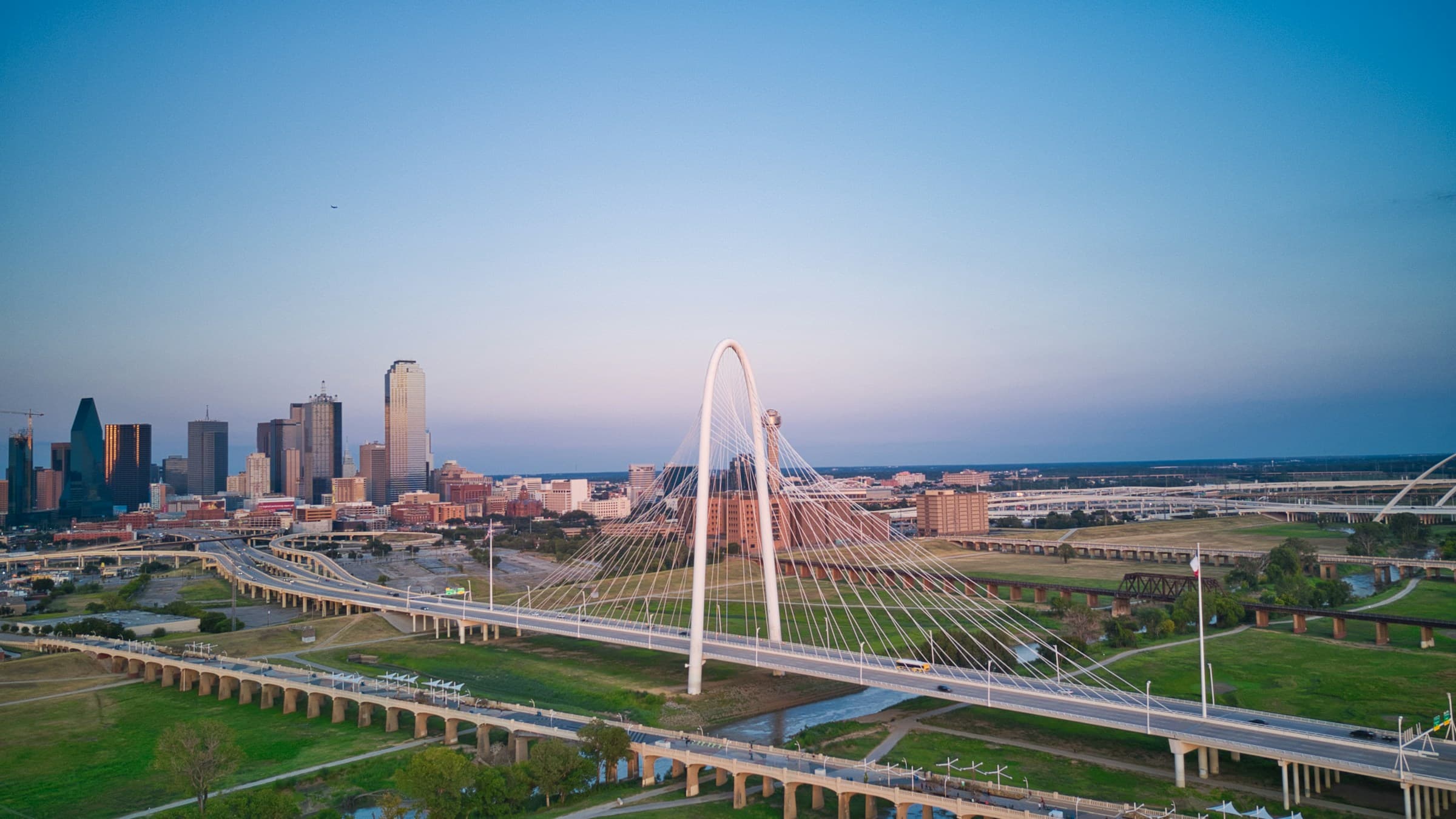
Dallas County recorded 558 overdose deaths in 2024, with fentanyl driving most of those fatalities. Counterfeit pills laced with fentanyl, plus polysubstance combinations like fentanyl cut with cocaine or methamphetamine, have made the landscape harder to survive than it was even five years ago. There are 56 SAMHSA-licensed substance use programs within 25 miles of central Dallas. Most families reaching this page have already tried at least one of them. This page is for the ones who haven't found what they need there and are now asking whether ibogaine is real, whether it's safe, and how a Dallas resident actually gets to it.\n\nIbogaine is a Schedule I controlled substance in the United States. No clinic in Texas, or anywhere else in the US, can administer it. That hasn't stopped Texas from taking the compound seriously. In June 2025, Governor Greg Abbott signed SB 2308, creating a $50 million public-private fund to support FDA clinical trials of ibogaine for opioid use disorder, TBI, and PTSD. It is the largest state investment in psychedelic medicine research in US history. Research, though, takes years. For someone in active addiction right now, the physician-prescribed pathway runs through Brazil.\n\nThis page covers what ibogaine does, how Nekawa's hospital-administered program works, why Brazil's regulatory framework matters, exactly how to get from DFW to Paraty, and what comes next when you're back in Dallas. If you're a family member doing research at midnight, or someone who has decided to stop waiting, read straight through. Then book a discovery call.
Why Dallas families are looking outside the US
The drop in Dallas County fentanyl deaths from their 2023 peak is real, and it reflects genuine work by Dallas County Health and Human Services, expanded overdose response teams, peer navigators placed in hospital emergency departments, and Narcan distribution funded through the CDC. That progress matters. It also doesn't help the person who is still using, still cycling through detox, or still alive only because someone happened to be nearby with naloxone.
Texas does not have a Good Samaritan overdose immunity law as broad as most states. That gap discourages 911 calls during overdoses, which means some people die in situations where a call might have saved them. It also tells you something about the political and institutional environment around addiction treatment in this state: cautious, slow, and still catching up to the scale of the problem.
Fentanyl-contaminated counterfeit pills have changed what addiction looks like in Dallas. People who thought they were using a prescription painkiller or a pressed benzo are physically dependent on a synthetic opioid fifty times more potent than morphine. Walk into any ER from Methodist Dallas to Parkland and the staff will tell you the same thing. Standard detox manages the acute withdrawal. It does not address the neurological state that makes relapse so likely in the weeks that follow. That's the gap ibogaine was designed to close. Our ibogaine overview explains the mechanism in full.
What ibogaine actually does, in plain terms
If your loved one is in active addiction, here is what matters most: ibogaine is not a substitute drug, and it is not a sedative. It acts on the brain in ways no approved medication does, resetting opioid receptors, interrupting withdrawal at the neurochemical level, and producing a period of reflection that most people describe as unlike anything they've experienced before.
For opioid dependence specifically, ibogaine can interrupt acute withdrawal within hours. People who have been physically dependent on fentanyl, heroin, or prescription opioids for years often report that the physical craving is dramatically reduced after a single session. That doesn't mean ibogaine is a cure or that no further work is required. It means the neurological baseline shifts in a way that makes the work of recovery more possible.
For burnout, depression, and trauma, the mechanism is different but the principle is similar: a period of neuroplasticity opens up, and the brain becomes more responsive to change. Our ibogaine overview goes deeper on receptor systems and what the current research shows. The people who come to Nekawa from Dallas have tried everything available to them and need something different.
The Nekawa medical protocol: what makes it different from local detox
Ibogaine carries real cardiac risk. It prolongs the QT interval, and that risk is manageable only with proper screening and monitoring. This is why unmonitored ibogaine use is dangerous and why the medical infrastructure around the session is not optional. At Nekawa, every guest undergoes cardiac screening before treatment is approved, including EKG evaluation. People who are not medically appropriate candidates are told so before they travel.
During the session itself, you're monitored with continuous cardiac telemetry. A physician is on-site. Magnesium loading is part of the protocol. After the session, there's a 24-hour observation period before anything else happens. This is hospital-administered treatment, not a ceremony in a rented house.
Compare that to a typical Dallas detox admission, whether at a Las Colinas facility or one of the programs along Forest Lane: medically managed withdrawal, usually five to seven days, with buprenorphine or methadone bridging the acute phase. That's appropriate care for what it is. It doesn't produce the neurological reset that ibogaine does, and it doesn't address the psychological dimension of why someone keeps returning to the substance. Our safety page covers the cardiac protocol, QT interval management, and screening criteria in detail.
Why Brazil, and not Mexico or Costa Rica
There are ibogaine providers in Mexico and Costa Rica. Some of them are run by careful, experienced people. Others are not. None of them operate under the kind of federal regulatory framework that governs Nekawa's program.
In Brazil, ibogaine is approved for medical use under ANVISA, Brazil's federal health agency, the equivalent of the FDA. Treatment is prescribed by licensed physicians and delivered within a structure that includes real accountability: medical licensing, institutional oversight, and the infrastructure of a functioning hospital system. When something goes wrong in a regulated medical setting, there are protocols. When something goes wrong at an unregulated retreat, the options narrow fast.
This is not a small distinction. The reason to choose Brazil over other destinations isn't geography or price. It's that the medical framework is real. ANVISA oversight means the physician prescribing your treatment has something to lose if the protocol isn't followed. That accountability is part of what you're paying for. Our location page describes the Nekawa property, the clinical team, and the physical setting in full detail.
Getting from Dallas to Paraty
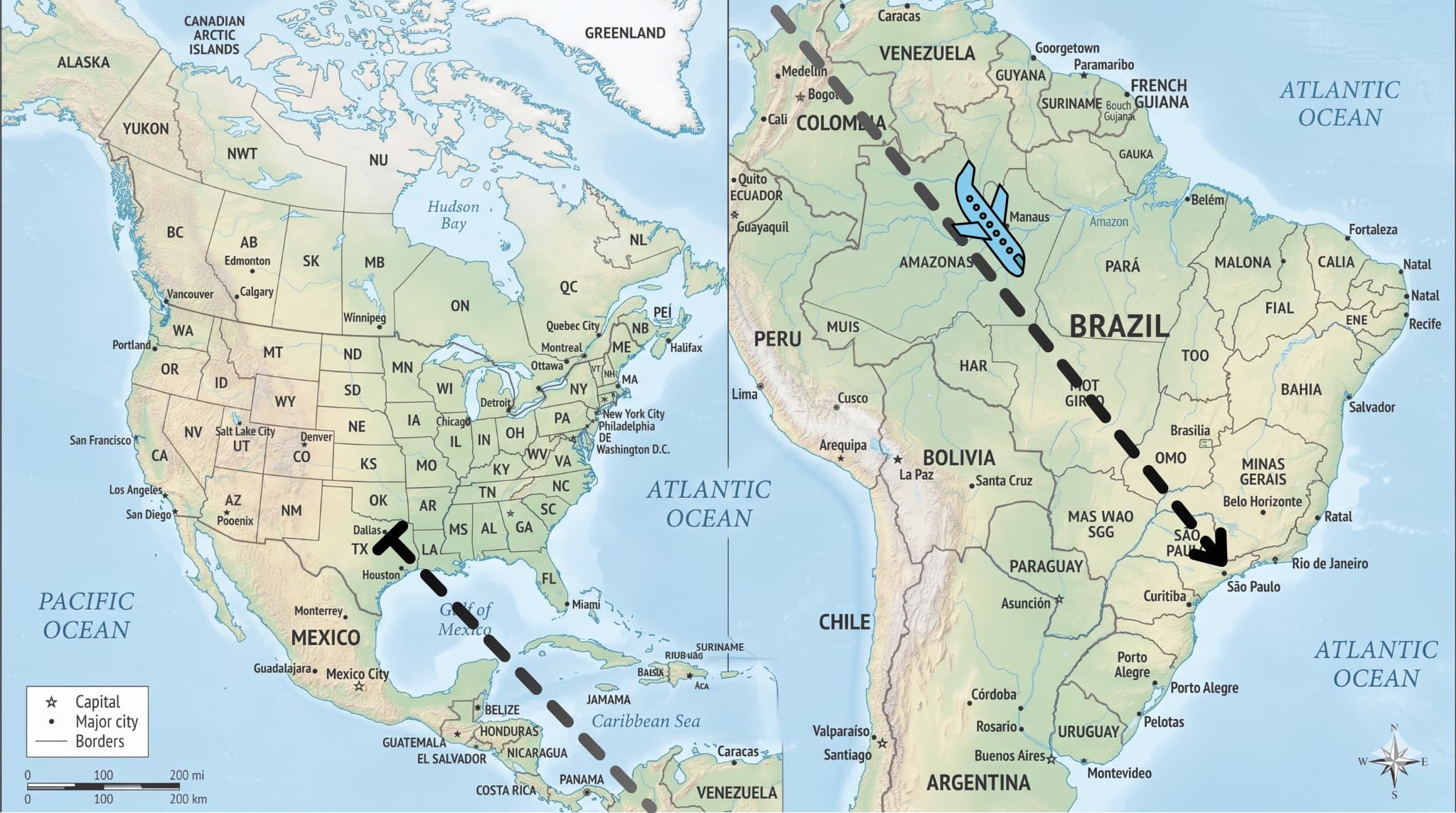
DFW International Airport has daily nonstop service to São Paulo–Guarulhos (GRU) on American Airlines flight AA963, operated by a Boeing 787 Dreamliner, with a block time of roughly 10 hours and 10 minutes. Nonstop service to Rio de Janeiro–Galeão (GIG) is also available from DFW, with a block time of approximately 10 hours. Both airports are roughly equidistant from Paraty by road. From DFW Terminal D, the international gates are a straightforward walk after security.
From GRU, Paraty is a 4-hour drive along the BR-101 coastal highway through the Atlantic rainforest. Nekawa arranges private ground transport from the airport, so you arrive directly at the clinic without navigating Brazilian transit on your own. The drive itself is something to look forward to: the BR-101 runs along the Costa Verde coast, through old-growth Mata Atlântica, the Atlantic rainforest that lines the edge of the sea in a way that has no equivalent in North America.
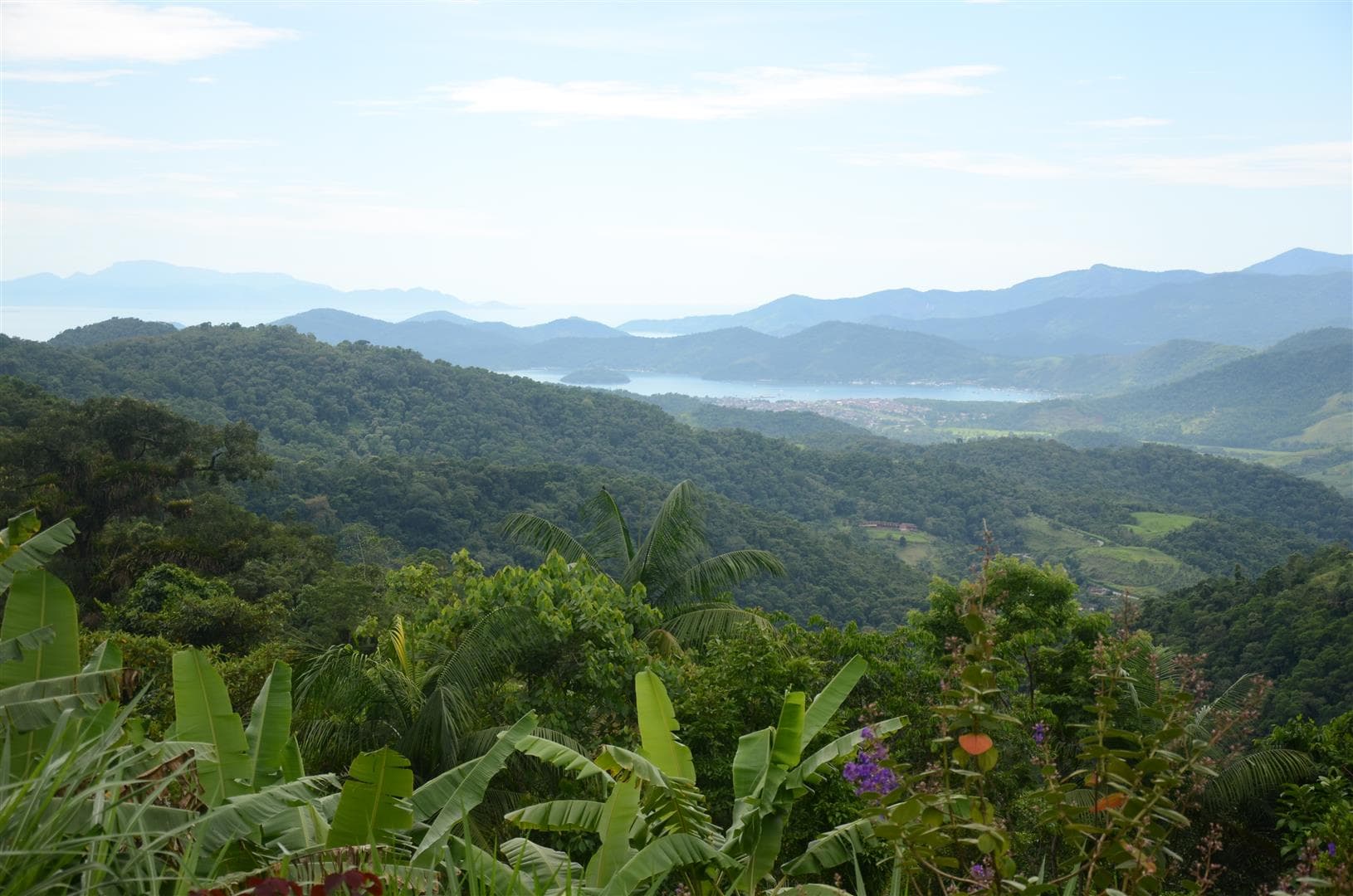
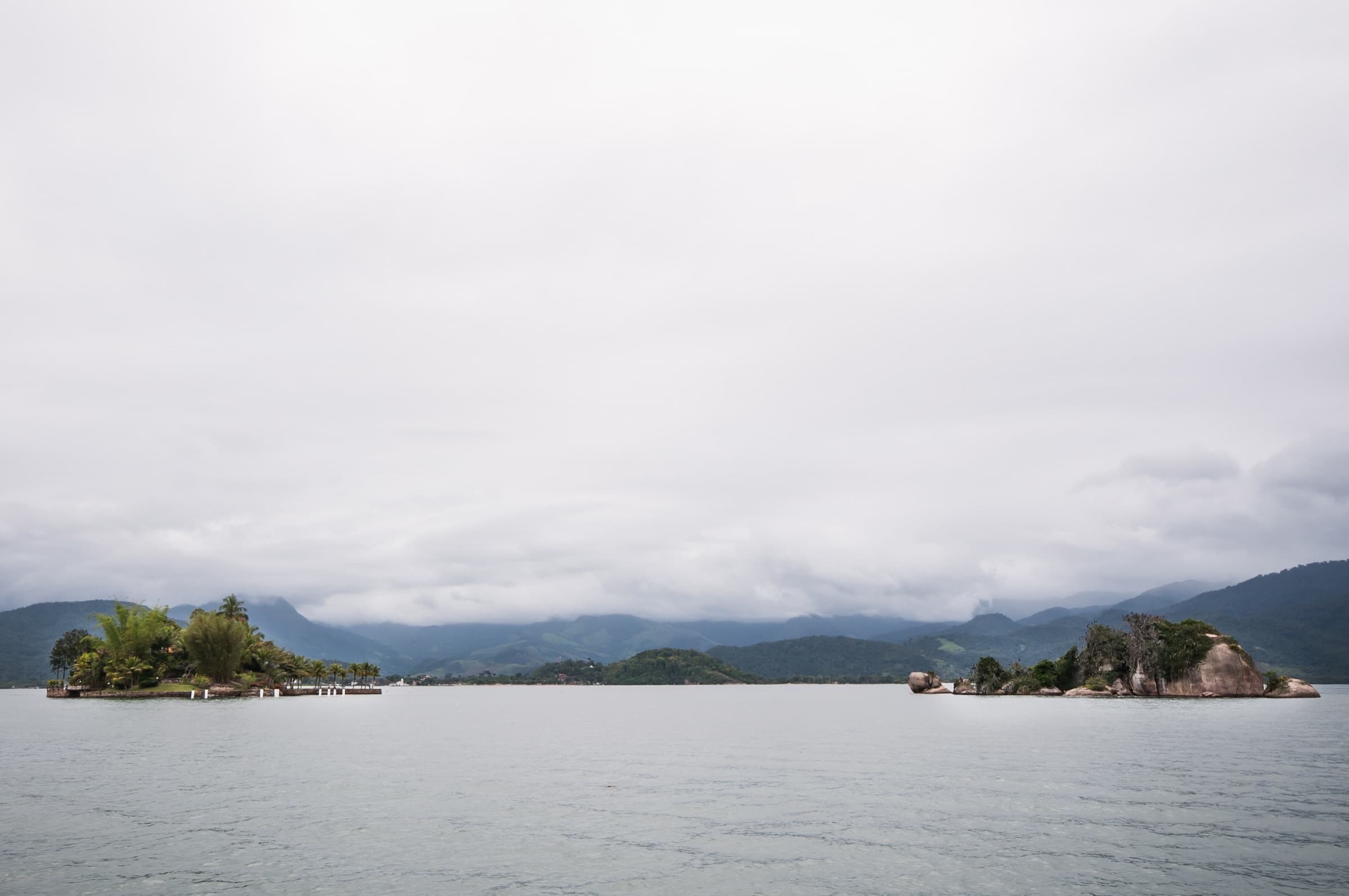
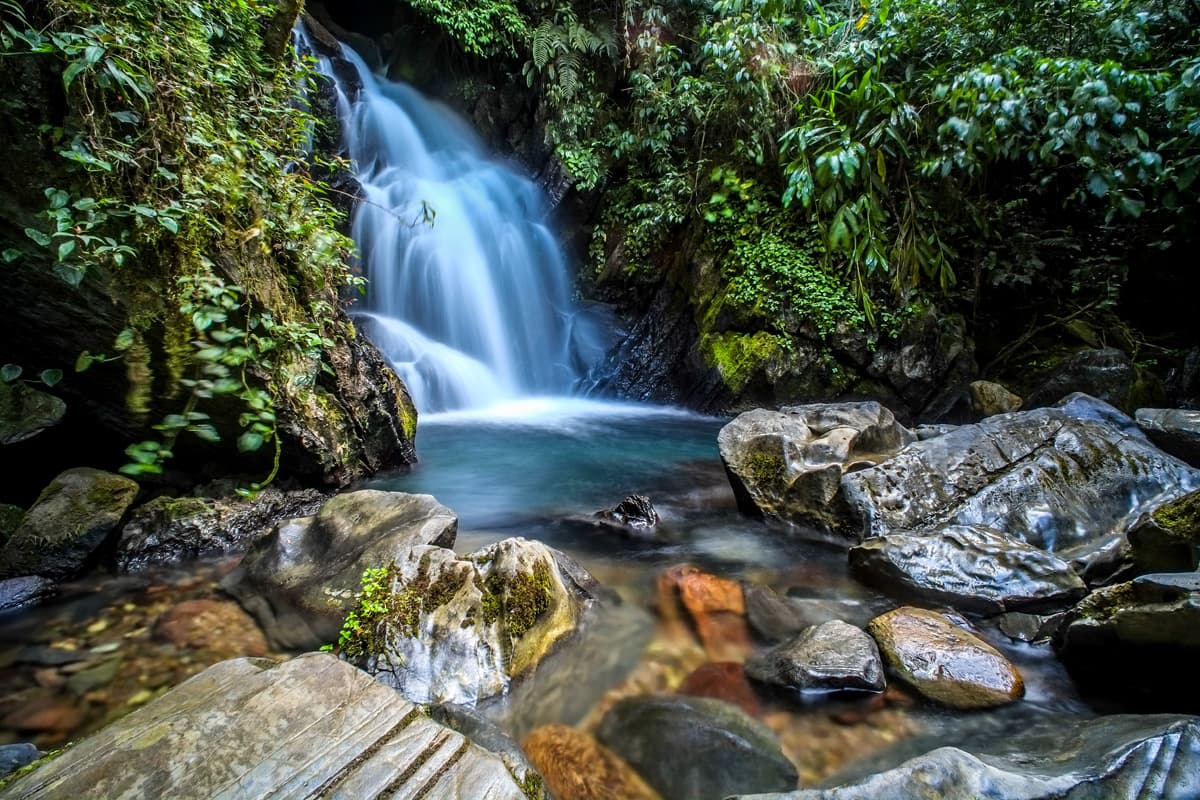
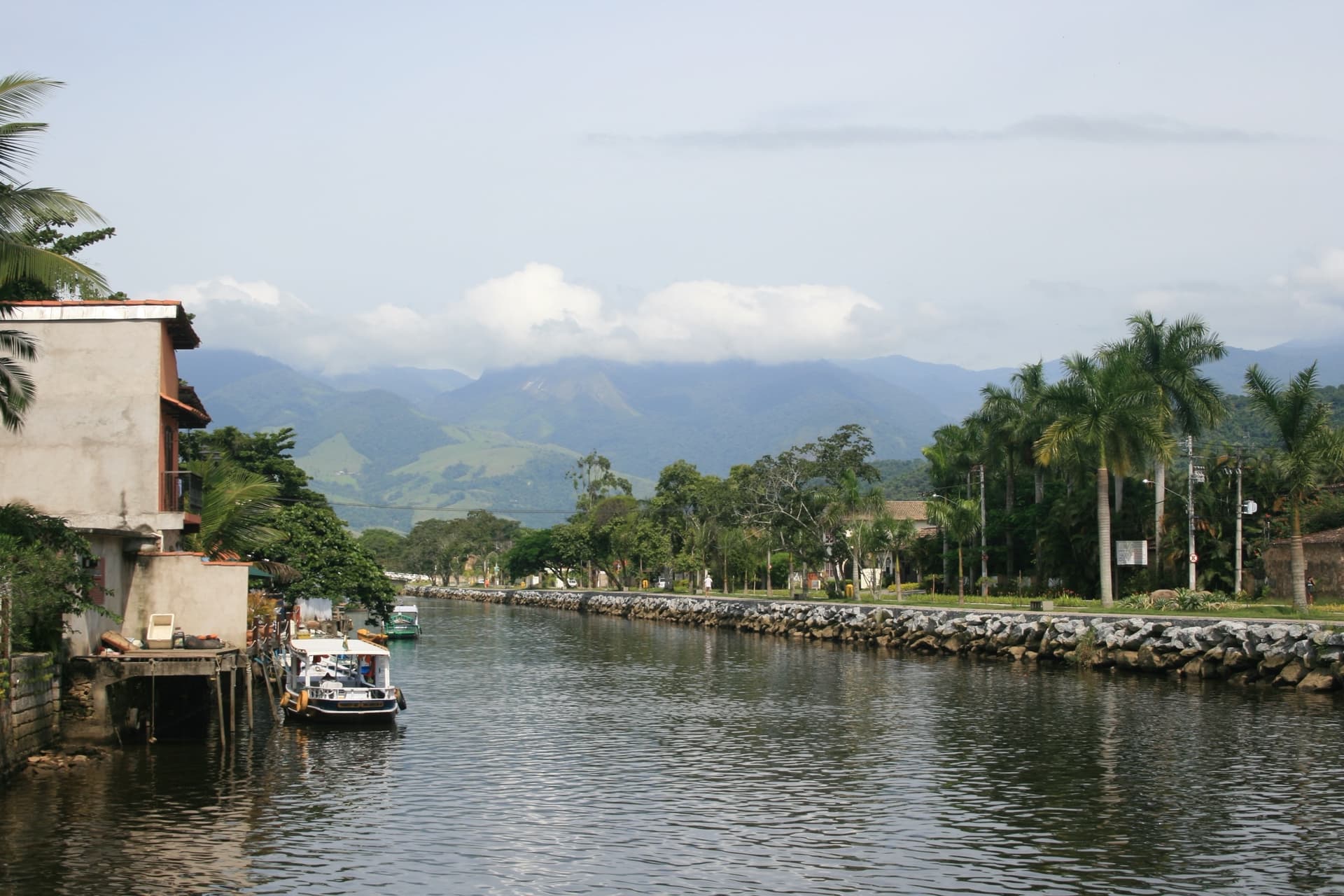
What you arrive to is worth describing. The Nekawa property sits at the edge of the jungle, with waterfalls, a protected lagoon, and a bay scattered with more than 300 forested islands visible from the grounds. Paraty itself is a colonial port town, preserved almost entirely intact, a 20-minute drive from the clinic. After weeks or months of crisis, the environment alone does something. Our location page has photographs and a full description of the property and the route in.
One logistical note: as of January 1, 2026, US travelers need an approved Brazilian eVisa to enter Brazil. You'll apply online at brazil.vfsevisa.com, the fee is US$80.90, and processing typically takes 72 hours. The visa is valid for 10 years and allows multiple entries of up to 90 days per stay. You'll also need a US passport with at least six months of remaining validity. We walk every guest through this during the intake process so nothing is missed before travel.
The Texas ibogaine picture: SB 2308 and what it means right now
In June 2025, Governor Greg Abbott signed SB 2308, creating a $50 million public-private fund to support FDA clinical trials of ibogaine for opioid use disorder, traumatic brain injury, and PTSD. The Texas Ibogaine Initiative, led in part by former Governor Rick Perry, is the largest state investment in psychedelic medicine research in US history. In April 2026, after failing to attract a private pharmaceutical partner, the Texas Health and Human Services Commission awarded the $50 million to UTHealth Houston in collaboration with UT Medical Branch at Galveston, to lead the IMPACT consortium, a statewide multi-university clinical trial program.
This is significant. It means the Texas legislature and the governor's office have concluded that ibogaine is worth serious public investment. It also means the research timeline is years away from producing anything a Dallas resident in active addiction can access. The fund supports research only. No Texas resident can receive ibogaine treatment inside the United States as of 2026.
SB 2308 matters for another reason: it changes the conversation. Families who worried that pursuing ibogaine treatment abroad meant doing something fringe or embarrassing now have a straightforward answer. The state of Texas has committed $50 million to studying this compound. The regulated medical pathway runs through Brazil because that's where the infrastructure exists today, not because it's a workaround. Our legal status page covers the current US and global regulatory picture in full.
Aftercare when you're back in Dallas
Ibogaine opens a window. What happens in the weeks after treatment determines how much of that window gets used. Most people need structured support when they return, and Dallas has real resources for that: UT Southwestern Medical Center, Baylor Scott & White Health, and Texas Health Resources all have behavioral health programs. The challenge is finding providers who understand what ibogaine does and can work with the neurological state that follows it, rather than treating the experience as something to be explained away.
We build aftercare planning into the program before you leave Paraty. That means identifying specific providers or programs in Dallas, not handing you a generic list. For people returning from opioid treatment, integration looks different than it does for someone who came to us for burnout or TBI. Our opioid program page and burnout and mental health page both include aftercare guidance specific to those presentations.
The goal is that when you land back at DFW, you're not starting from zero. You know who you're calling, you know what the next 90 days look like, and you have a point of contact at Nekawa if something comes up.
How to start: what a discovery call actually covers
A discovery call with Nekawa is not a sales call. It is a clinical intake conversation. We ask about the substance, the history, the medical background, and what's been tried before. We're looking for fit in both directions: whether Nekawa is the right program for this person, and whether this person is medically appropriate for ibogaine.
If cardiac screening later shows that someone isn't a candidate, we tell them before they book flights. That conversation is hard, but it's the right one to have. We'd rather lose a booking than put someone through a protocol that isn't safe for them.
If the fit is there, we walk through the program structure, the travel logistics, the visa process, and what to expect from the session itself. Most calls run 45 to 60 minutes. You can book one at nekawa.com/apply. There's no obligation after the call, and everything discussed is confidential.
Where the jungle meets the sea
Nekawa sits in the Atlantic rainforest just outside the colonial port town of Paraty. Old-growth jungle, waterfalls, natural swimming pools, and a bay scattered with more than 300 forested islands. After Dallas, this is a different world.
Frequently asked questions
Dallas has more treatment infrastructure than most American cities, and fentanyl is still killing more than one person per day in Dallas County. Those two facts can coexist. If you're reading this page, you already know that the available options haven't been enough. Nekawa's hospital-administered program in Paraty is a specific thing: physician-prescribed, medically regulated under ANVISA, with cardiac telemetry and an on-site physician, in a setting about as far from a clinical waiting room as you can get while still under full medical supervision. The flight from DFW is nonstop and under 11 hours. The discovery call is where we find out whether this is the right fit. Book yours at nekawa.com/apply.
A medical program in a setting that matters
The hospital protocol is the foundation. The setting is the second medicine. See the property, the rooms, the team, and the route in.
Let’s connect.
No pressure — tell us a little about what you’re going through.