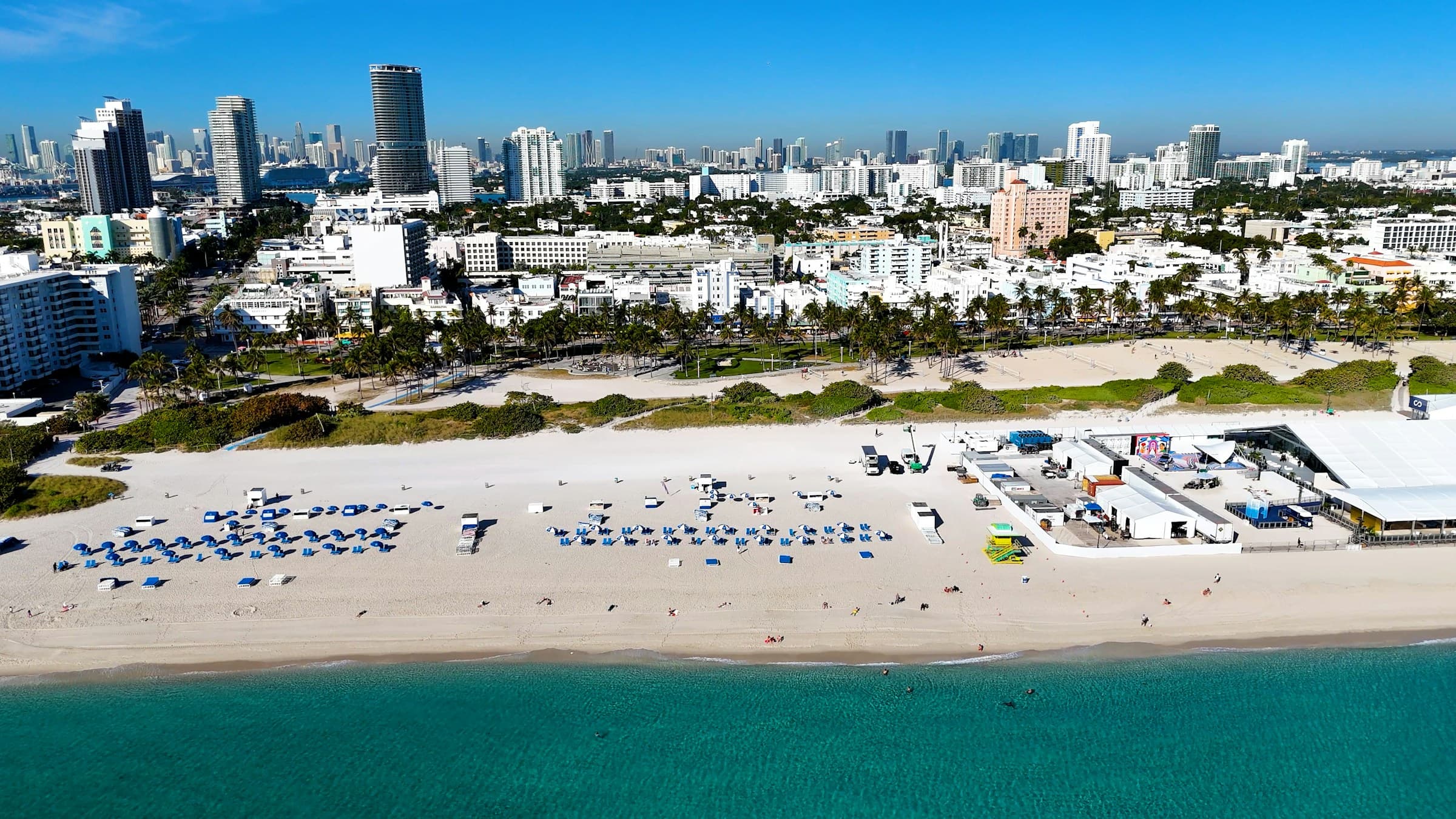
Florida recorded 4,999 drug overdose deaths in 2024. For families in Brickell, Coral Gables, and Little Havana, the number is not abstract. It is a reason to look further than what is available locally.
The Miami–Fort Lauderdale–West Palm Beach tri-county region holds the densest concentration of licensed substance use disorder treatment providers in Florida, historically the highest in the United States. That density has not translated into outcomes for everyone. South Florida's for-profit treatment industry spent the better part of a decade cycling people through programs built around billing rather than recovery. Florida's 2017 Patient Brokering Act and the federal 2018 Eliminating Kickbacks in Recovery Act tightened oversight, but the recurring-relapse dynamic those years created is exactly why many Floridians arrive at conversations about ibogaine. Sixty SAMHSA-licensed substance use programs operate within 25 miles of central Miami. For the people who reach this page, most of those programs have already been tried.
This page covers:
- What ibogaine is and how the medical session actually works
- Why the regulated medical pathway runs through Brazil rather than the United States
- How Nekawa's 28-day program is structured around the work the prescribing physicians do
- What the trip from Miami to Paraty involves, from flight through the Atlantic rainforest to integration
Nekawa is a wellness education academy. It is not a clinic, and it does not prescribe or administer ibogaine. The work the medical team does happens in a hospital under independent licensed Brazilian physicians; Nekawa builds the preparation, environment, and integration around it.
Why Miami residents are looking outside the US for ibogaine
Ibogaine is a Schedule I controlled substance in the United States. No clinic in the US can administer it, not in Florida, not anywhere. For someone whose loved one has been through multiple rounds of detox and residential treatment, that fact lands differently than it might for someone encountering it for the first time.
The South Florida treatment corridor is well-documented. At its peak in the 2010s, it drew people from across the country into a system that often prioritized insurance billing over clinical outcomes. The 2025 SXSW Grand Jury Prize-winning documentary Shuffle followed three Florida residents trapped in exactly that cycle. Florida's 2017 Patient Brokering Act and subsequent federal reforms changed the industry's structure, but they did not change the neurological reality of opioid dependence, or the fact that conventional treatment has a high relapse rate for the people who need something different.
Polysubstance use has made the picture more complicated. The Florida Department of Health flags fentanyl combined with cocaine and fentanyl combined with methamphetamine as a growing share of fatal cases across the Miami-Dade, Broward, and Palm Beach tri-county region. Each use is less predictable than the last. That unpredictability is part of what drives families toward ibogaine, as a fundamentally different intervention working on a different mechanism. Counterfeit pressed pills sold along the Flagler corridor and through Snap and Telegram networks are part of why the unpredictability has gotten worse. Our ibogaine overview covers that mechanism in full.
What ibogaine actually does
Ibogaine is not a substitute drug and it is not a sedative. It is a psychoactive alkaloid derived from the root bark of the Tabernanthe iboga plant. In a hospital setting, under physician supervision, it produces an extended visionary and introspective experience that many patients describe as a forced confrontation with the patterns driving their use, not metaphorically, but as a direct perceptual event.
On the neurological side, ibogaine acts on multiple receptor systems simultaneously. It resets opioid receptor sensitivity, which is why many patients report that withdrawal symptoms are dramatically reduced or absent during the session. It also stimulates the release of GDNF and BDNF, growth factors associated with neuroplasticity and the repair of dopamine pathways damaged by long-term stimulant or opioid use. The weeks following the session are sometimes called the Window of Wonder: a 2 to 12 week period of elevated neuroplasticity where the brain is unusually receptive to new patterns. That window is not automatic. It requires structured work, which is what Nekawa's integration program is built around.
For someone whose loved one has been cycling through treatment in Miami-Dade or Broward County, the relevant point is this: ibogaine does not work the way detox works, and it does not work the way a 30-day residential program works. It is a single high-intensity session followed by a period of integration that determines whether the session produces lasting change. The ibogaine overview on our site covers the mechanism in detail without clinical jargon.
The medical protocol: what hospital-administered ibogaine actually means
Ibogaine has a real cardiac risk profile. It prolongs the QT interval, which means the heart's electrical rhythm must be carefully evaluated before a patient is cleared for treatment. This is not a formality. It is the reason ibogaine requires a hospital setting and a physician-led protocol, and it is the reason Nekawa works within a hospital partnership rather than operating as a standalone retreat.
Before the prescribing physicians clear a patient for ibogaine, the workup includes:
- EKG
- QT-interval check
- Comprehensive blood panel
- Liver function test
- Magnesium loading
The hospital's ICU-trained nursing team monitors continuous cardiac telemetry for a minimum of 24 hours post-dose. An on-site physician is present throughout the session. This infrastructure belongs to the medical team, not Nekawa. Nekawa partners with it; Nekawa does not employ or direct the clinical staff. The full cardiac protocol is covered in detail at /ibogaine/safety.
The session itself, administered by the medical team in a hospital setting, moves through three phases. The intense visionary phase lasts 6 to 12 hours. That is followed by roughly 12 hours of quieter mental processing. Then comes 24 to 48 hours of physical recuperation, with continuous telemetry running throughout.
The full program structure is:
- 10 days of preparation and on-site medical onboarding before the session
- The ibogaine session, administered by the medical team in a hospital setting with continuous cardiac telemetry
- 15 days of structured integration on the property
- 45 days of at-home integration coursework after returning home
Longer on-site programs of up to 90 days are available for students who want deeper transformation work. The 28-day structure is the standard.
Why Brazil, and not somewhere else
Mexico and Costa Rica are where most US residents encounter ibogaine for the first time, because those are the countries that have marketed most aggressively to the US market, including the direct flights out of MIA and FLL that make a weekend trip feel deceptively casual. That marketing does not reflect a regulatory equivalence. In most of those settings, ibogaine is administered outside a hospital, without mandatory cardiac telemetry, and without the physician oversight that the compound's risk profile requires.
Brazil is different. Treatment is regulated by ANVISA, Brazil's federal health agency, the equivalent of the FDA, prescribed by licensed physicians, and delivered with full cardiac infrastructure. Independent licensed Brazilian physicians prescribe and administer ibogaine. The hospital provides the ICU-trained nursing, the telemetry, and the emergency response capacity. This is not a private retreat operating in a regulatory gray zone.
Nekawa is a wellness education academy, structured around the hospital infrastructure that physician-administered ibogaine treatment requires. Nekawa does not prescribe, administer, or monitor ibogaine. What Nekawa provides is the preparation curriculum that helps students arrive ready, the environment in which they recover, and the integration coursework that determines what the session becomes over time. The medical work belongs to the physicians and the hospital. The wellness program belongs to Nekawa.
For Miami residents who have watched South Florida's treatment industry operate without adequate oversight for years, the ANVISA framework is worth understanding clearly. It means the prescribing physicians are accountable to a federal regulatory body with enforcement authority, rather than to a private operator's internal standards. The legal status page covers the US and global regulatory picture in full.
Getting from Miami to Paraty
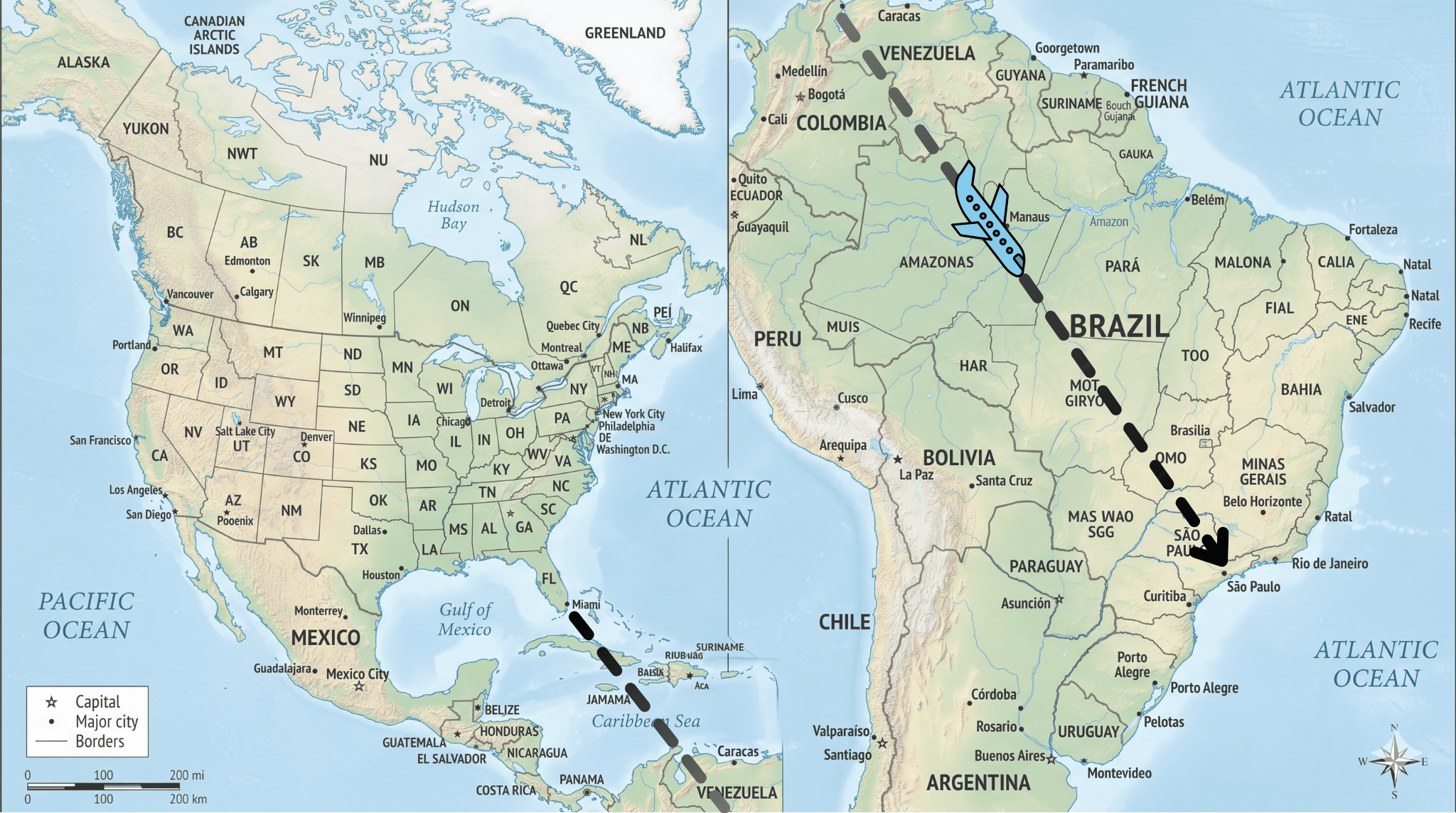
Miami has more nonstop service to Brazil than any other US city. American Airlines and LATAM both operate daily nonstop flights from Miami International Airport (MIA) to São Paulo–Guarulhos (GRU), with block times of roughly 8 hours 30 minutes, about 90 minutes shorter than from most other US metros. American Airlines also operates daily nonstop service from MIA to Rio de Janeiro–Galeão (GIG) on a similar schedule. Most students take the late-evening departure out of MIA's Concourse D and land in Brazil the following morning.
From either Brazilian airport, it is a 4-hour drive along the BR-101 coastal highway to Paraty, on Brazil's Costa Verde. Our intake team arranges private ground transport from GRU or GIG; students arrive directly at our location without navigating Brazilian transit.
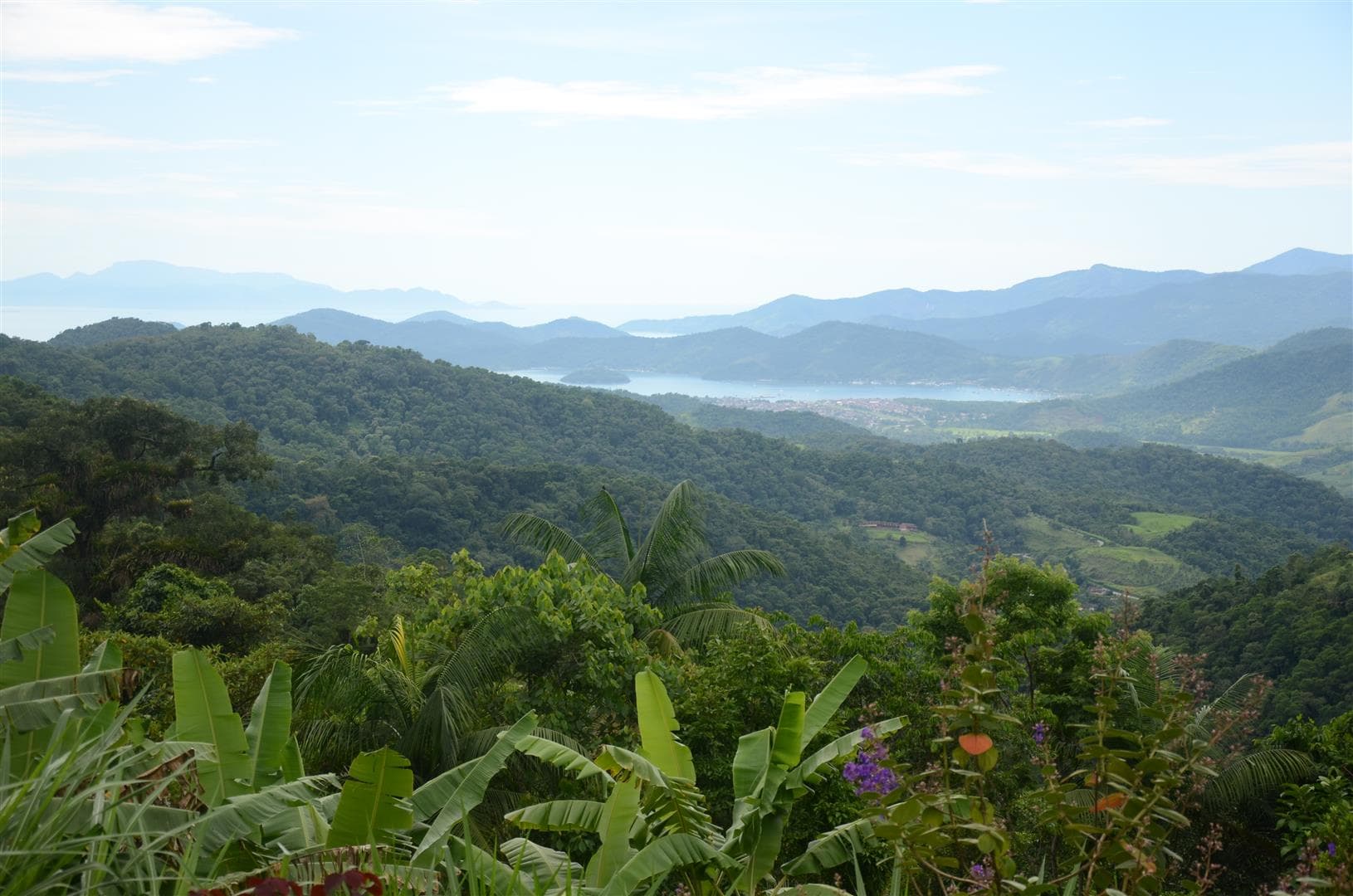
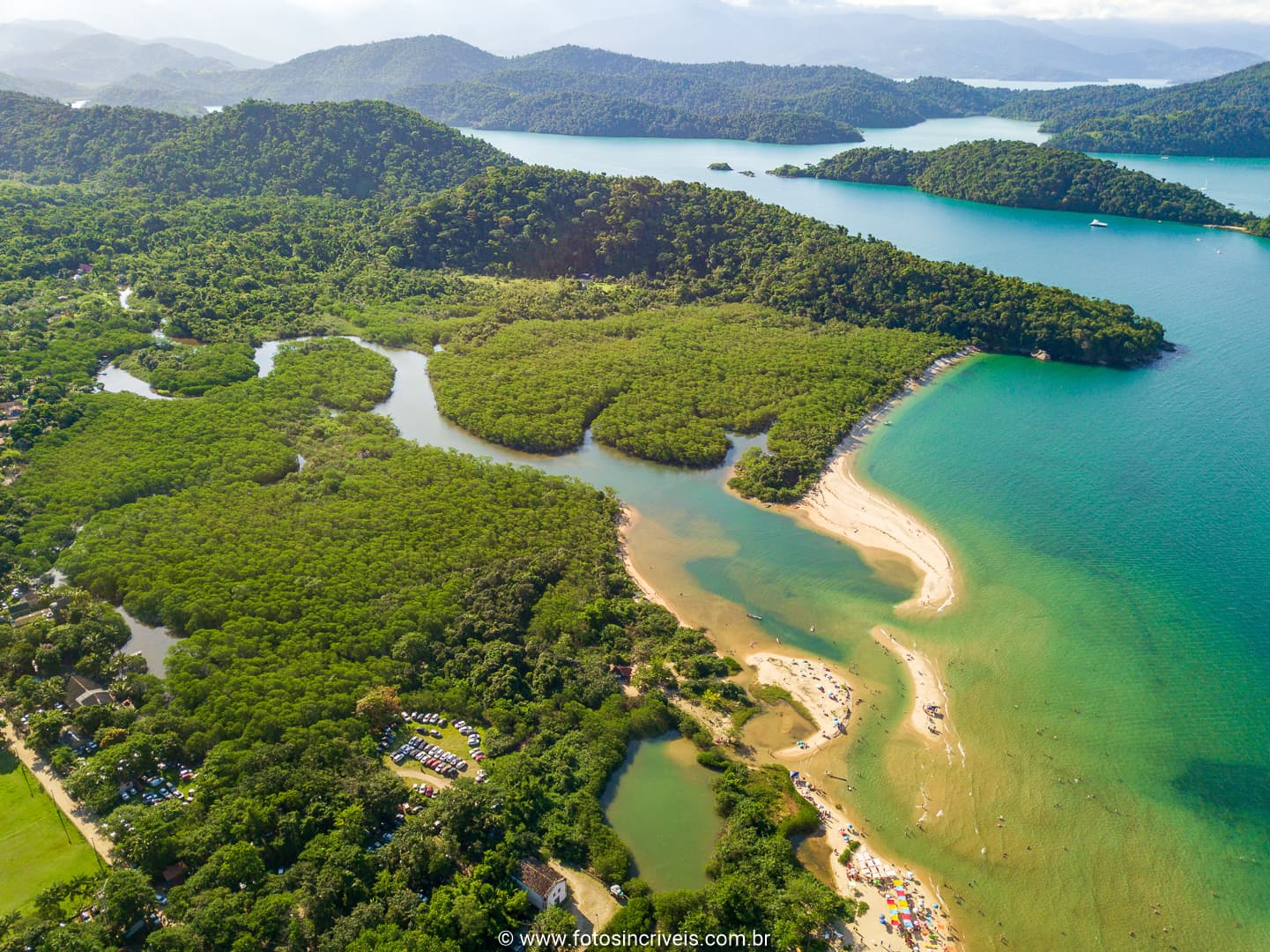
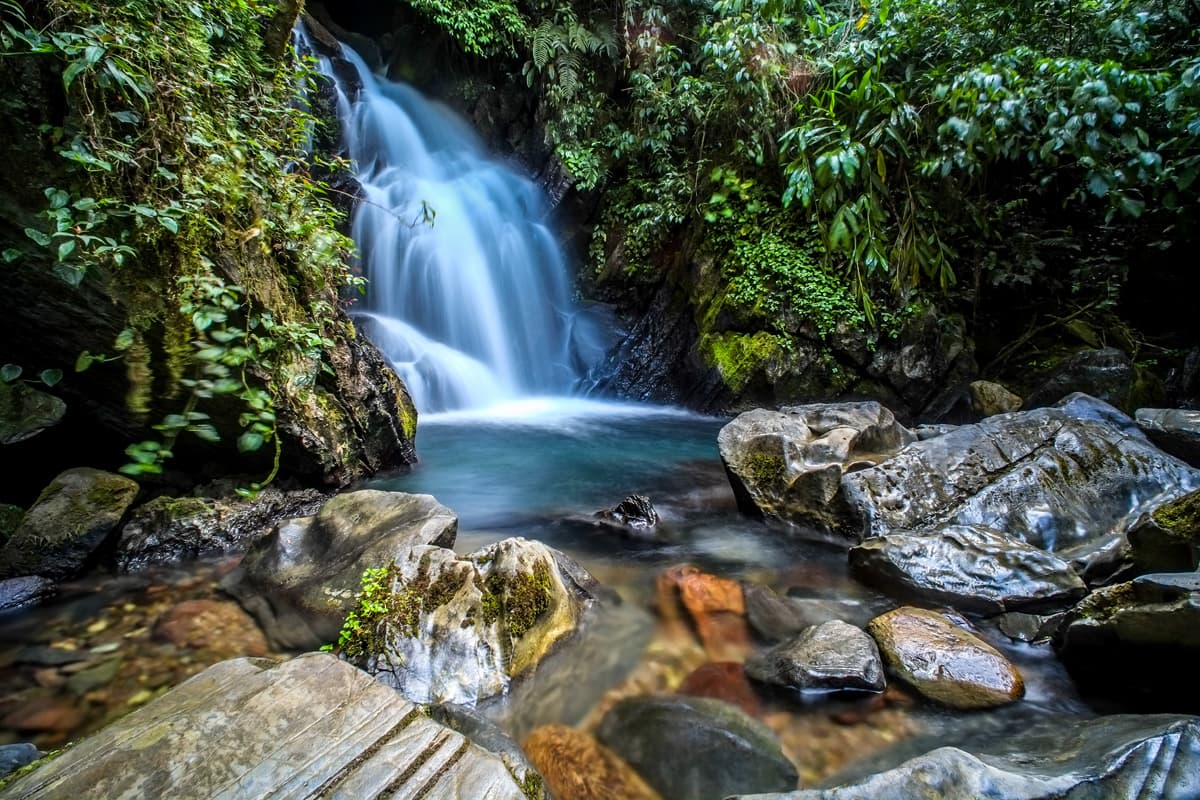
Paraty sits at the edge of the Atlantic rainforest, Mata Atlântica, one of the most biodiverse ecosystems remaining on the planet. Our location is old-growth jungle at the margin of the sea: waterfalls, a protected lagoon, and a bay scattered with more than 300 forested islands. The colonial port town of Paraty is a short distance away. What students arrive to is not a clinical facility. It is an environment built for the kind of internal work that ibogaine makes possible.
As of January 1, 2026, US travelers need an approved Brazilian eVisa to enter Brazil. Apply online at brazil.vfsevisa.com.
- Cost: US$80.90
- Processing time: about 72 hours
- Validity: 10 years, multiple entries of up to 90 days per stay
- Passport: US passport with at least 6 months of remaining validity
Our intake team walks every student through this during onboarding.
Florida's legal and policy context for ibogaine
Ibogaine is a Schedule I controlled substance under federal law. That status has not changed. What changed on April 18, 2026 is the federal posture toward research: President Trump signed an Executive Order directing a coordinated federal effort to prioritize ibogaine research, accelerate clinical development, and modernize regulatory pathways, with a specific focus on Veterans. The order does not reschedule ibogaine. For US residents, including those in Miami, the physician-prescribed pathway still requires travel abroad.
Florida has not passed legislation funding or authorizing ibogaine clinical trials. Americans for Ibogaine, a national nonprofit led by former Texas Governor Rick Perry, W. Bryan Hubbard, and former Navy SEAL Marcus Luttrell, has identified Florida as a state of interest for joining a multi-state research collaboration alongside Texas. As of April 2026, no Florida bill has been introduced or passed. Given the Miami VA Healthcare System's footprint across Dade and Broward, Veterans are likely to be a significant share of any future Florida cohort if state legislation moves.
For Miami residents, the practical reality is unchanged: ibogaine treatment is not available in Florida, and the regulated medical pathway runs through Brazil. The April 2026 Executive Order matters for the long arc of domestic access, particularly for Veterans. It does not create a near-term in-state option.
What integration looks like when you return to Miami
The ibogaine session opens a window. What happens inside that window, the 2 to 12 weeks of elevated neuroplasticity that follow, determines whether the experience produces lasting change or fades into memory. The 15 days of structured integration on the property in Paraty are the beginning of that work, not the end of it.
When students return to Miami, 45 days of at-home integration coursework continue the program. This is not a check-in call or a resource list. It is structured coursework, designed around the same neuroplasticity window the on-site integration begins. The environment in Miami, the relationships, the routines, the bar two blocks from the apartment, is where the work of the session either holds or doesn't. The at-home coursework is built with that in mind.
For students returning to Miami-Dade, Broward, or Palm Beach, the coursework runs alongside whatever local support structures make sense, whether that is outpatient therapy, peer support, or family work. Nekawa's integration program is not a replacement for local support. It is the structure that makes local support more likely to land.
How to start: what a discovery call with Nekawa covers
A discovery call with our intake team is a candidacy and program-fit conversation. It is not a sales call, and it is not a clinical screening. Nekawa determines whether a student is genuinely ready to do the preparation and integration work the program requires; that readiness is separate from the medical clearance the prescribing physicians conduct independently.
On the call, we walk through your situation: what has been tried, what the pattern looks like, what the student's goals are, and whether the 28-day structure fits what they are actually facing. We cover the program timeline, the travel logistics from Miami, the visa process, and what preparation looks like in the weeks before arrival. If the program is a fit, we move to intake and scheduling. If it is not, we say so directly.
Clinical screening (the EKG, the blood work, the QT-interval evaluation) is conducted by the prescribing physicians as a separate step, after program candidacy is established. Nekawa does not conduct medical screening and does not make medical determinations.
If someone you love is in active addiction in Miami and you have already been through what the local system offers, the discovery call is the right next step. You can apply at nekawa.com/apply.
Where the jungle meets the sea
Nekawa sits in the Atlantic rainforest just outside the colonial port town of Paraty. Old-growth jungle, waterfalls, natural swimming pools, and a bay scattered with more than 300 forested islands. After Miami, this is a different world.
Frequently asked questions
More questions? See our full FAQ.
If someone in your life is stuck in a pattern that Miami's treatment options have not broken, whether that is cycling through programs in Brickell or Coral Gables, or managing a polysubstance situation that keeps shifting, ibogaine through the physician-prescribed pathway in Brazil is worth understanding clearly. Nekawa's discovery call is the place to start: a direct conversation about whether the 28-day program is the right fit, what the trip from Miami involves, and what preparation actually requires. Apply at nekawa.com/apply and our intake team will reach out to schedule a call.
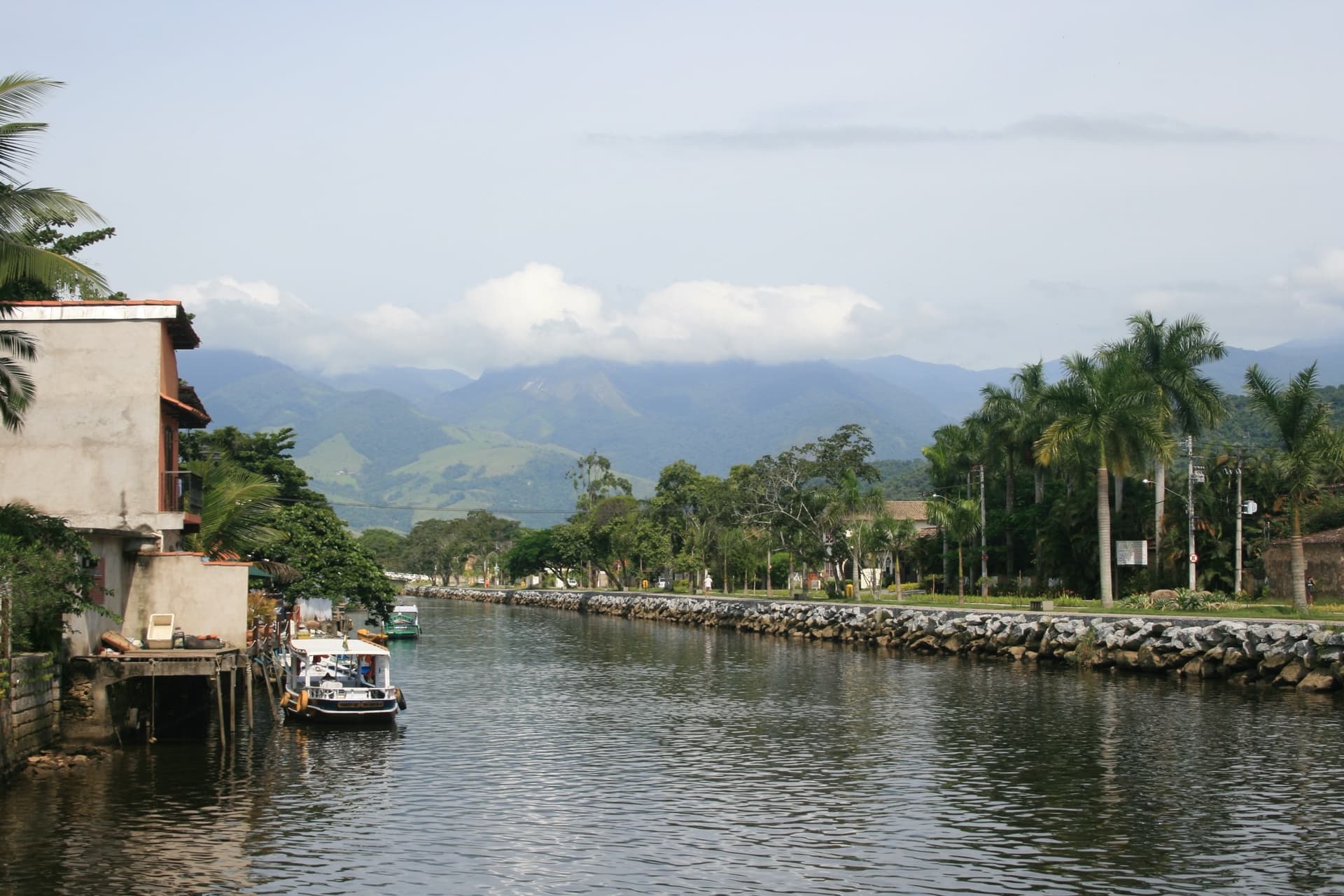
A medical program in a setting that matters
The hospital protocol is the foundation. The setting is the second medicine. See the property, the rooms, the team, and the route in.
Let’s connect.
No pressure — tell us a little about what you’re going through.