
Safety First
Is ibogaine safe? It depends on the dose, and on what is already in your body.
Natural ibogaine treatment at Nekawa is highly individualized: doses that build gradually instead of one big flood, inside a residential program with cardiac screening before you arrive and ECG monitoring during treatment.
Our approach is thousands of years old, taught by indigenous teachers.
Traditionally, iboga and its constituent ibogaine are used over a long period of time, to maximize the plant’s neuroregenerative abilities and to allow for a deeper introspective process.
The unregulated ibogaine industry built itself around flood doses, to move people through treatment and detox fast. We follow the science of the native people instead.
Our comprehensive approach
Screening happens before you arrive. Everything after that happens on campus, inside our residential program.
- EKG
- Comprehensive blood work
- Psychological evaluation

Fully holistic detox
Natural methods clear the body, and small, incremental doses of full-spectrum ibogaine complete the detox, preparing you for the larger doses.
How the detox worksCumulative dosing
More ibogaine over more time, not one big flood. Highly individualized, with your heart checked at every step.
How cumulative dosing worksLong-term integration
The weeks after ibogaine matter most. Integration runs between doses and through a final week on campus.
Where the risk actually lives
Large doses of ibogaine, given before a person has detoxed, are dangerous.
That is the flood-dose model much of the industry still uses. Ours runs the other way: small, incremental doses of full-spectrum ibogaine detox you fully, and the larger doses come only after.
The largest ibogaine safety study to date, 19,071 people across 11 clinics, found the deaths concentrated in one group: people using ibogaine as their opioid detox.⁸⁵ Read the study
Detox first. Larger doses after.
The first part of the program clears your body. Natural methods do most of the work, and small, incremental doses of full-spectrum ibogaine take you the rest of the way, so you are fully detoxed before the larger doses.
- Small, incremental doses of full-spectrum ibogaine
- Fasting and an all-natural supplement protocol
- Hydro-colonics and gut cleansing
- Sauna and cold plunge
- Somatic and breath work
- Daily movement outdoors
Any medication changes, including coming off opioids, happen under medical supervision, never on your own.

Opioids
Cleared with small, incremental doses of full-spectrum ibogaine under medical supervision, before any larger dose.
Psychiatric medications
Washed out under medical direction before any treatment decision.
Cannabis
Cleared so nothing else is layered over the medicine.
Nicotine
Its own load on the heart. It goes too.
Alcohol and stimulants
Hard on the heart and the liver. Out before the larger doses.
More ibogaine, over more time.
more ibogaine than most centers that offer flood doses, spread across days
dosed for your body, your history, and your goals
your heart checked on ECG before you move up
Our dosing protocol draws on leading practitioners in the field and follows the same principles as the FDA’s proposed approach for upcoming US ibogaine trials: start low, step up only after a safety check, and keep watch on the heart.
The difference is the medicine. We use full-spectrum ibogaine, for a more holistic and spiritual experience.
Building up gradually is designed to put less strain on the heart than one large dose. It lowers the risk; it does not remove it.
The FDA is moving in the same direction.
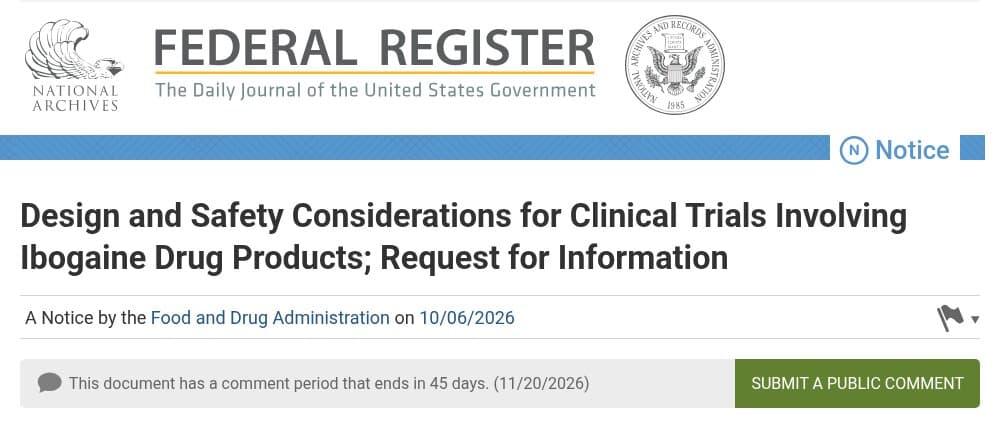
On 6 October 2026, the FDA published how it plans to run the first US ibogaine trials. The principles line up with how we already work.
| Principle | FDA trials | Nekawa |
|---|---|---|
| Start with a low dose | ||
| Step up only after a safety check | ||
| Monitor the heart at every dose |
The difference: we provide full preparation and integration in an immersive natural environment, and we bring in the spiritual traditions of Africa and the Amazon. The FDA’s trials leave the tradition and the spirituality out of the medicine.
The program team
Spiritual guides and iboga facilitators take you through the experience. A licensed medical team is on hand, and your heart is on ECG monitoring during treatment.
Nekawa Program Team
- Indigenous teachers and ceremony facilitators
- Peer mentors with lived experience recovery
- Integration specialists and certified coaches
Frequently Asked Questions
Ready to experience Ibogaine the safe way?
Click below to begin your intake screening and speak with a guide. It’s free and completely confidential.

Citations (2)
[85] Arns M, Shinozuka K, Barsuglia J (2026). Indication-stratified mortality risk of ibogaine treatment under contemporary safety protocols: a multisite analysis of 19,071 patients and updated systematic review of fatalities. Research Square preprint (posted 17 June 2026; not yet peer reviewed). Read the source →
The largest ibogaine safety analysis to date: 19,071 patients treated under the 2016 safety guidelines at 11 international clinics. Six deaths occurred within 72 hours of dosing (0.03%), all among the 10,382 opioid use disorder patients; there were none among 8,689 non-SUD patients. An updated systematic review found 41 of 44 fatalities with a known indication involved substance use disorder, predominantly opioid detox. The authors describe the 0.03% as a lower bound rather than the true rate, since clinic participation was voluntary and deaths were not independently adjudicated. A preprint that has not completed peer review; one author holds equity in ibogaine companies and was firewalled from the data analysis.
[85] Daly N, Jacobs A (2026). Americans Encounter Risks at Psychedelic Clinics Abroad. The New York Times, 26 August 2026. Read the source →
Investigation into overseas psychedelic clinics. The Times counted at least 40 clinics and wellness centers in Mexico offering ibogaine, up from almost none a decade ago, and found no official tally anywhere of injuries or deaths. Patients described absent medical screening, prescription drugs given without regard to medical history, pressure to stop psychiatric medications abruptly, upselling during treatment, and sexual assault with little legal recourse. Also reports a JAMA survey of 49 retreats and clinics in which fewer than half employed a medical professional and roughly 10% employed a staff member with emergency medical training.