

Ibogaine treatment for Suboxone and Buprenorphine has arrived
Suboxone and buprenorphine pull people out of active addiction, and for many they are genuinely lifesaving. The trouble comes later, when a medication meant to be a bridge becomes something you cannot get off. Years in, a lot of people feel flat and half-present, and they want to be fully alive again with no opioid in their system. Ibogaine treatment for Suboxone works at the mu-opioid receptor to make coming off possible.
Medical care connected to the program is provided by licensed medical professionals under their own licenses. See our medical disclaimer.
Coming off Suboxone and other long-acting opioids can mean long, protracted withdrawal. With our cumulative, full-spectrum ibogaine program, you can come off in a program of six weeks or more: two weeks of preparation,* two weeks of ibogaine treatment to detox, and two weeks of integration. See below to learn more.
*Longer if you have been on buprenorphine for many years or at a high dose.
About 1.5 million Americans were dispensed buprenorphine in 2023, the medication in Suboxone, and many remain on it for years.¹⁰
If you are reading this, Suboxone probably did its job. It got you off the drug that was going to kill you, and that matters. The problem is what came next. You are still on an opioid every day, the taper you keep planning never quite holds, and somewhere along the way the color drained out of things.
Being on buprenorphine is not a moral failing, and getting off it should not have to mean months of withdrawal or one more taper that stalls at the bottom. Ibogaine treatment for Suboxone works on the receptor itself, which is a different kind of treatment than trading one dose schedule for a slower one.
“Suboxone did its job. Getting off it is a different problem, and almost nobody is set up to help with that part.”
Charles D. Johnston, Co-Founder, Nekawa
How Nekawa treats buprenorphine dependence
Coming off buprenorphine needs a different plan than coming off a street opioid, and it is the one place people almost always get wrong on their own. Because buprenorphine clings so tightly to the receptor, it blocks ibogaine from reaching it. So buprenorphine, and any other long-acting opioid, has to be out of the receptor before ibogaine treatment begins.¹² Short-acting opioids are different. Being on one when you start ibogaine is normal, and it is part of the plan.
That is why ibogaine treatment for Suboxone is a program of six weeks or more. It starts with about two weeks of preparation, moving you off buprenorphine and onto a short-acting opioid, and longer if you have been on it for many years or at a high dose. Then come two weeks of cumulative full-spectrum ibogaine, small doses rising step by step, which clear the short-acting opioid and carry you through withdrawal. Two weeks of integration follow.
As the doses build, ibogaine resets the receptor toward its pre-dependence state. The flat, muted feeling many people describe on buprenorphine begins to lift, and for most students the physical withdrawal eases within hours, not weeks.¹ How ibogaine works →

Why Suboxone and buprenorphine are so hard to stop
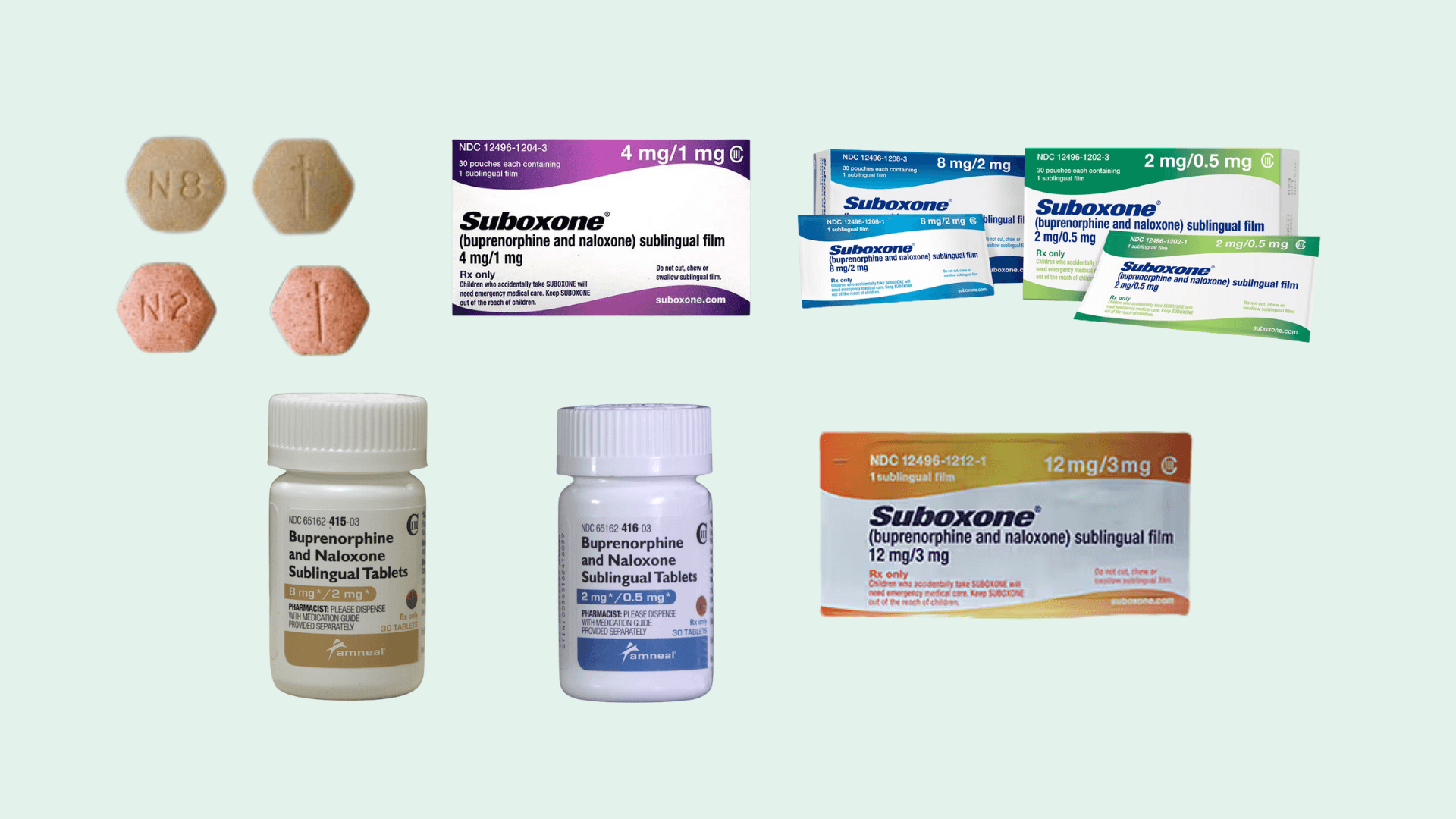
Buprenorphine, the active medication in Suboxone, Subutex, Zubsolv, Sublocade, and Brixadi, is a partial agonist at the mu-opioid receptor. It binds that receptor more tightly than almost any other opioid, morphine and fentanyl included, and it holds on with a long half-life.¹¹ That tight, lasting grip is exactly what makes it good medicine. It blocks other opioids and stays steady in the body. It is also what makes it so hard to leave.
When you lower the dose, the receptor is slow to adjust. So withdrawal from buprenorphine tends to be milder than fentanyl but far more drawn out, dragging on for weeks. Most people who try to taper stall near the bottom, feel awful, and go back up. That is not weakness. It is pharmacology.
Naltrexone shots like Vivitrol work the other way, blocking the receptor instead of feeding it, but people on them often want the same thing: to be free of a monthly injection and fully present again. Ibogaine works on the same mu-opioid receptor all of these medications occupy, guiding it back toward where it was before. If you want to understand ibogaine and opioids better, read more
Your ibogaine treatment for Suboxone pretox protocol
Minimizing Withdrawals

What's included in your program
- Supervised transition off buprenorphine onto a short-acting opioid, then cumulative full-spectrum ibogaine to clear it
- Natural ibogaine treatment led by spiritual guides and iboga facilitators, with a licensed medical team on hand
- Preparation and integration support with trained psychotherapists
- Pre-treatment Ayurvedic cleansing protocol (sweat, colonics, nutrition, exercise)
- Post-treatment integration support for months, not days, during the Window of Wonder (WoW)
- Accommodations at our luxury rainforest center for the full program
- BDNF stimulation protocols for faster neural repair
- Nature immersion: rainforest, ocean, and mountain

Suggested Programs
Coming off buprenorphine needs some runway, because buprenorphine and other long-acting opioids have to clear the receptor before ibogaine treatment, and depot injections can take weeks to leave the body. That is why we recommend at least six weeks for Suboxone and buprenorphine: two weeks of preparation, two weeks of ibogaine treatment, and two weeks of integration.

Ibogaine vs. conventional treatment
MAT means medication-assisted treatment: staying on a prescribed opioid medication like buprenorphine to manage dependence.

How ibogaine addresses this substance
Ibogaine works across four neurological and psychological dimensions, each specific to how this substance affects the brain.
Receptor Reset
Buprenorphine holds the mu-opioid receptor in a steady, occupied state for years. Ibogaine acts on that same receptor, and on the NMDA receptors beside it, guiding the system back toward how it worked before maintenance began. It addresses the biochemistry of dependence at the source instead of holding it in place.
Withdrawal Relief
Buprenorphine withdrawal is milder than fentanyl but far more drawn out, which is why tapers stall in the tail. Ibogaine interrupts that process rather than substituting another drug for it. Most students feel their physical symptoms ease within the first hours, including the protracted, weeks-long tail that usually sends people back to the medication.
Feeling Returns
The most common thing we hear from long-term buprenorphine patients is not pain but flatness, a muted emotional range that never quite lifts. As the receptor resets, most people describe emotions, motivation, and clarity coming back. Being fully present again is often the reason they wanted off in the first place.
Neural Regeneration
Years on any opioid, medication included, wear on the brain's own signaling. Ibogaine stimulates BDNF, the protein behind neuroplasticity and repair, which speeds the receptor's recovery and shortens the protracted withdrawal that makes tapering off buprenorphine so hard to finish.
Ibogaine aftercare is the best way to ensure long-term success

Citations (4)
[1] Davis AK, Barsuglia JP, Windham-Herman AM, Lynch M, Polanco M (2017). Subjective effectiveness of ibogaine treatment for problematic opioid consumption: Short- and long-term outcomes and current psychological functioning. Journal of Psychedelic Studies, 1(2), 65–73. Read the source →
Survey of 88 people who received ibogaine for opioid use disorder. 80% indicated ibogaine eliminated or drastically reduced withdrawal symptoms; 30% reported never using opioids again; 54% of those abstainers had been abstinent for at least one year.
[10] Guy GP Jr, Jones CM, Rikard M, Strahan AE, Zhang K, Olsen Y (2025). Individuals Dispensed Buprenorphine in the United States Before and After Federal Policy Changes Aimed at Increasing Access. Journal of Addiction Medicine, 19(5), 615–621. Read the source →
National dispensing analysis reporting that the number of individuals dispensed buprenorphine from U.S. retail pharmacies rose from about 1.2 million in 2018 to about 1.5 million in 2023.
[11] Shulman M, Wai JM, Nunes EV (2019). Buprenorphine Treatment for Opioid Use Disorder: An Overview. CNS Drugs, 33(6), 567–580. Read the source →
Overview of medications for opioid use disorder. Describes buprenorphine as a partial mu-opioid agonist with very high receptor affinity and a long duration of action, and extended-release naltrexone (Vivitrol) as a mu-opioid antagonist that blocks the receptor.
[12] Cherian K, Shinozuka K, Tabaac BJ, et al. (2024). Psychedelic Therapy: A Primer for Primary Care Clinicians—Ibogaine. American Journal of Therapeutics, 31(2), e133–e140. Read the source →
Peer-reviewed clinical primer noting that patients receiving ibogaine for opioid use disorder must withdraw from long-acting opioids first, ensuring they are no longer present in plasma, with clinicians recommending a switch to short-acting opioids up to two weeks before treatment.