
Natural Ibogaine Treatment
One flood, or four days. Two ways to take ibogaine, and why we chose the slower one.
Most clinics give ibogaine as a single large dose in a hospital and send you home within days. Natural ibogaine treatment uses full-spectrum iboga, in smaller doses that build over four days, inside a 28-day program, with spiritual guides in the room and medical oversight and cardiac monitoring throughout.
The same plant. Two very different weeks.
When people say "ibogaine treatment" they usually mean the clinical model: a hospital, one very large dose, and a fast exit. Natural ibogaine treatment starts from the same plant, keeps all of its alkaloids instead of isolating one, and asks it to do something different. Here is what each one actually involves.
Isolated ibogaine HCl vs. full-spectrum iboga
What most clinics use. One alkaloid, pulled out of the plant chemistry and purified into a salt, a white powder. It is precise and easy to measure, and it is the form behind most of the published research.
What natural ibogaine treatment uses. An extract of the iboga root that keeps all of the plant’s alkaloids together, ibogaine alongside the others the plant makes, the way the medicine has traditionally been taken.
We believe nature is the best healer, and that the plant’s alkaloids work together, for well-being, for the visions, and for the brain’s repair. When ibogaine is extracted as a single molecule, it loses much of that. That belief comes from years of practice; no trial has yet compared the two.
Hospital-based. One flood dose. Built for detox.
- One large flood dose, typically 10 to 15 mg/kg, taken in a single treatment.
- Zero to two small boosters in the days that follow. The whole course usually maxes out around 15 mg/kg, given over four consecutive days at most.
- A 24 to 36 hour experience, a few days of recovery, then discharge.
- Designed to get people through opioid withdrawal as fast as possible.
This is the model most of the ibogaine industry runs on, and it is the model behind most of the published data. It works for some people. It is also where the risk concentrates.
Cumulative dosing, the way iboga has traditionally been taken.
- Four daily doses, typically around 4 mg/kg each, over four consecutive days.
- No single dose comes close to a flood.
- Each day builds on the last, so the experience deepens instead of peaking.
- Held inside a 28-day program: an all-natural detox before, 15 days of in-person integration after.
This is what we do at Nekawa. Spiritual guides in the room, medical oversight and cardiac monitoring throughout, and the time the medicine needs.
Similar amount of medicine. Very different peak.
Add up the course and the two approaches land close together: a hospital flood plus boosters usually tops out around 15 mg/kg, and four days of natural ibogaine treatment come to about 16. What separates them is the most ibogaine in your body at any one moment. The flood puts most of it in on the first night. Natural ibogaine treatment never lets it climb that high.
How the experience moves
A flood takes most people into the visionary phase on the first night, then drops off hard, and the booster days barely register. Natural ibogaine treatment is more like a roller coaster that keeps climbing: each day goes a little higher than the last. Early reports put the start of the visionary phase at around 6 to 9 mg/kg,¹⁴⁸ and with cumulative dosing the total reaches that range with the second dose. From there the peak is more gradual and lasts longer. In our experience, that is partly because we use full-spectrum iboga, with all of the plant’s alkaloids, not isolated ibogaine alone.
Typical figures, shown to make the shape clear. Every dose at Nekawa is calculated for the individual by the medical team from weight, metabolism and screening results. This is a sketch of the pattern, not a protocol, and not advice.
Three things the slow way gives you
We did not choose cumulative dosing because it is gentler to market. We chose it because of what we saw it do, and because the tradition the medicine comes from never treated it as a one-night event.
A deeper experience, not a shorter one
A flood dose is intense and fast. In our experience, four days of building doses open a longer, more introspective process, with more room for the spiritual side of the medicine that the Bwiti tradition is built around. That is an observation from our program, not a controlled finding, and we say so.
More time for the brain to do its work
In animal studies, ibogaine raises the growth factors linked to neural repair, GDNF and BDNF,¹⁷ and one of those signals appears to keep itself switched on after the drug is gone.⁸¹ Whether spreading the medicine over four days produces more of that benefit in people has not been tested in a trial. We find that it does. Treat that as our experience, not settled science.
Less load on the heart at any one moment
Ibogaine’s real risk is cardiac. QT prolongation tracks how much of the drug is in the blood,¹²³ and in the largest safety dataset to date every death sat in one group: people being detoxed from opioids while still dependent.⁸⁵ Lower single doses keep the peak lower. They do not remove the risk, which is why screening and monitoring never relax.

Iboga was never meant to be a one-night event.
In Gabon, iboga root bark has been used for generations by the Bwiti and the peoples who taught them, for initiation and for ongoing healing. The full initiation dose exists in that tradition. So does the smaller, repeated dose, taken over time for healing, practice and community. The Western clinic took the first and left the second behind.
Natural ibogaine treatment brings the second back, inside a structure the tradition never needed to invent: cardiac screening, continuous monitoring, and medical oversight. We are not the tradition and do not pretend to be. We learned from indigenous teachers, and they are part of the program team.
Read about the Bwiti tradition and the science
Not one night. Four days, then fifteen more.
- Before
A clean baseline
Opioids, psychiatric medications, cannabis, nicotine and alcohol are out of your body first, through an all-natural detox. Bloodwork, a 12-lead EKG and a full medical and psychological evaluation come before any treatment decision.
- Day 1
The first dose, kept low
A dose calculated for your weight and metabolism. A spiritual guide sits with you. The medical team is present and your heart is on a monitor. Most people describe the first day as quiet, inward, and longer than they expected.
- Days 2 and 3
It builds
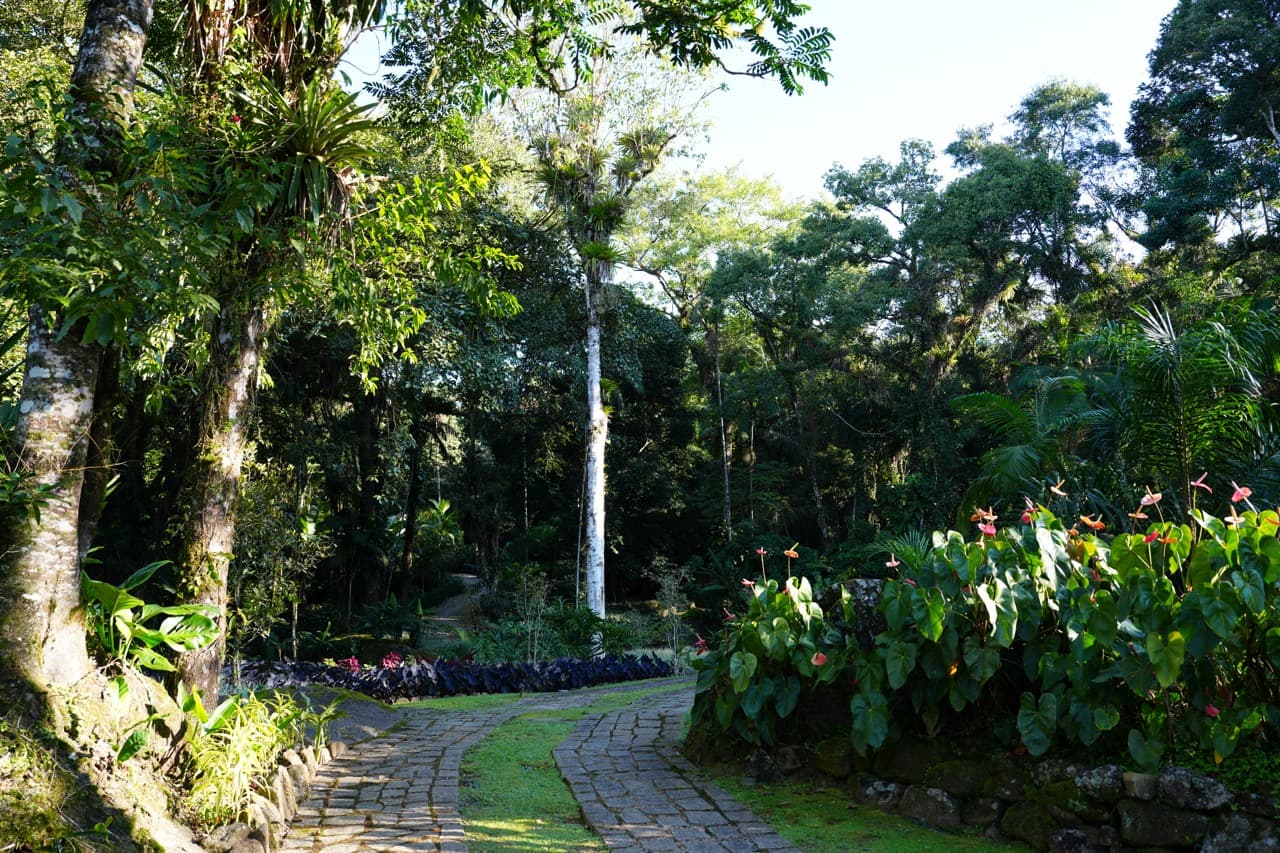
Each day adds to the last. The introspection deepens and the visionary side of the medicine tends to open here, without the disorientation of a single large dose. Between doses there is rest, food, and the forest.
- Day 4
The last dose
The fourth dose closes the treatment. By now the medicine has had four days to work instead of one night, and the cardiac load has never approached what a flood puts on the heart.
- Days 5 to 19
The Window of Wonder
Fifteen days of in-person integration, longer than most clinics’ entire programs. This is the part most people underestimate, and the part we think matters most.

What natural ibogaine treatment is not
It is not a faster detox.
You do not meet the medicine while opioids or other substances are still in your body. The all-natural detox comes first, and it takes as long as it takes. If what you need is an emergency detox in hospital, that is the clinical model, and it is also where the deaths are.
It is not risk-free.
Lower doses make ibogaine safer, but it still has risks. Some people are screened out after the EKG and bloodwork, and that is the screening working.
It is not a promise.
Ibogaine opens a door. Walking through it is still a lot of work, and that work is what we focus on, not the ibogaine. The detox before, the guides in the room, the fifteen days of integration after: we put everything else around the medicine.
Clinical versus natural, on one page
Frequently asked about natural ibogaine treatment
More on the program, the property and the science in our full FAQ.
Not sure which approach is right for you?
Book a call. We will ask about what you are using, what you have tried and what you are hoping for, and we will tell you plainly whether natural ibogaine treatment fits, or whether something else does.
Citations (5)
[17] Marton S, González B, Rodríguez-Bottero S, et al. (2019). Ibogaine Administration Modifies GDNF and BDNF Expression in Brain Regions Involved in Mesocorticolimbic and Nigral Dopaminergic Circuits. Frontiers in Pharmacology, 10, 193. Read the source →
Rodent study showing that a single dose of ibogaine raises BDNF expression in the nucleus accumbens, substantia nigra, and prefrontal cortex, and selectively raises GDNF in the ventral tegmental area at the dose range effective in self-administration models.
[81] He DY, Ron D (2006). Autoregulation of glial cell line-derived neurotrophic factor expression: implications for the long-lasting actions of ibogaine. The FASEB Journal, 20(13), 2420–2422. Read the source →
Shows ibogaine triggers a sustained, self-sustaining upregulation of GDNF in reward-related brain regions — a mechanism for effects that outlast the drug itself.
[123] Knuijver T, Ter Heine R, Schellekens AFA, Heydari P, Lucas L, Westra S, Belgers M, Van Oosteren T, Verkes RJ, Kramers C (2024). The pharmacokinetics and pharmacodynamics of ibogaine in opioid use disorder patients. Journal of Psychopharmacology, 38(5), 481–488. Read the source →
PK/PD study in opioid use disorder patients: ibogaine clearance varies more than ten-fold with CYP2D6 enzyme activity, and QTc prolongation tracks drug exposure. The quantitative basis for strict cardiac screening and for clearing CYP2D6-inhibiting medications before treatment.
[85] Arns M, Shinozuka K, Barsuglia J (2026). Indication-stratified mortality risk of ibogaine treatment under contemporary safety protocols: a multisite analysis of 19,071 patients and updated systematic review of fatalities. Research Square preprint (posted 17 June 2026; not yet peer reviewed). Read the source →
The largest ibogaine safety analysis to date: 19,071 patients treated under the 2016 safety guidelines at 11 international clinics. Six deaths occurred within 72 hours of dosing (0.03%), all among the 10,382 opioid use disorder patients; there were none among 8,689 non-SUD patients. An updated systematic review found 41 of 44 fatalities with a known indication involved substance use disorder, predominantly opioid detox. The authors describe the 0.03% as a lower bound rather than the true rate, since clinic participation was voluntary and deaths were not independently adjudicated. A preprint that has not completed peer review; one author holds equity in ibogaine companies and was firewalled from the data analysis.
[148] Alper KR, Beal D, Kaplan CD (2001). A contemporary history of ibogaine in the United States and Europe. The Alkaloids: Chemistry and Biology, 56, 249–281. Read the source →
Historical review of ibogaine use in the US and Europe. Records Howard Lotsof's account that doses of about 6 to 9 mg/kg produced an active phase of dream-like visualizations followed by a period of deep introspection. These are early, informal reports, not a controlled dose-finding study.