
Ibogaine treatment for heroin, the reset behind three decades of detox reports
Heroin trains the opioid receptor to expect it, and once that happens, stopping sets off withdrawal that has nothing to do with willpower. Heroin is the substance ibogaine has the longest track record with. Most of our students tell us the acute withdrawal eased sharply, or lifted entirely, within the first hours of treatment.
Medical care connected to the program is provided by licensed medical professionals under their own licenses. See our medical disclaimer.
Heroin overdose deaths in the US peaked near 15,500 in 2016 and have since fallen to about 4,000²
If you are reading this, you have almost certainly tried to stop already. Cold turkey, a methadone program, suboxone, white-knuckle willpower. Heroin outlasts most of it, and that is the drug talking, not a flaw in you.
Ibogaine does not manage heroin withdrawal the way a substitute drug does. It interrupts the receptor mechanism that drives the withdrawal in the first place. That is a different kind of treatment from anything you have likely been offered.
“I lived through three years of heroin addiction, and most of it was intravenous. When my ibogaine treatment ended, that nightmare ended with it. I still find it hard to explain to people how completely it lifted. You almost have to have lived inside it to understand what it means to be free of it.”
Charles D. Johnston, Co-Founder, Nekawa
How Nekawa treats heroin addiction
Heroin clears the body quickly, which is the one thing that works in your favor here. The pre-treatment window is shorter than for long-acting opioids like fentanyl or methadone, because there is no drug pooling in fat tissue that has to leach out first.
Ibogaine for heroin resets the mu-opioid receptor toward its pre-addiction state, so it removes the physical basis of the dependency instead of managing it with another opioid. In the earliest and most cited case series, most heroin-dependent patients came through the first 72 hours with no objective signs of withdrawal.²² That evidence is open-label and uncontrolled, and we hold it honestly, but it lines up with what most of our students tell us.
The preparation still matters. A structured detox clears the receptor and confirms your heart is fit for ibogaine treatment, which is what makes the reset both safe and complete. How ibogaine works →
Why heroin is so hard to break
Heroin crosses into the brain fast and clears fast, so the receptor swings from flooded to empty within hours. That short cycle is what makes the withdrawal come on so quickly and feel so punishing, and it is why the next dose starts to feel less like a choice and more like the only way to stop feeling sick.
Underneath that, the mu-opioid receptor has reorganized around the drug and dialed down your own endorphin production. Your body stops making enough of its own opioids to feel normal, so the absence of heroin registers as pain, dread, and sleeplessness. That is a physical change, not a lack of resolve.
Ibogaine works on the same mu-opioid receptors heroin took over, and on the NMDA receptors beside them that the research links to withdrawal itself, guiding the system back toward where it worked before the dependency set in. Is ibogaine safe? →
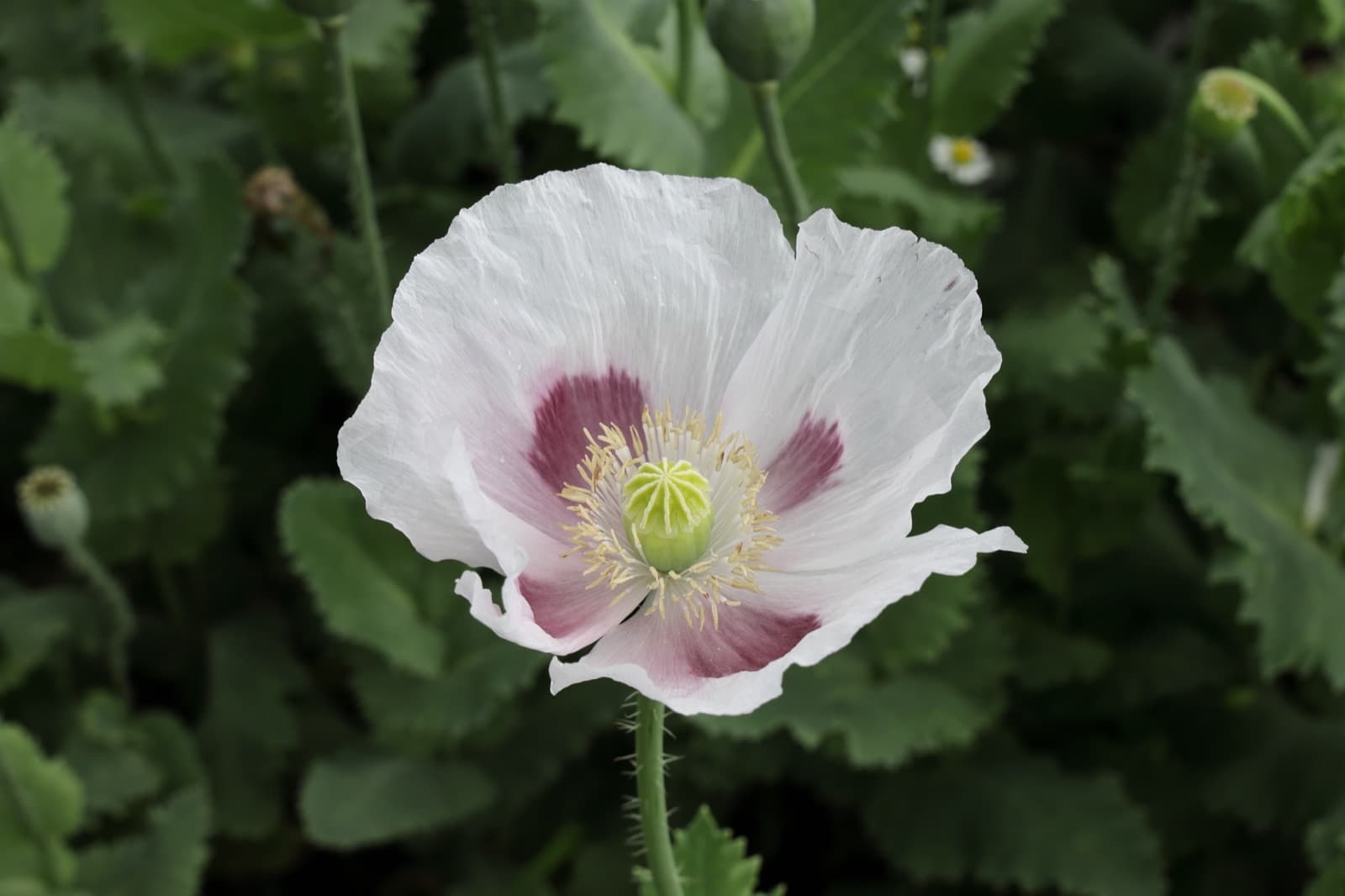
Before it was heroin, it was a flower
Heroin's real name is diacetylmorphine, and it does not exist in nature. It is made by taking morphine, the painkiller drawn from the opium poppy, Papaver somniferum, and altering it in a lab so it reaches the brain faster and hits harder.
For thousands of years the poppy was a plant medicine. Opium and later morphine were used for pain and sleep, with all the risk that carried, but they came from the field. Heroin was the next step, made by human hands in the late 1800s and sold at first as a safer painkiller. It turned out to be far more addictive. The two structures below are that step: the natural compound, and the manufactured one built from it.
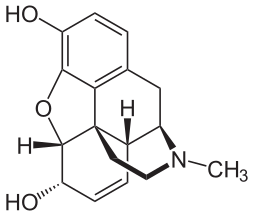
Morphine
The natural opioid painkiller found in the opium poppy, used medically for well over a century.
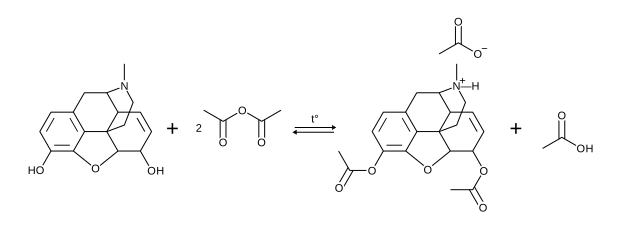
Diacetylmorphine (heroin)
Morphine with two acetyl groups added in a lab. The change lets it cross into the brain faster, which is what makes heroin both more intense and more addictive.
Your pre-ibogaine treatment for heroin protocol
Minimizing Withdrawals
What's included in your program
- Natural ibogaine treatment led by spiritual guides and iboga facilitators, with a licensed medical team on hand
- Preparation and integration support with trained psychotherapists
- Pre-treatment Ayurvedic cleansing protocol (sweat, colonics, nutrition, exercise)
- Post-treatment integration support for months, not days, during the Window of Wonder (WoW)
- Accommodations at our luxury rainforest center for the full program
- BDNF stimulation protocols for faster neural repair
- Nature immersion: rainforest, ocean, and mountain
Suggested Programs
Heroin clears quickly, so the preparation is shorter than for fentanyl or methadone. Most people who come to us for heroin land in these mid-length programs, with room for integration afterward.
28 days
28-Day Program
The most common choice for ibogaine treatment for heroin. Enough room for a thorough detox, ibogaine treatment, and real integration time.
Learn more →6, 8 or 12 weeks
Advanced Program
Our fuller option for long-term heroin use, or where the supply has been mixed with fentanyl, which lengthens the clearing. Available in 6, 8, or 12-week formats.
Learn more →
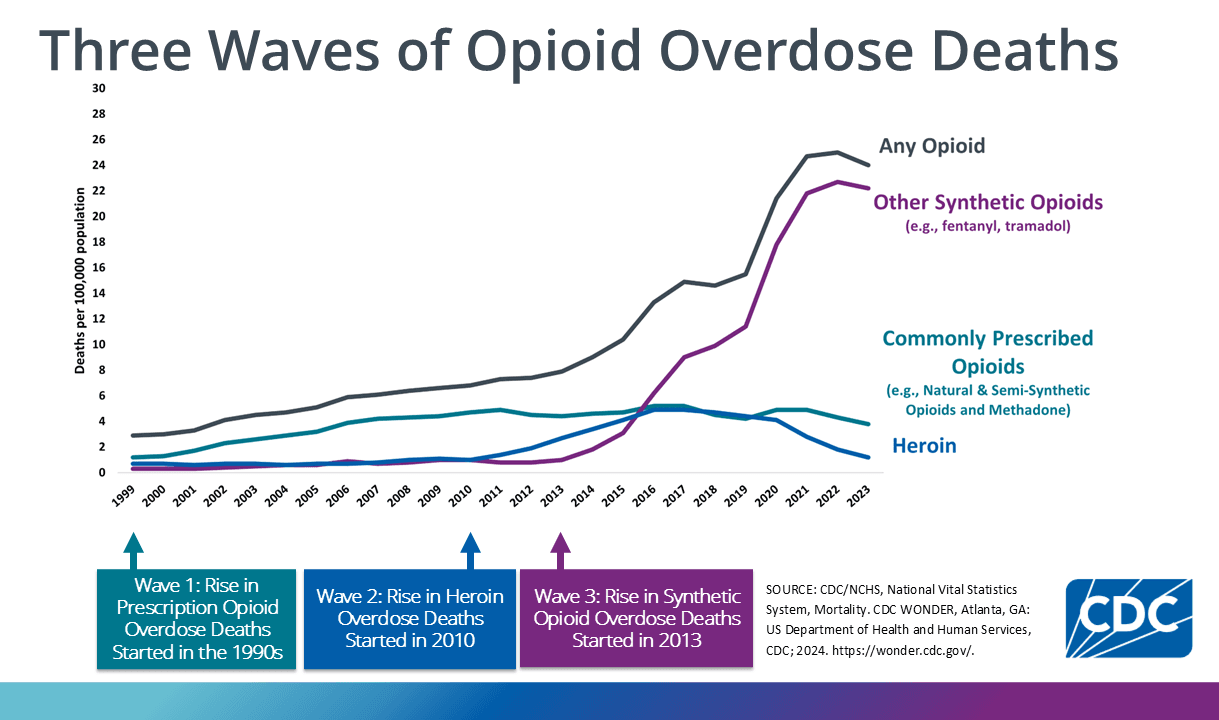
Heroin was the second wave of the opioid crisis. As prescriptions tightened in the early 2010s, many people who were already dependent moved to heroin because it was cheaper and easier to get. Deaths climbed for years before peaking in 2016.
The raw number of heroin deaths has come down a long way since then, but that is not the good news it sounds like. Most of the drop is because the heroin supply has been replaced by fentanyl, which is deadlier. Around 8 in 10 heroin-involved deaths now also involve fentanyl, so anyone using street heroin today is very likely being exposed to it.²
How ibogaine addresses this substance
Ibogaine works across four neurological and psychological dimensions, each specific to how this substance affects the brain.
Receptor Reset
Heroin's grip on the mu-opioid receptor is physical, written into the wiring through months or years of use. Ibogaine acts directly on those receptors, and on the NMDA receptors beside them, returning the system toward its pre-addiction baseline instead of managing around it.
Withdrawal Relief
Heroin withdrawal comes on fast and hard because the drug clears so quickly. Ibogaine interrupts that process rather than substituting another opioid for it. Most students report their acute symptoms, the cramps, restless legs, and bone pain, ease sharply within the first hours of treatment.
Craving Interruption
The pull that sends people back to heroin despite knowing the cost runs along deeply worn neural loops. Ibogaine disrupts the default-mode-network patterns and memory associations behind those loops. What tends to follow is a stretch of clarity people say they have not felt since before they started.
Root-Cause Clarity
For many people the pain came before the heroin, and the heroin became the way to quiet it. Years of use then add their own damage on top. The ibogaine experience tends to surface both at once. Seeing it clearly does not resolve the root cause by itself, but it changes how you relate to it in a way ordinary detox never reaches.
Ibogaine aftercare is the best way to ensure long-term success

Citations (3)
[2] National Institute on Drug Abuse (NIDA), based on CDC WONDER data (2024). Drug Overdose Death Rates. National Institutes of Health, citing CDC, National Center for Health Statistics, Multiple Cause of Death data. Read the source →
About 73,838 U.S. overdose deaths in 2022 involved synthetic opioids other than methadone (primarily fentanyl) — roughly two-thirds of the approximately 107,900 total drug overdose deaths that year. Also documents the longer trends: heroin-involved deaths peaked at about 15,500 in 2016 and fell to roughly 4,000 by 2023 (about 80% of remaining heroin deaths also involve illicitly manufactured fentanyl), deaths involving prescription opioids rose from about 3,400 in 1999 to a peak near 17,000 in 2017 before declining, and methadone continues to contribute thousands of overdose deaths each year.
[3] Centers for Disease Control and Prevention (CDC) (2025). Understanding the Opioid Overdose Epidemic. U.S. Centers for Disease Control and Prevention, Overdose Prevention. Read the source →
Describes the U.S. opioid overdose epidemic in three waves: prescription opioids (rising since the 1990s), heroin (from 2010), and synthetic opioids such as illicitly manufactured fentanyl (from 2013). Source of the three-waves overdose-death chart.
[22] Alper KR, Lotsof HS, Frenken GM, Luciano DJ, Bastiaans J (1999). Treatment of acute opioid withdrawal with ibogaine. The American Journal on Addictions, 8(3), 234–242. Read the source →
Open-label case series of 33 heroin-dependent patients treated with a single dose of ibogaine. 25 of the 33 (about 73%) showed no objective signs of opioid withdrawal and no drug-seeking behavior during the 72-hour observation window. One death occurred, possibly involving surreptitious heroin use. Uncontrolled and unblinded.
