At a glance — ibogaine treatment for Calgary residents, June 2026 update:
- Federal status in Canada: not approved for clinical use under the Controlled Drugs and Substances Act; no Alberta clinic can administer ibogaine
- Calgary / Alberta crisis: 629 toxic drug deaths in Calgary in 2023 (deadliest year on record); fentanyl in more than 93% of cases; Alberta recorded 1,873 opioid-related deaths provincially in 2023
- 2024 trend: Calgary opioid deaths fell to 284 (54% decrease from 2023), while the crisis remains severe across the province
- Allowed treatment pathway: Brazil, ANVISA-approved, hospital-administered
- Travel from Calgary: YYC → GRU/GIG via Toronto, Vancouver, or Houston hubs
Ibogaine is a single-session medical intervention for opioid dependence, substance abuse, prescription medications, behavioral addictions, and trauma, prescribed and administered by independent licensed Brazilian physicians in a hospital setting. For Calgary residents, the available pathway runs through Brazil — Nekawa is the wellness academy that supports students through it.
Calgary recorded 629 deaths from toxic drugs in 2023 — nearly two deaths per day, the deadliest year the city has seen. Government of Alberta surveillance data reported fentanyl in more than 93% of those deaths, with methamphetamine co-use in roughly two-thirds of cases. Provincially, Alberta logged 1,873 opioid-related deaths in 2023, a record. In 2024, Calgary's opioid-related deaths fell to 284 — a meaningful decrease, but still 284 families in a single year. These are not abstractions. They are people from the Beltline, Kensington, Mission, Inglewood, Mahogany, and every other corner of the metro.
Alberta Health Services operates addiction and mental health programs across Calgary — detox, residential treatment, opioid agonist therapy, and community supports. For many families who land on this page, those programs have already been tried. The cycle continues. The question that brings people here is whether something is structurally different, or just another variation of the same approach.
This page covers:
- What ibogaine is and how the medical session actually works
- Why the available medical pathway runs through Brazil rather than Canada or the United States
- How Nekawa's wellness program is structured around the work the prescribing physicians do
- What the trip from Calgary to Paraty involves, from hub connections to on-site integration
Nekawa is a wellness education academy. It is not a clinic, and it does not prescribe or administer ibogaine. The medical work happens in a hospital under independent licensed Brazilian physicians; Nekawa builds the preparation, environment, and integration around it.
Why Calgary residents are looking outside Canada for ibogaine
Ibogaine is not approved for clinical use in Canada. Under the Controlled Drugs and Substances Act, it has no authorized medical pathway — no Calgary clinic, hospital, or physician can legally prescribe or administer it. Health Canada's controlled substances framework makes that clear. The policy gap is not closing soon.
Alberta's overdose crisis has made that gap painfully visible. The Alberta Substance Use Surveillance System tracks monthly updates on opioid and substance-related deaths. Calgary's 629 toxic drug deaths in 2023 represented a city in crisis — fentanyl in more than 93% of cases, methamphetamine co-use widespread. Edmonton has often carried the highest municipal count in the province, but Calgary's 2023 toll was the deadliest year on record for the city itself.
Alberta Health Services runs a substantial addiction treatment system — supervised consumption, naloxone distribution, opioid agonist therapy, residential programs. For many Calgary families, those services have been essential and insufficient. Detox at Foothills or Rockyview, residential programs, methadone or suboxone, IOP, sober living — the cycle continues. The question is whether something works at the neurological level, not just the behavioral one.
Canada's national opioid mortality data from the Public Health Agency of Canada confirms what Alberta families already know: fentanyl has reshaped the crisis. For Calgary residents who have exhausted local options, the physician-prescribed pathway runs through Brazil.
What ibogaine actually does
If your loved one is in active addiction, you have probably heard a lot of clinical language that did not translate into results. Ibogaine is worth understanding differently, because it works differently.
Ibogaine is a naturally occurring compound derived from the root bark of the iboga plant. It acts on multiple receptor systems simultaneously, including opioid receptors, NMDA receptors, and serotonin pathways. The result, for many patients, is a dramatic reduction in acute opioid withdrawal symptoms and a reset of the neurological patterns that drive compulsive use. The full receptor-level mechanism is covered in detail on our ibogaine overview.
What makes ibogaine different from medication-assisted treatment goes beyond pharmacology. It is the window that opens after. In the weeks following a session, the brain enters a period of elevated neuroplasticity, sometimes called the Window of Wonder, that typically lasts 2 to 12 weeks. This is not a passive recovery period. It is the window that Nekawa's 15-day on-site integration and 45-day at-home coursework are specifically built around, because what a student does during that window shapes what the session becomes long-term.
Ibogaine is not appropriate for everyone. The peer-reviewed research is serious and growing, and so is the understanding of who is and is not a candidate. Cardiac history, current medications, and other health factors all matter. That is precisely why the physician-prescribed pathway requires a full medical workup before any session proceeds.
The medical protocol: what hospital administration actually means
The ibogaine session at the heart of Nekawa's program is prescribed and administered by independent licensed Brazilian physicians, not by Nekawa. Understanding what that means in practice matters, because it is the difference between a supervised medical procedure and an unmonitored retreat experience.
Before the prescribing physicians clear a patient for ibogaine, the workup includes:
- EKG
- QT-interval check
- Comprehensive blood panel
- Liver function test
- Magnesium loading
The QT-interval check is the critical cardiac screen. Ibogaine affects cardiac conduction, and a prolonged QT interval is a contraindication. This is not a formality. It is the reason the medical workup exists.
During the session, an on-site physician is present throughout. The hospital's ICU-trained nursing team monitors continuous cardiac telemetry for a minimum of 24 hours post-dose. The session itself moves through distinct phases: the intense visionary phase lasts 6 to 12 hours, followed by roughly 12 hours of quieter mental processing, then 24 to 48 hours of physical recuperation.
Nekawa's role is not clinical. We build the preparation, the environment, and the integration structure around the medical team's work. The full program structure is:
- 10 days of preparation and on-site medical onboarding before the session
- The ibogaine session, administered by the medical team in a hospital setting with continuous cardiac telemetry
- 15 days of structured integration on the property
- 45 days of at-home integration coursework after returning home
Longer on-site programs of up to 90 days are available for students who want deeper transformation work. The 28-day structure is the foundation; the extended program builds on it.
See our cardiac safety overview for the full QT-interval, EKG, and screening protocol the prescribing physicians follow.
Why Brazil and not somewhere else
Mexico and Costa Rica have become common destinations for ibogaine, and some of the programs there are run by serious people. But the regulatory framework is not the same, and that difference matters when you are talking about a compound that requires continuous cardiac monitoring.
In Brazil, ibogaine is approved for medical use under ANVISA, Brazil's federal health agency, the equivalent of Health Canada. Treatment is prescribed by licensed physicians and delivered within hospital infrastructure that includes emergency response capability. This is not a private villa. It is not a retreat center operating in a gray area. The current US and global legal status of ibogaine makes clear why the structure of the Brazilian system is distinct — and why that distinction matters for Canadian families evaluating options abroad.
Nekawa is a wellness education academy, structured around the hospital infrastructure that physician-administered ibogaine treatment requires. We do not run the medical protocol. The prescribing physicians do. What we provide is the preparation curriculum, the environment, the integration coursework, and the program structure that gives the medical session its full context.
For Calgary students specifically, the contrast with unregulated ibogaine abroad is not abstract. Alberta's surveillance data shows what fentanyl-driven dependence looks like at scale. The evidence base for physician-prescribed, hospital-administered ibogaine is why serious researchers and policymakers — in the US and elsewhere — are paying attention to Brazil's framework.
| Brazil (Nekawa pathway) | Alberta rehabs | Mexico clinics | |
|---|---|---|---|
| Is ibogaine available? | Yes — physician-prescribed | No (Schedule I) | Yes — but unregulated |
| Regulatory framework | ANVISA-regulated | FDA + DEA (federally illegal — no ibogaine pathway) | No formal framework |
| Cardiac monitoring | 24-hour ICU telemetry, EKG, QT screening | N/A (no ibogaine) | Varies |
| Program length | 28+ days | 30 days typical | 5–10 days typical |
| Setting | Hospital partner + wellness program | Treatment facility | Retreat / private clinic |
| Aftercare structure | 45-day online/home coursework with mentors | Outpatient varies | Rare |
| Cost / insurance | $750/day; insurance N/A | $300–$2,000/day; insurance available | $1,000–$1,800/day; insurance N/A |
Traveling from Calgary to Paraty
Calgary International (YYC) does not offer nonstop service to Brazil. Most Calgary travelers connect through Toronto (YYZ), Vancouver (YVR), or Houston (IAH) to reach São Paulo–Guarulhos (GRU) or Rio de Janeiro–Galeão (GIG). Total travel time typically runs 16 to 22 hours door to door, depending on connection length and season.
From either GRU or GIG, it is a 4-hour drive along the BR-101 coastal highway to Paraty, on Brazil's Costa Verde coast. We arrange private ground transport from the airport, so students arrive directly without navigating Brazilian transit or making connections.
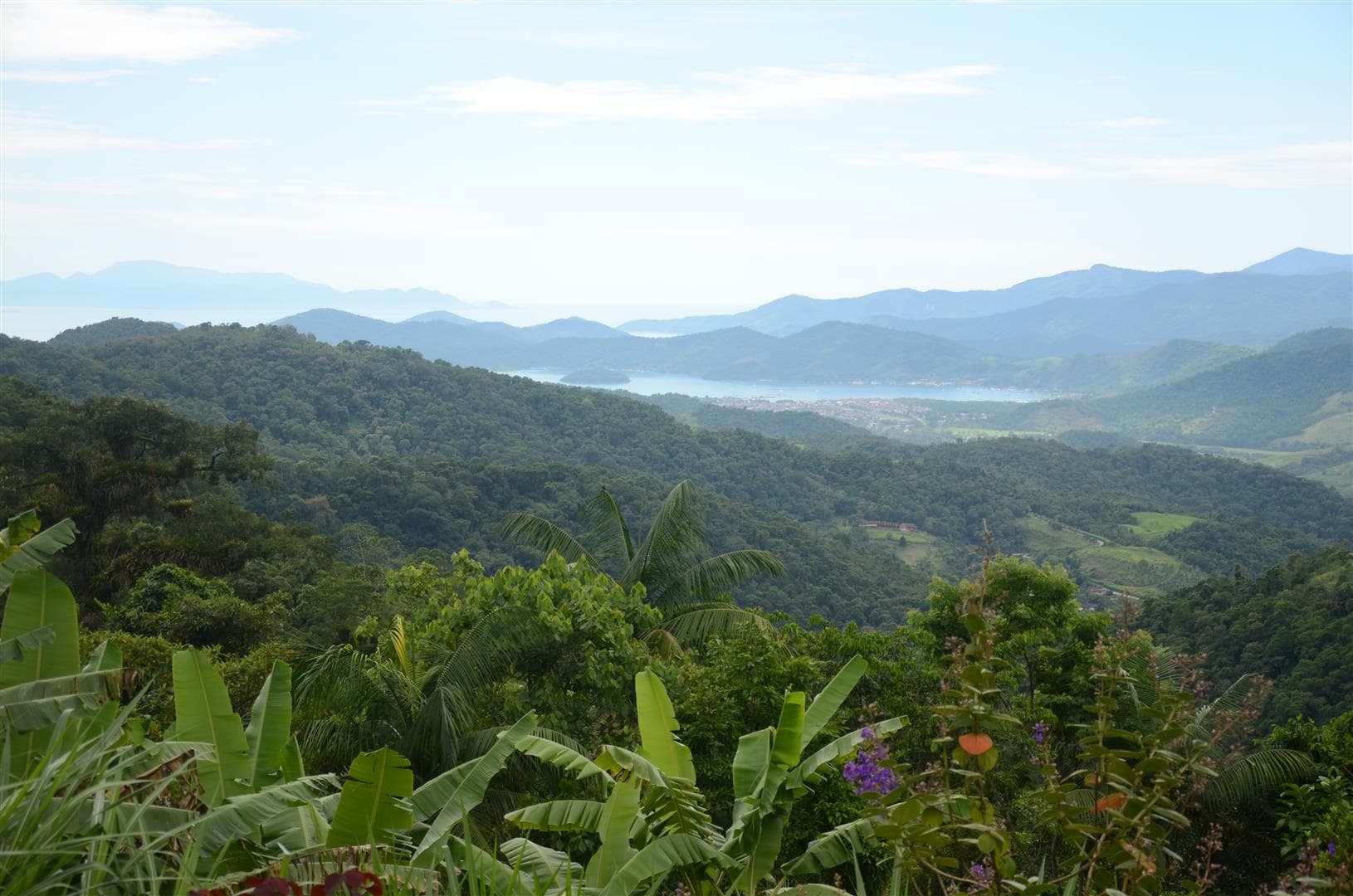
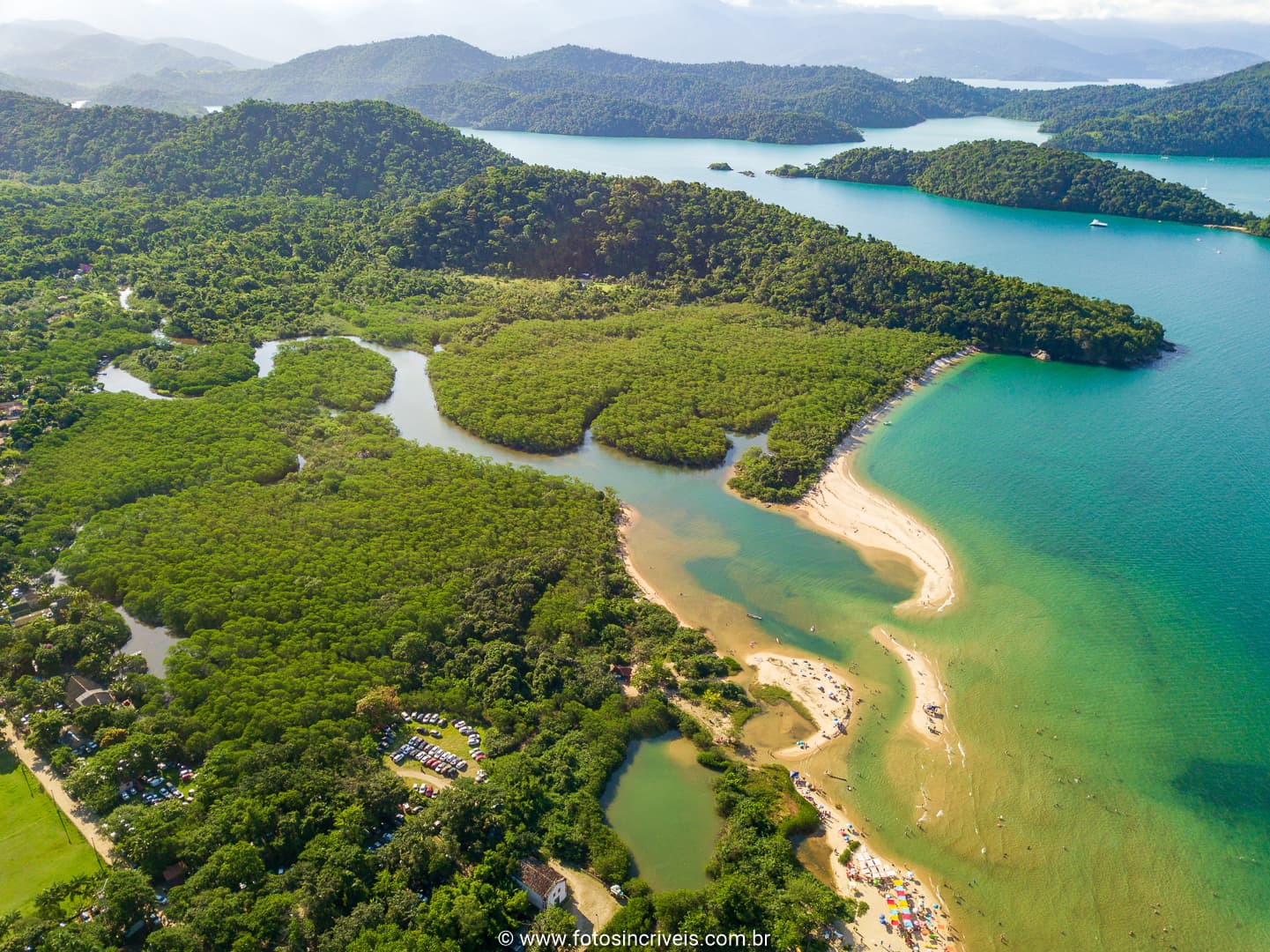
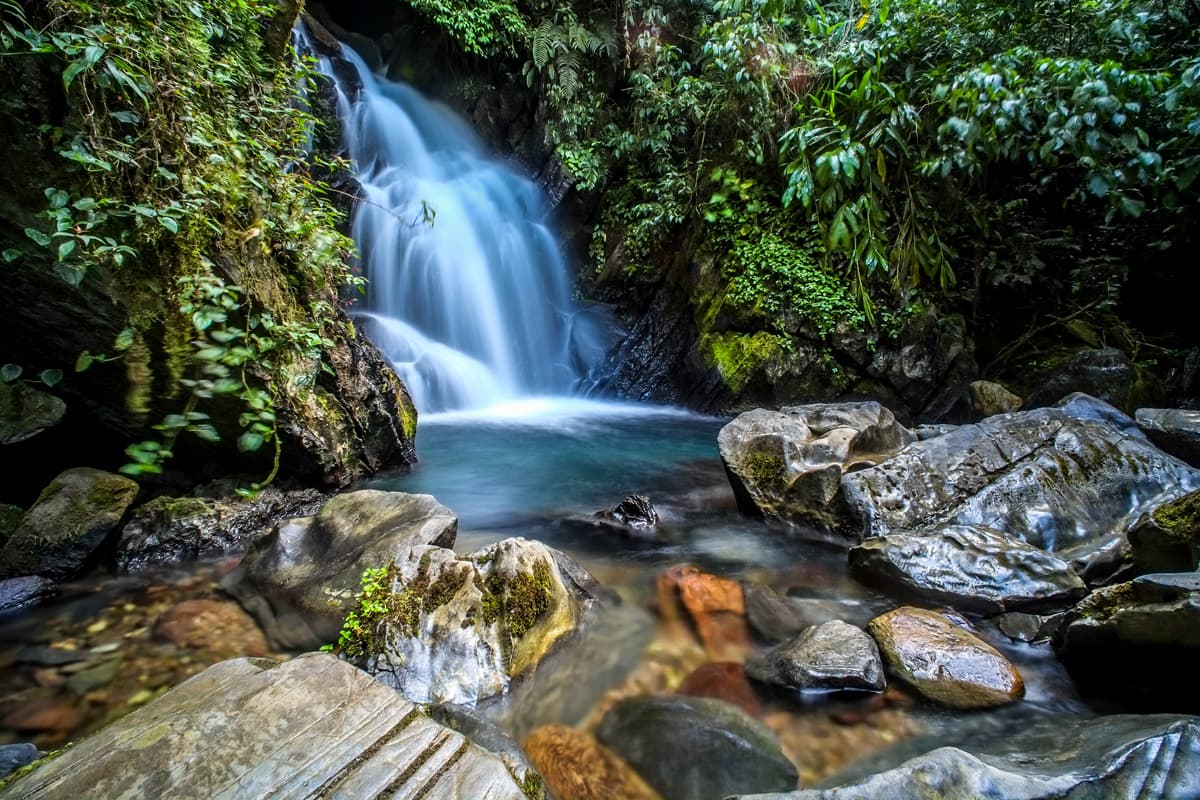
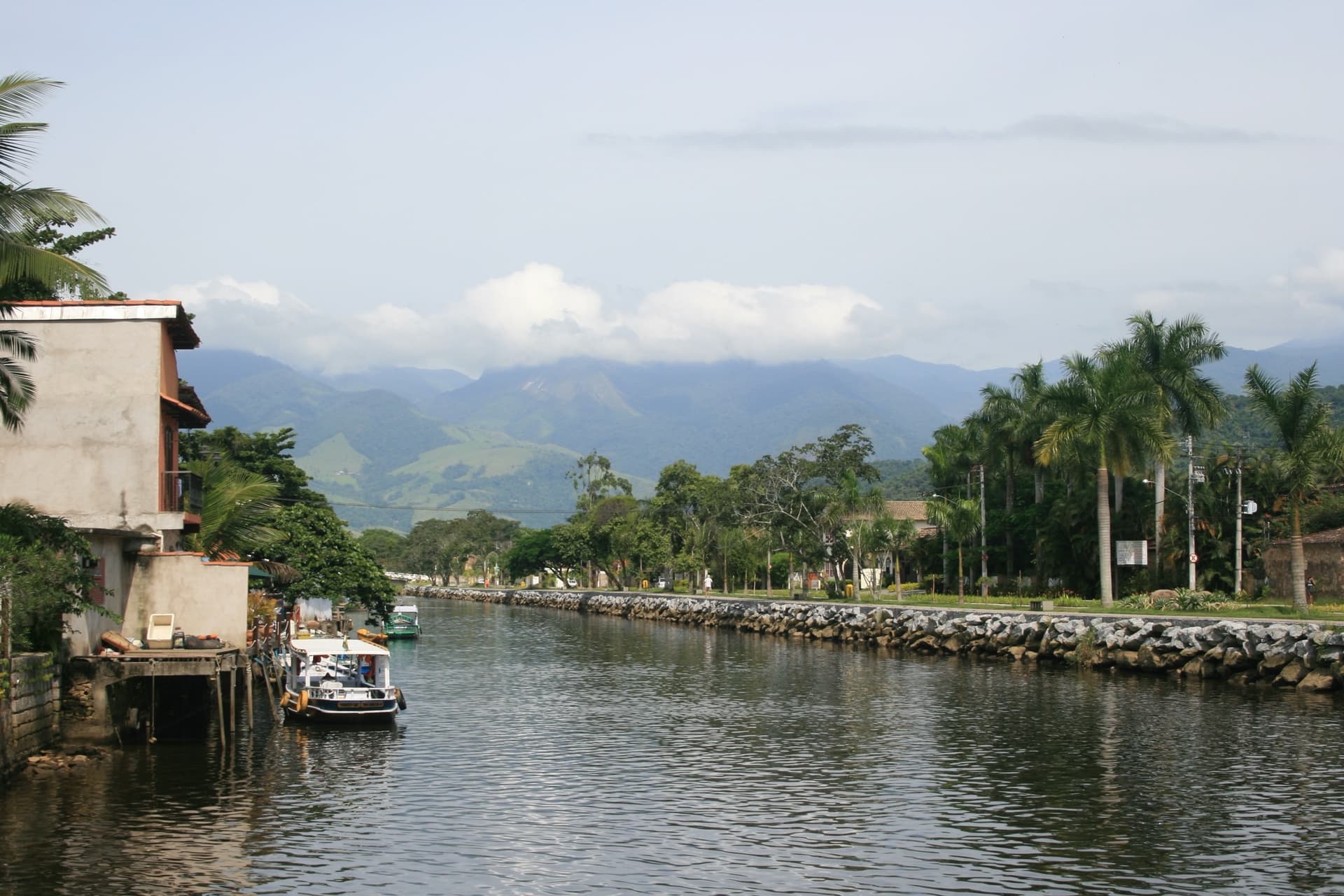
What you arrive to is not a medical facility. Our location sits in the Atlantic rainforest, the Mata Atlântica, at the edge of the sea. Old-growth jungle. Waterfalls. A protected lagoon. A bay scattered with more than 300 forested islands. The colonial port town of Paraty is just outside. The environment is part of the program. The preparation and integration work we walk students through is designed to use the setting intentionally.
Canadian passport holders must meet Brazil's current entry requirements before travel. These differ from U.S. eVisa rules and can change. Our intake team verifies passport validity and entry requirements during onboarding — do not assume U.S.-specific visa guidance applies to Canadian travelers.
- Passport: Canadian passport with sufficient remaining validity
- Entry requirements: confirm with intake team before booking; Brazil's rules for Canadian citizens are distinct from U.S. travelers
- Ground transport: arranged by Nekawa from GRU or GIG to Paraty
Alberta's legal and policy posture on ibogaine and psychedelic medicine
Canada has not followed the US path of state-level ibogaine research funding. Alberta's policy conversation has focused on the overdose crisis itself — supervised consumption, naloxone access, opioid agonist therapy, and recovery-oriented system reform — rather than clinical ibogaine authorization.
At the federal level, ibogaine remains outside Canada's approved pharmacopeia. Health Canada has not opened a domestic treatment pathway. Psychedelic-assisted therapy trials exist in Canada for substances like psilocybin and MDMA in specific contexts, but ibogaine is not part of that authorized landscape. An Alberta resident in active addiction in 2026 cannot receive ibogaine in Calgary, cannot access it through a Canadian hospital, and has no domestic medical provider to turn to for it.
That policy reality sits alongside a provincial crisis that surveillance data documents in detail. The Alberta Substance Use Surveillance System is updated monthly. Calgary's record 629 toxic drug deaths in 2023 and the partial decline to 284 opioid deaths in 2024 both tell the same underlying story: fentanyl changed the pharmacology of the crisis, and conventional treatment alone has not kept pace.
For now, the physician-prescribed pathway runs through Brazil. Federal momentum in the United States — including research initiatives aimed at veterans — is worth watching for dual citizens and families with cross-border ties, but it does not create Canadian treatment access today.
What integration looks like when you return to Calgary
The ibogaine session is not the end of the program. It is closer to the beginning of the part that requires the most work.
The 45 days of at-home integration coursework that follow the on-site program are structured around the Window of Wonder, the 2 to 12 weeks of elevated neuroplasticity that follow the session. This is when the brain is most receptive to new patterns, and it is when the coursework is designed to be used. Students returning to Calgary — to a condo in the Beltline, a house in Mahogany, or a quiet street in Kensington — return to the same environment where the patterns formed. The at-home coursework is built with that reality in mind, including the rhythms of a prairie city: long winters, energy-sector layoff cycles, and the social pressure that comes with both.
Integration is not passive. It involves structured reflection, specific practices, and ongoing engagement with the material from the preparation phase. Our team remains in contact with students through this period. The work continues.
For students with opioid dependence specifically, the opioid program page covers how the full curriculum is structured for that context. Students navigating burnout, depression, or anxiety alongside addiction may find the burnout and mental health program relevant as well.
How to start: the discovery call
The first step is a discovery call. This is a candidacy and program-fit conversation, not a sales call. We are looking at whether Nekawa's program is genuinely right for you or your loved one, and whether you are ready to do what the program requires.
On the call, we cover the program structure, the preparation curriculum, what the on-site experience involves, and what the at-home integration period looks like. We also talk honestly about who the program is not right for. Clinical screening is conducted separately by the prescribing physicians. What we assess is program fit, commitment, and readiness.
If the program is a fit, we move to intake, onboarding, and scheduling. Our intake team handles entry-requirement guidance, ground transport coordination, and preparation coursework. You do not navigate this alone.
To start, visit Book a discovery call. If you are a Calgary family member trying to understand whether this is the right path, the discovery call is the right place to begin.
Where the jungle meets the sea
Nekawa sits in the Atlantic rainforest just outside the colonial port town of Paraty. Old-growth jungle, waterfalls, natural swimming pools, and a bay scattered with more than 300 forested islands. After Calgary, this is a different world.
Frequently asked questions
More questions? See our full FAQ.
Definitions
Plain-language definitions of the terms used on this page.
- Schedule I
- A US federal classification under the Controlled Substances Act for substances with no accepted medical use and high abuse potential. Ibogaine has been Schedule I since 1970, which means no clinic in the United States — public or private — can administer it.
- ANVISA
- Brazil's federal health agency, the Agência Nacional de Vigilância Sanitária — the functional equivalent of the US FDA. Regulates physician-prescribed, hospital-administered ibogaine treatment in Brazil under formal medical-use authorization.
- Window of Wonder
- The 2- to 12-week period of elevated neuroplasticity following an ibogaine session, during which the brain is more receptive to new patterns and integration work. Nekawa's 15-day on-site integration plus 45-day at-home coursework are structured around this window.
- eVisa (Brazilian)
- An electronic visa required for US travelers entering Brazil since January 1, 2026. Applied at brazil.vfsevisa.com, costs US$80.90, processes in roughly 72 hours, valid 10 years with multiple entries up to 90 days per stay.
- QT-interval
- A measurement on an electrocardiogram (EKG) of the time between ventricular depolarization and repolarization. Ibogaine prolongs the QT interval, which is why the prescribing physicians screen every patient with EKG and a comprehensive workup before clearing them for a session.
- Hospital-administered
- Refers to ibogaine treatment delivered in a hospital setting under continuous cardiac telemetry, ICU-trained nursing, and an on-site physician throughout — the regulated framework Brazil's prescribing physicians operate within. Distinct from retreat-style settings in countries without a federal regulatory pathway.
Calgary's toxic drug death toll hit a record in 2023, and fentanyl remains the driving force even as 2024 brought a partial decline. If you are a Calgary family member who has watched someone cycle through Alberta Health Services programs without lasting change, the physician-prescribed pathway through Brazil is worth understanding seriously. Nekawa's discovery call is a direct conversation about whether this program is genuinely right for your situation. It is not a pitch. It is an honest assessment of fit, readiness, and what the 28-day program actually requires of a student. If you are ready for that conversation, start at Book a discovery call.
A medical program in a setting that matters
The hospital protocol is the foundation. The setting is the second medicine. See the property, the rooms, the team, and the route in.